Zipper Types for Clothing Manufacturing: A Practical Guide for Apparel Brands
A zipper can look like a small detail on a technical pack, yet it influences how a garment functions, feels, wears, and is assembled. For an apparel brand, the right choice is not simply a matter of selecting a metal or plastic finish. It is a decision about garment purpose, fabric weight, opening length, pull direction, construction sequence, and the level of testing that makes sense before bulk production.
This guide helps clothing buyers and product teams choose zipper types for clothing manufacturing with a clear, practical process. It is intended for custom apparel development, from lightweight fashion pieces to outerwear and utility styles, without treating one zipper as the universal answer.
Start with the job the zipper must do
Begin with the garment function rather than a preferred zipper finish. A center-front zipper on a jacket, a concealed zipper on a skirt, a pocket zipper on a performance layer, and a trouser fly zipper all face different stresses and user expectations. Write down the opening location, approximate length, direction of use, expected frequency of use, and whether the zipper needs to be visible or hidden.
Then consider the garment as a system. A heavy zipper can distort a very light woven fabric. A bulky puller may catch on a narrow placket. A zipper that works smoothly on a flat panel can behave differently after it is set into a curved seam or placed near a waistband. These early questions reduce the risk of choosing hardware that looks right in isolation but feels wrong in the finished style.
Define the use case in the technical pack
- State the zipper location and finished opening length.
- Identify whether it is separating, closed-end, two-way, concealed, or intended for a fly.
- Note the desired tape color, teeth or coil appearance, puller shape, and any finish requirements.
- Show the zipper in a construction sketch, including guards, facings, plackets, and topstitching.
- Specify what must be checked on the sample: smooth operation, alignment, comfort, security, and appearance after laundering where relevant.
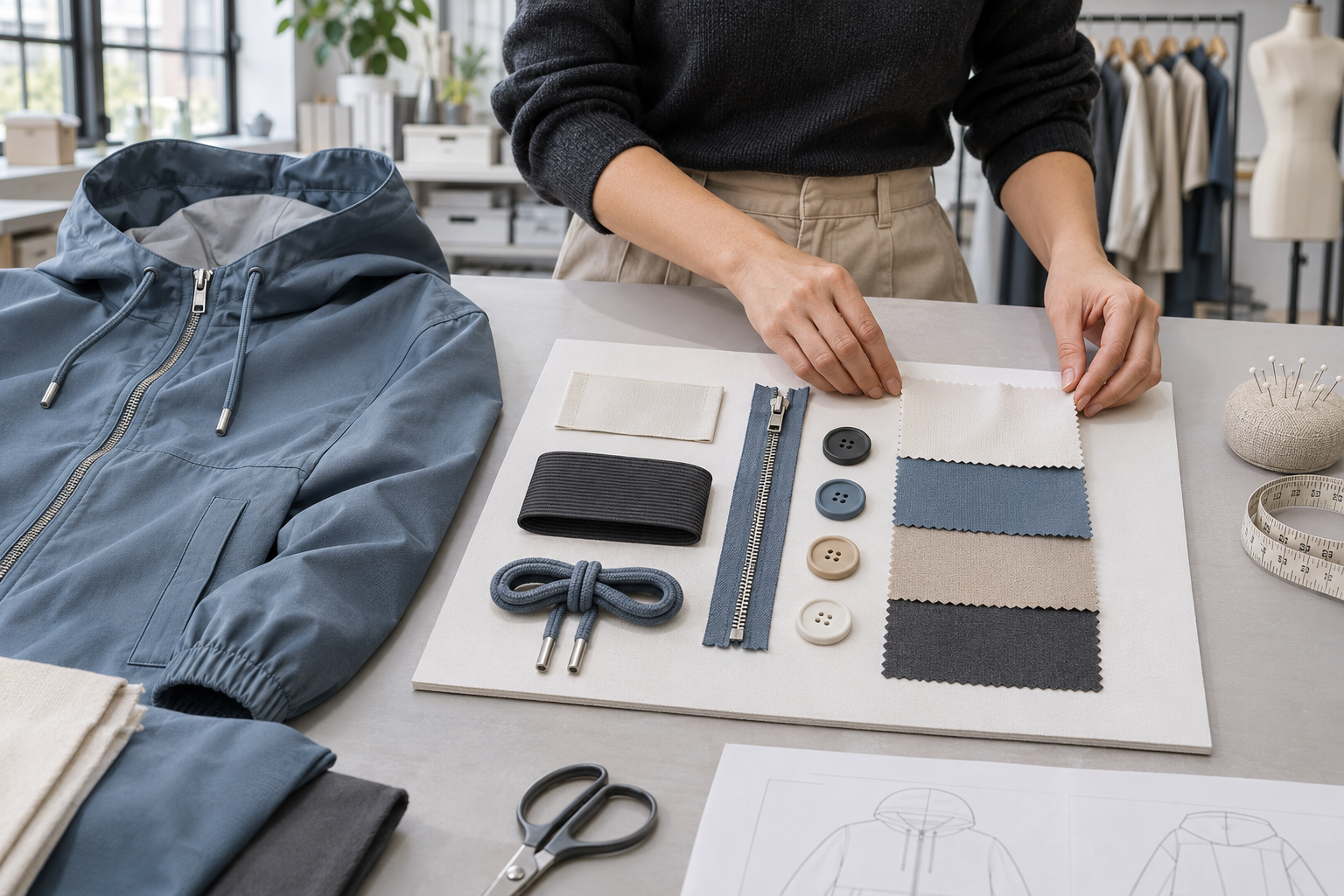
A complete trim brief complements a wider garment trim sourcing plan. It gives the development team a shared reference before substitutions, sample comments, or production approvals are discussed.
Understand the main zipper types
Nylon coil zippers
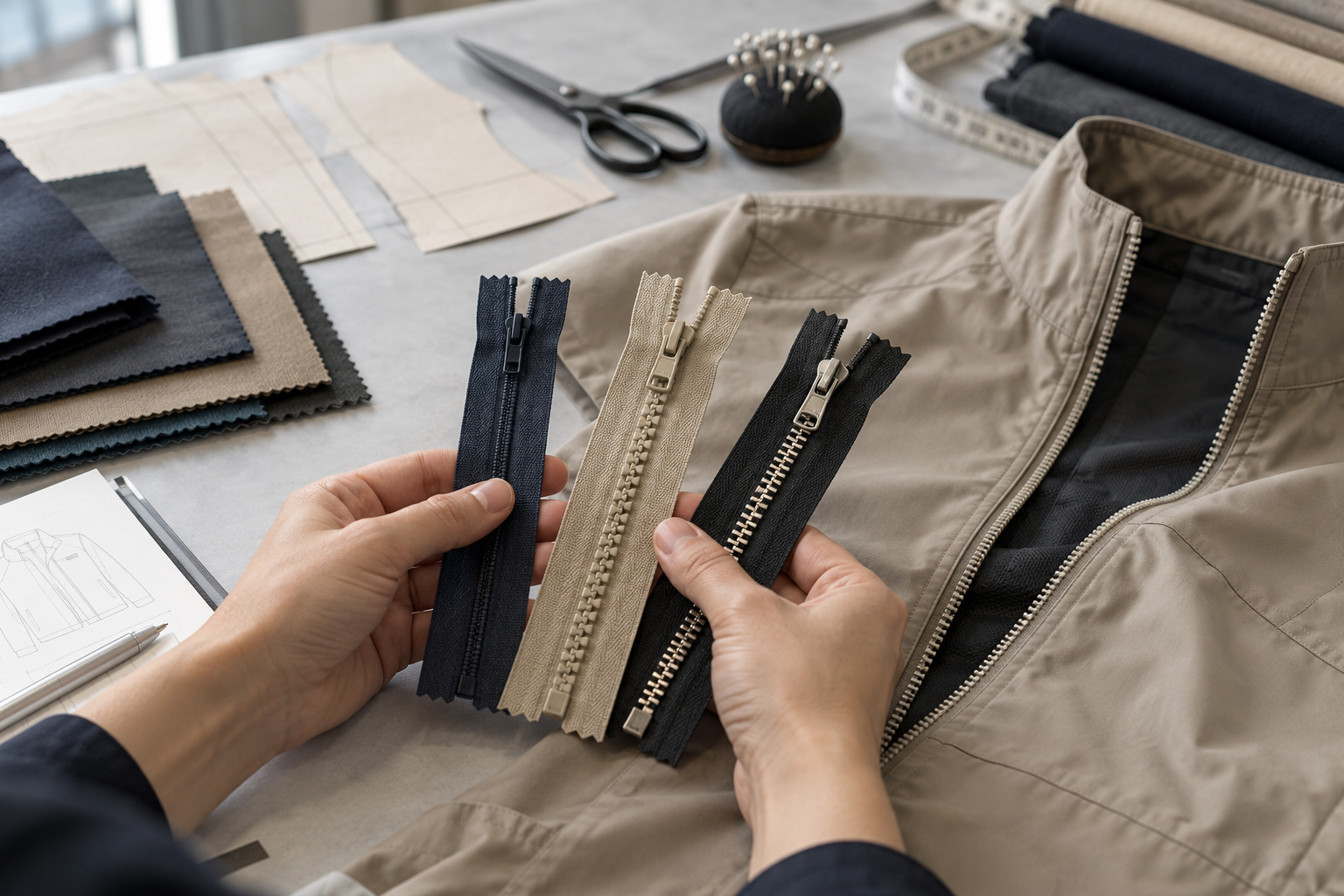
Nylon coil zippers use a continuous coil sewn onto zipper tape. They are commonly considered when flexibility, a relatively low profile, or a curved application is useful. They can suit dresses, skirts, lightweight jackets, pockets, bags, and many everyday apparel applications. Coil size, tape quality, slider choice, and the construction around the opening all influence the final result, so do not judge suitability from a small swatch alone.
Molded plastic tooth zippers
Molded plastic tooth zippers have individually formed teeth. Their more visible, structured appearance may fit casual outerwear, children’s styles, sportswear, and garments where a stronger visual zipper line supports the design. Consider the tooth size against the scale of the garment; a substantial zipper can be intentional on a parka yet overpower a light shirt jacket.
Metal tooth zippers
Metal tooth zippers create a distinctive finish and can be selected for denim, leather-adjacent styles, workwear-inspired products, or fashion pieces that call for visible hardware. The tape, teeth, and slider finish should be reviewed against the shell fabric and nearby trims. Take care with exposed edges, washing effects, and the feel of the zipper against the wearer’s body, particularly at necklines and fly fronts.
Concealed zippers
Concealed zippers are designed to sit within a seam so the teeth are largely hidden when closed. They are often used in dresses, skirts, tailored garments, and clean fashion silhouettes. Their appearance depends greatly on accurate sewing, seam stabilization, and appropriate fabric handling. Request a representative sample in the actual or closest available fabric before approving a concealed zipper for a production style.
Separating, closed-end, and two-way formats
A separating zipper opens fully at the bottom and is typical for jackets and vests. A closed-end zipper stops at the bottom and is common for pockets, trousers, and many dress openings. Two-way formats allow access from both ends, which can be useful on longer outerwear or styling-focused pieces. The format must match the opening’s function; choosing the wrong end construction can make an otherwise good zipper unusable for its intended garment.
Match zipper choice to fabric and construction
Fabric and construction details deserve the same attention as the zipper itself. Light, sheer, stretchy, coated, brushed, or loosely woven fabrics may need different seam support, facing treatment, or zipper-tape handling. The goal is a balanced opening that lies flat, opens smoothly, and retains the intended silhouette.
Check whether the zipper tape needs to be stabilized, whether the seam allowance is sufficient for clean insertion, and whether a backing, zipper garage, fly shield, or chin guard is required. For lined garments, the lining construction should prevent the zipper tape from catching. For decorated fabrics, define the placement before artwork or pattern pieces are finalized so the zipper does not interrupt a key graphic or repeat.
These details belong in the garment build, not in an isolated trim note. A garment construction details guide can help product teams document the seam, facing, stitching, and reinforcement choices that surround an opening.
Use samples to test the actual experience
Do not approve a zipper only from a supplier card or a photo. Include it in a sample that reflects the intended fabric, layers, seam construction, and user movement. Ask reviewers to open and close it repeatedly, inspect the top and bottom stops, and look at the garment both flat and worn.
A practical zipper sample-review checklist
- Confirm that the zipper type, size, length, tape color, slider, and puller match the approved specification.
- Open and close the zipper through its full length, checking for catches, waviness, and inconsistent resistance.
- Examine alignment at key points such as a waistband, hem, collar, print, pocket edge, or seam intersection.
- Check that the slider, stops, teeth, and tape do not create discomfort or snag adjacent fabric.
- Assess whether the opening remains stable after handling or relevant care testing for the garment.
- Record the approved version with clear photos, trim code, finish, and revision date.
Testing should be appropriate to the product and market rather than assumed. If a style needs wash, wear, or functional checks, agree on the review method and acceptance criteria in advance. This creates a better handoff than vague instructions such as “make zipper stronger.”
Prevent common specification mistakes
One frequent issue is specifying a zipper by color only. Two black zippers may differ in coil size, tape texture, puller, finish, and opening behavior. Another is leaving the zipper length to interpretation. State whether the measurement is tape length, finished opening length, or a specific point-to-point dimension on the garment.
Brands also sometimes approve one trim at the sample stage but fail to lock the reference before production. A change in slider, tooth finish, tape, or source can alter the look and feel of the garment. If an alternative must be considered, treat it as a controlled change: compare it with the approved sample, document the difference, and sign off before it enters the production run.
Finally, keep zipper comments connected to the broader approval record. Use a clear pre-production checklist so the trim reference, sample photos, construction notes, and outstanding revisions are reviewed together. The pre-production approval checklist for apparel manufacturing is a useful starting point for organizing that review.
Create a zipper approval record that production can use
A concise approval record can save time later. Include the garment style code, zipper position, type, length, size where applicable, tape color, teeth or coil finish, slider and puller reference, supplier or trim code if available, and the approved sample date. Add a close-up photo and a construction sketch that shows what is visible on the finished garment.
For styles with multiple zippers, assign each one a distinct name, such as center front, left pocket, right pocket, or fly. This avoids confusing a small pocket zipper with a center-front zipper that happens to share the same color. Version control matters too: when a tech pack changes, update the trim page and the sample comments together.
FAQ: zipper types for clothing manufacturing
Which zipper type is best for a jacket?
It depends on the jacket’s fabric, weight, intended use, and design. Separating coil, molded plastic tooth, or metal tooth zippers may all be appropriate. Review the actual zipper in a representative jacket sample before making the final choice.
What is the difference between a coil zipper and a molded plastic zipper?
A coil zipper uses a continuous coil attached to tape, while a molded plastic zipper has individually formed teeth. They differ in appearance, flexibility, profile, and how they suit the surrounding garment construction.
Should a clothing brand approve zipper samples before bulk production?
Yes. The sample helps the brand review operation, alignment, comfort, visual finish, and compatibility with the actual garment materials. Record the approved specification so that changes can be identified and reviewed.
Move from trim idea to a production-ready decision
The best zipper choice is the one that supports the garment’s purpose and has been clearly documented, sampled, and approved in context. Start with the opening function, compare suitable zipper formats, test them in the actual construction, and capture the final reference in the technical pack.
If you are preparing a custom apparel style and want to align trims, construction notes, and sample feedback before production, contact Huilin Fashion to discuss your project requirements.