Apparel Trim Card Checklist: How to Approve Details Before Clothing Production
In a garment, trims can be small in size but large in consequence. A zipper that feels different from the approved sample, a drawcord with the wrong tip finish, or a label that arrives in a slightly different color can change the product customers receive. For apparel brands, an organized trim card turns those physical details into a clear reference for sampling, purchasing, quality checks, and bulk production.
This guide explains how to build an apparel trim card checklist that is useful to both a brand team and a clothing manufacturer. The aim is not to make more paperwork. It is to make each approved component easy to identify, compare, and trace back to the right style and version.
What is an apparel trim card?
An apparel trim card is a physical board or controlled digital-and-physical record that gathers the approved non-fabric components for a garment style. Depending on the product, it may include buttons, zippers, snaps, elastic, drawcords, labels, hangtags, thread, hook-and-loop tape, patches, piping, eyelets, rivets, packaging items, and other accessories.
The card should not replace a bill of materials (BOM) or tech pack. Instead, it gives the written specification a tangible counterpart. A production team can see the actual puller, touch the elastic, compare the color with the approved fabric, and distinguish between components that may look similar in a photo. Pair the card with a clear apparel bill of materials so the physical sample and the written data always point to the same item.
Why trim approval deserves its own process
Trims affect function, appearance, comfort, durability, and the repeatability of a garment. A jacket zip needs the right length, tape color, teeth finish, slider, puller, and stop construction. A button needs the right diameter, material, color, hole count, and attachment method. A label needs the correct content, fold, placement, and finished edge.
Without a single approved reference, teams can rely on memory, email attachments, or an earlier sample that no longer represents the latest decision. That creates avoidable questions when production begins. A trim card gives the team one visible source of truth and makes it easier to flag a substitution before it reaches the sewing line.
The core apparel trim card checklist
1. Identify the garment style and version
Start each card with the essentials: brand name, style name or number, colorway, season or collection, sample stage, and document revision. If one style comes in several colorways, state whether the card applies to all of them or to one colorway only. Where a component differs by size, note the size range and the specific rule.
A version date is especially important. Trims often change while fit samples are being reviewed. If a new zipper is approved, mark the older card as superseded rather than leaving multiple “approved” references in circulation.
2. Attach a physical sample of every visible or functional trim
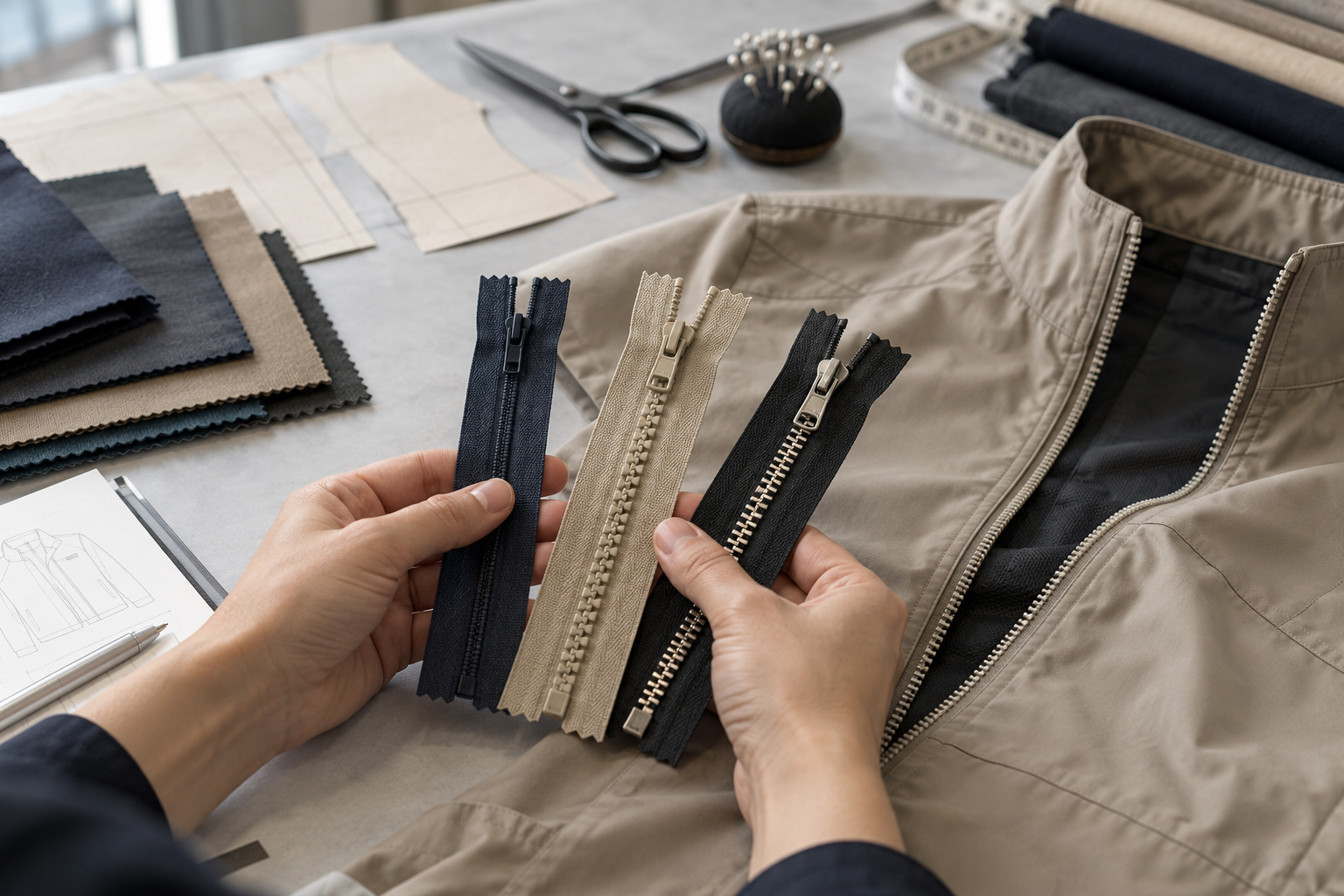
Attach representative pieces securely enough that they will not be confused or detached in handling. For a zipper, include a usable length that shows the teeth, tape, slider, puller, and stop. For a drawcord, include the cord and its end treatment. For an elastic, include enough length to check width, recovery, hand feel, and surface finish.
For components that cannot be attached, use a controlled sample, supplier swatch, or clearly referenced photo alongside the card. State where the retained physical sample is stored. This is more reliable than assuming a supplier description captures every visual detail.
3. Record the construction details that distinguish the component
Next to each trim, record what makes that item specific. The details will vary, but a practical entry generally includes:
- Component name and position on the garment
- Reference or item code, where one is available
- Material, finish, color reference, and dimensions
- Supplier reference or nominated-source information, if applicable
- Quantity per garment and any size-based variation
- Method of attachment or relevant sewing instruction
- Approval status, approver, and revision date
Be precise about traits that a production team cannot safely infer. “Black zipper” is not enough when tape shade, tooth material, tooth color, gauge, open-end or closed-end construction, slider orientation, and puller finish matter. The same principle applies to buttons, labels, and decorative hardware.
4. Check trim-to-fabric compatibility
A trim can be correct in isolation and still perform poorly with the chosen fabric. Test it against the actual approved fabric and garment construction when possible. Consider whether a zipper tape shows through a light shell, whether a metal snap can mark a delicate fabric, whether elastic causes puckering, or whether a label edge irritates the wearer.
Color deserves a real-world check too. Place the trim beside the approved shell, lining, and contrast materials under the lighting used for approval. For a structured approach to aligning components before bulk work, see this guide to fabric, color, and trim approval before production.
5. Match each trim to the relevant tech-pack callout
A trim card works best when it is traceable to the technical file. Use the same component IDs across the card, BOM, construction page, and artwork files. For example, “TR-04” should mean the same waistband elastic everywhere. If a component appears in a sketch, identify the exact callout on the trim card rather than relying on a general description.
This connection helps a manufacturer ask a focused question when information conflicts. It also helps the brand team see whether a change has been reflected everywhere it needs to be. Review the trim card alongside a production-ready apparel tech pack, not as a separate afterthought.
How to run the trim approval workflow
Build a preliminary card during development
Create the first card as soon as the product concept has enough definition to identify likely components. It may initially contain options: two zipper pulls, several button finishes, or alternate label materials. Label options clearly as unapproved so they cannot be mistaken for production selections.
Use the sample to make final decisions
Review trims in the context of the garment sample. Open and close closures repeatedly, examine the balance of hardware, inspect label placement, and consider how the garment looks after pressing or washing where relevant. Record the decision on the card immediately. A comment such as “use option B” is only helpful if option B remains unambiguous months later.
Control substitutions before they happen
Sometimes an approved component becomes unavailable or a proposed alternative is needed. Treat that as a formal change, not an informal swap. Ask for the alternative’s physical sample, compare it with the approved trim card, assess any effect on construction and appearance, then update the linked documents only after a decision is made.
Even a seemingly minor substitute can affect other areas: a wider elastic may require a different channel, a longer zipper may change the pattern, or a different button thickness may alter buttonhole settings. A clear trim record gives the team a practical way to review those knock-on effects.
Common trim card mistakes to avoid
Using only photos
Photos are useful for sharing, but they rarely show hand feel, thickness, sheen, or accurate color. Keep a physical reference for components where those properties matter, and use well-lit photos as a supplement.
Approving a trim without its application
A loose button may look right on a desk but feel too heavy once attached to a lightweight blouse. Whenever the trim affects use, placement, or appearance, confirm it on a representative sample.
Forgetting hidden components
Inside labels, pocketing, fusible tapes, hanger loops, seam tape, and internal elastic can be overlooked because customers may not see them immediately. They still influence comfort, construction, and consistency. Include them when they are material to the style.
Letting revisions live only in email
Email provides useful discussion history, but it is not a reliable production reference by itself. Capture the final decision on the trim card and the corresponding BOM or tech pack, then communicate which revision is current.
Questions to ask before production starts
- Does every trim on the approved sample appear on the trim card and BOM?
- Are all color, finish, size, quantity, and placement details stated clearly?
- Are component IDs consistent across the tech pack, artwork files, and trim card?
- Have functional trims been checked on the actual fabric and construction?
- Is there one current revision that the brand and manufacturer can identify?
- Does the card document an approval path for any future substitution?
FAQ
Is a trim card necessary for every clothing style?
Its depth should match the product. A simple T-shirt may need only labels, thread, and packaging references, while outerwear or structured apparel may need a detailed component board. The principle is the same: document the components that affect the finished garment.
Can a digital trim card replace a physical one?
A digital record is valuable for sharing and version control, but it does not fully replace physical confirmation for color, texture, thickness, and function. Many teams use both: a controlled physical card and a digital copy that links to the technical documentation.
Who should approve the trim card?
Approval commonly involves the people responsible for design, product development, and technical or quality decisions. The exact workflow depends on the brand, but the card should identify the authorized decision and the revision that has been accepted for production.
Bring trim decisions into one production-ready reference
A well-managed trim card makes small components easier to control before they become expensive production questions. It gives your team and manufacturer a shared physical reference, supports clear change management, and helps the approved sample translate into repeatable instructions.
If you are preparing a custom apparel style, contact Huilin Fashion to discuss the information needed to turn your approved materials and components into a clearer production brief.