Sewing Thread Selection for Clothing Manufacturing: A Practical Guide for Apparel Brands
Sewing thread is easy to overlook when a clothing collection is being developed. It is small, often specified late, and rarely the first item a buyer asks about. Yet thread affects seam appearance, abrasion resistance, stretch recovery, color continuity, and how a garment performs after wear and care. A considered thread brief gives a factory and a brand the same starting point before samples move into bulk production.
This guide explains sewing thread selection for clothing manufacturing from a buyer’s perspective. It is not a substitute for material testing or a supplier’s technical recommendation. Instead, it helps apparel teams ask better questions, record decisions clearly, and approve representative samples before production.
Why sewing thread selection belongs in the product brief
Thread is part of the construction system, not merely a consumable. It works with the shell fabric, seam type, needle, stitch formation, seam allowance, and garment use. A choice that looks appropriate on a flat swatch can behave differently on a stretchy jersey, a crisp poplin, a heavy twill, or a washed garment.
For apparel brands, the practical goal is alignment. The selected thread should suit the fabric and the intended use, produce the desired visual effect, and be available consistently enough for the approved color and construction. That decision should then appear in the bill of materials and construction notes alongside other components. A broader garment trim sourcing guide can help put thread, labels, fasteners, and other small components into one controlled workflow.
Start with the garment’s function and fabric behavior
Before comparing thread samples, describe what the garment needs to do. A lightweight woven blouse, a workwear overshirt, a ribbed knit top, and a lined tailored jacket all place different demands on their seams. The product brief should state the garment category, end use, fabric composition and construction, key seam locations, finish expectations, and planned care instructions.
For stable woven fabrics, the discussion often centers on seam neatness, color match, and an appropriate balance between thread visibility and seam strength. For knits and other stretch fabrics, teams should also consider whether the seam can extend and recover with the fabric. For garments intended for repeated movement, abrasion, washing, or more demanding use, the critical seams may deserve separate review rather than a one-thread-for-everything assumption.
Map the high-risk seam locations
List the seams that carry load, sit against the body, remain highly visible, or pass through multiple layers. Examples include armholes, crotch seams, inseams, center-back seams, pocket openings, plackets, belt loops, and topstitching. This map helps a brand decide where thread requirements can remain standard and where they should be specified separately.
It also avoids an incomplete approval. A sample may look correct at a front seam while a high-stress or highly visible seam uses a different stitch type, layer count, or operation. The selected thread and stitch approach should be reviewed where the product will actually be used.
Understand the main thread decisions
A productive sewing thread selection conversation usually covers four linked areas: fiber type, thread size or weight, color, and finish. Terminology can vary among thread suppliers and factories, so the brand should ask for the supplier’s own designation and sample reference rather than relying only on a generic description.
Fiber type and compatibility
Thread fibers can differ in strength, feel, stretch, heat response, dye behavior, and durability. The right option depends on the fabric, construction, garment use, and care plan. Rather than treating a matching fiber as a universal rule, ask how the proposed thread is expected to behave with the shell fabric and any interfacing, elastic, lining, or coating it contacts.
For example, a brand may want a softer feel at a next-to-skin seam, a more defined appearance for topstitching, or a thread that supports an elastic seam construction. Record the intended outcome, then compare stitched sample panels under normal handling. If a thread is being chosen for its performance after care, include that care condition in the sample review instead of assuming it from the cone.
Thread size and seam appearance
Thread size influences how a seam looks and feels, as well as how it runs with a chosen needle and stitch construction. Finer thread may suit delicate fabrics or a less visible seam. A heavier or more pronounced thread may be a deliberate design element for denim-style topstitching, utility details, or contrast stitching. Neither is automatically better; it must fit the material and design intent.
Ask to see the selected thread in the actual stitch application. A thread that appears balanced on one layer may look tight, bulky, or uneven where multiple layers meet. Make clear whether visible topstitching is decorative, functional, or both, and whether it should match the assembly thread or be treated as a separate component.
Color matching and intentional contrast
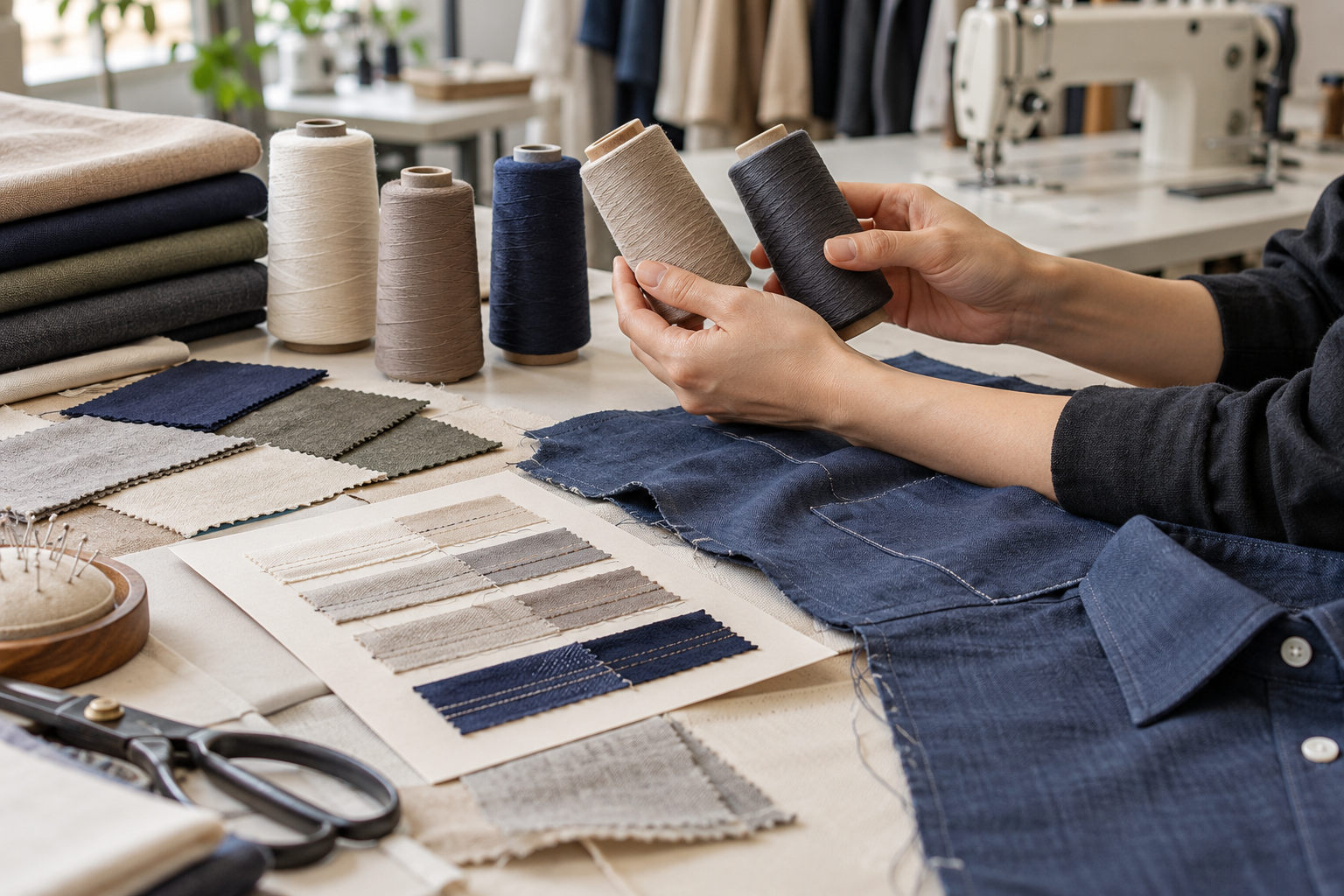
Color should be approved against the relevant fabric under a consistent viewing condition. A close shade may appear different against a textured surface, a washed fabric, a print, or a fabric with sheen. When the thread is intended to disappear, specify the approved reference for the closest acceptable match. When contrast is intentional, specify the approved color reference and exactly which seams receive it.
Do not rely on descriptions such as “dark blue” or “natural” alone. Include the thread supplier’s color reference where available, a physical or approved digital reference, and a note about the garment panels or seam locations that must be checked. For a collection with several colors, define whether each colorway needs a distinct matching thread or whether a single approved contrast thread is part of the design.
Connect thread choice to seam construction
Thread cannot be approved in isolation from stitch and seam construction. A seam’s behavior comes from the interaction of thread, stitch type, stitch density, tension, seam allowance, fabric layers, and operation. The right question is not simply “Which thread is used?” but “Which thread is used in this seam, with this fabric, for this purpose?”
Use the selected construction drawing or tech pack to call out exceptions. For instance, a garment could use one thread for internal assembly, another for visible topstitching, and a specific elastic-compatible approach at a stretch point. The seam types in garment manufacturing guide is useful context when translating design intent into these construction-level notes.
Build an approval sample that answers real questions
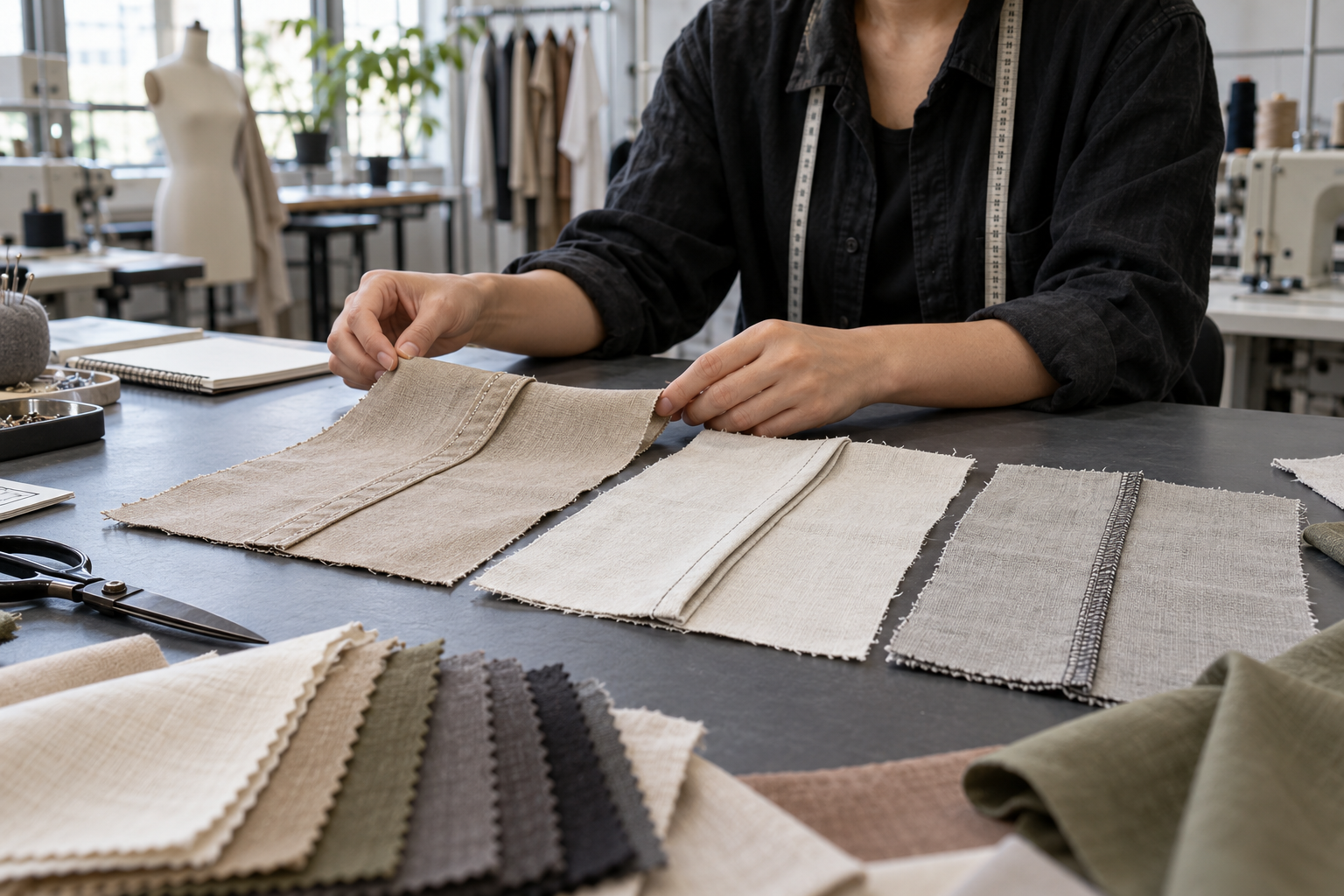
Request stitched samples that are representative of the garment, not only loose thread cards. The best sample set includes the final or closest available shell fabric, the relevant number of layers, the intended seam or topstitch detail, and the target colorway. If the garment includes contrast thread, request that treatment in the same package.
During review, examine seam appearance from the outside and inside, puckering, skipped or uneven stitches, visible tension issues, bulk at intersections, and how the seam behaves when gently moved as intended. Record observations by seam location. If the garment will be washed, dyed, printed, or otherwise finished after sewing, plan the review at the appropriate stage because appearance can change through those processes.
Where performance needs validation, agree on a suitable test plan with the relevant technical parties. The purpose is not to assume a result but to confirm that the approved fabric-thread-seam combination meets the brand’s requirements. Use a fabric testing checklist as a starting point for documenting material and care considerations that affect the sewn garment.
Put the decision into production-ready documentation
Once the thread is approved, make the information easy to locate and difficult to misread. The bill of materials can identify the thread category, supplier reference when applicable, color reference, and intended use. Construction pages can identify seam-specific requirements, stitch direction, visible versus internal use, and any exceptions. An approval log should record the sample or panel reviewed, the date or version, and the final decision.
Use clear version control when fabrics, colors, or construction change. A substitute fabric, altered wash, new colorway, or revised seam detail can reopen the thread decision. The team does not need to restart every discussion; it does need to confirm whether the prior approval still applies.
A practical thread-spec checklist
- Garment style, colorway, and current development version
- Shell fabric and relevant secondary materials
- Thread fiber description and supplier reference, if available
- Thread size or designation used by the supplier
- Color reference and whether the effect is matching or contrast
- Seam locations and operations covered by the selection
- Separate requirements for topstitching, bartacks, or elastic seams
- Representative sample or panel approved and any follow-up action
Common mistakes to avoid
The first mistake is leaving thread out of the development brief until the production sample. This reduces the time available to compare options and can make a construction issue look like a last-minute factory problem. The second is approving a cone or color card without seeing the thread sewn into the intended materials. The third is documenting a generic color but not the seams where a contrast or different thread is required.
Another common error is treating a change in fabric or finish as unrelated to thread. When a fabric becomes heavier, more elastic, more textured, or differently colored, recheck the stitched result. Finally, avoid using a passing comment in email as the only approval record. Put the decision into the controlled production documents so the approved intent can travel with the style.
FAQ: sewing thread selection for clothing manufacturing
Should every seam use the same thread?
Not necessarily. Many styles use a consistent thread across standard assembly seams, while visible topstitching, elastic areas, reinforcements, or specialist operations may need a separate instruction. The garment’s fabric, design, and function should determine where exceptions are needed.
When should thread be chosen in the sampling process?
Identify the intended thread approach when construction details are being defined, then review it in a representative sample. Final confirmation should happen before the information is released for bulk production, with updates documented if the material or construction changes.
How should brands approve a thread color?
Approve the color on a sewn sample against the relevant garment fabric and record the reference used. For contrast stitching, also identify the exact seam locations and visual effect that are approved.
Turn a small component into a controlled decision
Sewing thread selection for clothing manufacturing becomes manageable when it is treated as a design-and-construction decision rather than a late purchasing detail. Define the garment need, review the thread in the correct seam application, record the approved references, and revisit the decision when a material or construction change makes that necessary.
If you are preparing a product brief for custom apparel, use a structured approval checklist before releasing the style to production. You can also contact Huilin Fashion to start a conversation about your custom clothing project.