Garment Trim Sourcing Guide for Custom Clothing Brands
Trims may be small components, but they shape how a garment functions, feels, and holds up in use. A zipper that catches, an elastic that recovers poorly, or a button that does not match the approved sample can turn an otherwise strong design into a production problem. For a clothing brand placing a custom order, trim sourcing is not simply a shopping task. It is a specification, approval, and handoff process that needs the same care as fabric and fit.
This guide explains how to source and approve garment trims for custom clothing production. It is designed for founders, product developers, and buyers who want clearer decisions before bulk cutting begins.
What Counts as a Garment Trim?
In apparel production, trims are the non-fabric components that add function, structure, identification, or finish. Common examples include zippers, buttons, snaps, hooks, elastics, drawcords, eyelets, tapes, labels, hangtags, thread, and packaging components. Some are visible design features; others are hidden inside the garment. Both deserve clear instructions.
Start by separating trims into three groups. Functional trims make the garment work, such as a zipper, waistband elastic, or hook-and-eye closure. Decorative trims influence the visual direction, such as contrast piping, metal hardware, or a decorative cord. brand and compliance trims include main labels, size labels, care labels, and any packaging details that must be correct at delivery.
This grouping helps your team identify which components are most likely to affect wear, fit, or regulatory information. It also makes a garment bill of materials easier to review with a manufacturer.
Begin With the Garment’s Use Case
Do not choose a trim by appearance alone. The same zipper or elastic can behave very differently depending on the product. A lightweight dress, a fleece hoodie, a swim style, and a structured outerwear piece place different demands on their components.
Ask practical product questions first
- Where on the garment will the trim sit, and will it touch the skin?
- Will it be pulled, stretched, washed frequently, exposed to moisture, or pressed with heat?
- Does it need to match a fabric color closely, or should it create contrast?
- Is the trim intended to be a subtle finish or a visible part of the design?
- Does its weight, rigidity, or thickness change the garment’s drape or fit?
A zipper can look appropriate on a trim card and still feel too heavy for a soft knit. Similarly, a drawcord may be visually correct but unsuitable if its ends, thickness, or movement interfere with the garment construction. Write down the expected use before comparing options. This protects the design intent and gives the factory useful context when recommending an alternative.
Create a Factory-Ready Trim Specification
“Black zipper” or “gold button” is not a production-ready instruction. A usable trim specification describes the component precisely enough that a buyer, sample room, and production team can identify the same item. Place each trim on a dedicated line in your BOM and connect it to the relevant callout in the tech pack.
Details to record for every trim
- Trim name and location: for example, centre-front separating zipper or cuff snap.
- Material and construction: metal, nylon coil, resin, cotton tape, braided elastic, or another relevant description.
- Size and dimensions: length, width, gauge, diameter, or tape width as applicable.
- Colour reference: an approved physical swatch, supplier code, or clearly named standard; describe whether tape, puller, and teeth must match.
- Finish and appearance: matte, polished, antique, coated, tonal, contrast, or other visual requirement.
- Supplier reference: item number or source information if you have nominated one.
- Application note: placement, stitching, reinforcement, or orientation requirements.
Use images where they clarify an instruction, but do not rely on an image alone. Add a short written note for critical details such as zipper length, puller direction, logo-free requirement, or label fold. The more closely your trim list aligns with your apparel tech pack, the less interpretation is needed during sampling.
Evaluate the Most Common Trim Types
Zippers
For zippers, confirm type, length, open-end or closed-end construction, teeth material, tape colour, slider style, and puller finish. Consider the garment’s fabric weight and the seam where the zipper will be inserted. Test the zipper in the intended garment panel rather than judging it only as a loose component. A smooth pull, stable tape, and clean appearance when closed all matter.
Buttons, snaps, and hardware
Specify the diameter, thickness, material, colour or plating, attachment method, and placement. For a buttoned garment, the button size must work with the buttonhole and the fabric thickness. For snaps and rivets, assess both the visible cap and the back component that contacts the inside of the garment. A secure attachment should not distort the surrounding fabric.
Elastic, cords, and tapes
Elastic needs more than a width and colour. Define its composition where known, stretch direction, intended recovery, softness, and whether it will be enclosed, exposed, or stitched through. For cords and tapes, note thickness, hand feel, end treatment, and length after assembly. If a trim will contact the skin, include comfort in your sample review criteria.
Labels and packaging components
Brand labels, size labels, care labels, and hangtags should be treated as controlled artwork, not informal accessories. Confirm the approved file, material, dimensions, fold, placement, language, and attachment method. Keep label information consistent with the garment and its market requirements. For a deeper planning reference, see this guide to private label clothing labels and packaging.
Use Samples to Confirm Compatibility, Not Just Appearance
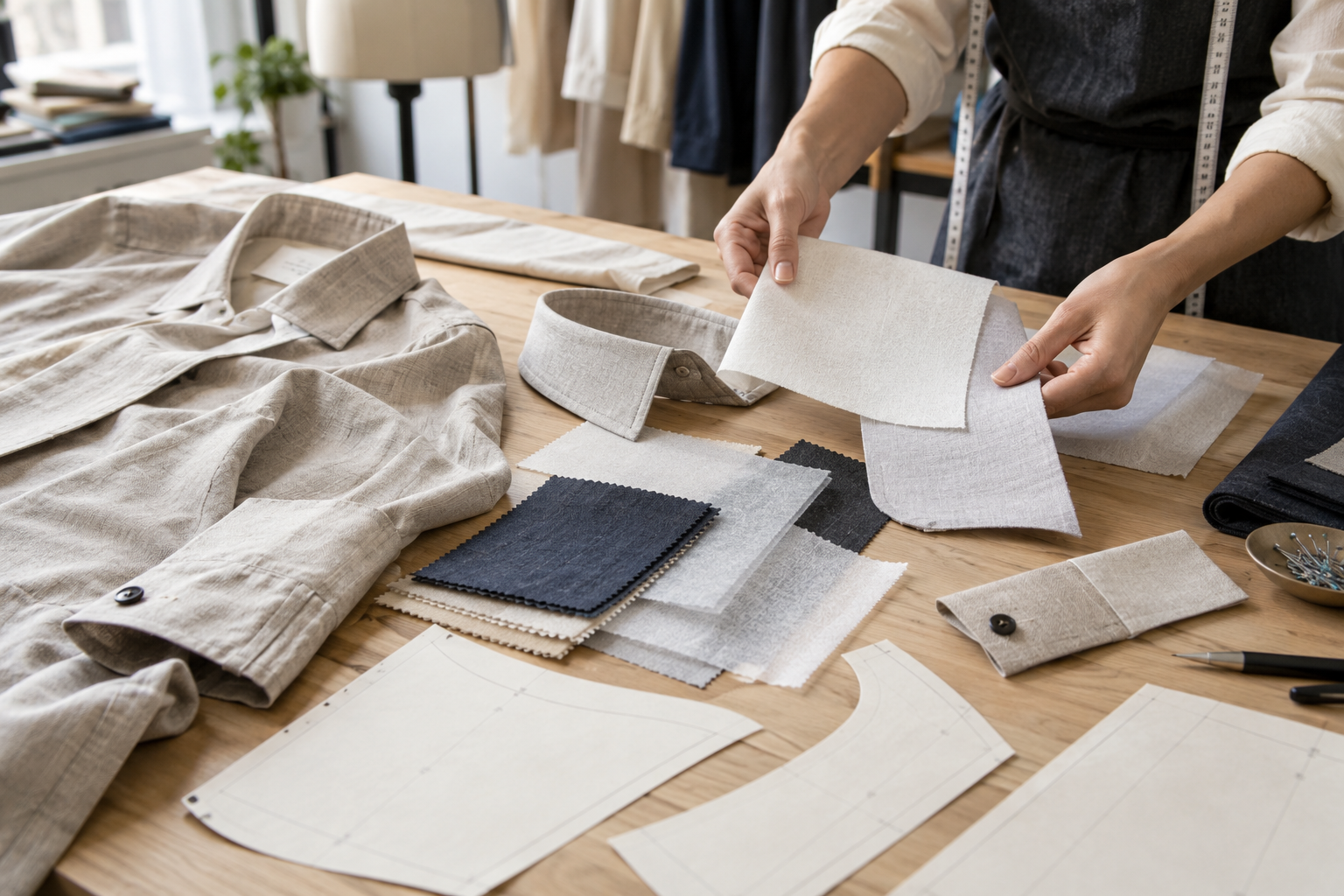
A trim card can establish a direction; a sample proves whether the direction works in the product. Request or prepare representative trim options early enough to review them in the first useful sample. This is particularly important for colour-sensitive, washed, printed, or stretch garments.
During the sample review, check the trim in context. Look at alignment, comfort, operation, attachment security, colour harmony, and whether the trim changes the garment’s balance. Open and close fastenings repeatedly. Stretch elastic areas and inspect how the fabric returns. Examine the inside as well as the outside. If a component creates puckering, bulk, sharp edges, or an unexpected noise, record the issue before production.
Keep feedback specific: identify the trim, location, observed result, and requested change. The same disciplined approach used in fit-sample feedback makes trim corrections easier to track across revisions.
Set a Clear Approval Path Before Bulk Production
Late trim changes can affect patterns, operations, quantities, packaging, and the production schedule. Establish who can approve a substitute and what must be re-approved when a component changes. A simple approval path prevents a verbal decision from getting lost between teams.
- Confirm the final trim specification and any approved physical reference.
- Review the trim in the production-intent sample, including its placement and attachment.
- Document approval in writing, with photos where they add clarity.
- Require confirmation before any change to supplier, material, colour, finish, or dimensions.
- Include trim checks in the pre-production review and final inspection plan.
Do not assume that a similar-looking component is equivalent. A substitute may change durability, colour consistency, or how a sewing operation is performed. If a change is proposed, ask what is different, why it is needed, and whether the sample needs to be updated. Your pre-production approval checklist should include the trims that are critical to function or appearance.
Common Trim Sourcing Mistakes to Avoid
The first mistake is approving from a screen only. Digital images can hide scale, sheen, texture, and colour variation. The second is forgetting components that are not immediately visible, such as zipper tape, back pieces, cord ends, or label folds. The third is separating trim decisions from garment testing. A component that seems acceptable by itself may fail when sewn into a seam, washed with the fabric, or worn against the body.
Another frequent problem is treating trim quantity as an afterthought. Build a complete list early, including each component used per garment, so buying and production discussions are based on the actual design. Finally, avoid letting several versions of the same trim reference circulate. Name the approved version clearly and keep the latest information in one controlled tech pack and BOM.
FAQ
Should a brand nominate its own trim supplier?
You can nominate a supplier when a specific component is central to your design or brand requirements. If you do, provide the item reference and allow time to confirm that it is suitable for the garment and production process. When alternatives are proposed, compare them against the written specification and sample rather than appearance alone.
When should trims be finalized?
Finalize critical trims before the production-intent sample and before bulk cutting begins. Early decisions give the team time to check compatibility, placement, and any required changes without creating avoidable rework.
What is the best way to approve a trim colour?
Use an approved physical sample whenever colour is important, and record the supplier reference or colour standard with it. Review the trim alongside the actual fabric because surrounding colour, sheen, and texture can alter how the match appears.
Make Trim Decisions Part of Production Readiness
Good trim sourcing connects creative direction with practical manufacturing. When every component is specified, tested in a sample, and approved through a clear record, your manufacturer can focus on making the garment as intended. Before your next custom clothing order, review each zipper, button, elastic, label, and finishing detail with the same discipline you apply to fabric and fit. If you are preparing a production brief, use Huilin Fashion’s custom apparel manufacturing resources to organize your questions before discussing your next collection.