Sustainable Clothing Manufacturing: A Practical Guide for Apparel Brands
Sustainable clothing manufacturing is not a single fabric choice or a label added at the end of development. For an apparel brand, it is a way of making product decisions that can be specified, sampled, checked, and communicated accurately. The work begins before a purchase order: with the product brief, materials, construction, quantities, packaging, and the records needed to support any customer-facing claim.
For emerging and established brands alike, the most useful goal is a product that meets its intended performance and aesthetic while avoiding preventable material waste, rework, and vague sustainability language. This guide explains how to turn that goal into a clearer manufacturing process.
Start with a product brief, not a broad claim
Words such as “eco-friendly,” “green,” and “sustainable” are too general to guide a factory or reassure a buyer. Begin by defining what matters for this particular style. A lightweight jersey T-shirt, a lined tailored jacket, and a stretch activewear set have different performance needs and therefore different material and construction decisions.
Write down the intended wearer, use case, target hand feel, expected care method, color range, size range, and target order quantity. Then identify the priorities that are relevant to the product. They might include durable construction, a preferred fibre content, reduced packaging, a longer wear life, or the ability to reorder a proven style. Keep the list focused. A precise brief makes trade-offs visible and prevents an unsupported claim from travelling through the supply chain.
A well-prepared apparel tech pack is the practical home for these decisions. It gives the manufacturer a consistent reference for measurements, materials, construction, labels, and packaging rather than relying on changing messages or a visual mood board alone.
Choose materials for the garment’s real life
Material selection should balance the product’s purpose with its appearance, feel, care, and repeatability. A fabric that looks right in a swatch but pills, loses shape, or changes after washing can shorten the useful life of the garment. Conversely, a durable material is not automatically appropriate if it makes the style uncomfortable or prevents the fit and drape the collection needs.
Ask questions that lead to usable specifications
- What fibre content, weight, construction, stretch, recovery, and finish are required?
- How should the garment feel and perform after the intended care process?
- Which colors and prints need approval, and could they affect hand feel or consistency?
- Is the material available for repeat orders, or is it seasonal, stock-based, or subject to a separate minimum?
- What documentation is available for a material or process before it is used in marketing?
These questions do not assume that every supplier offers the same options. They help a brand compare like with like and choose a realistic route. For a deeper material brief, use this guide to fabric selection for private label clothing alongside swatches, supplier information, and physical sample review.
Design to reduce avoidable rework and waste
Many production problems are set in motion by incomplete decisions rather than by sewing itself. Last-minute changes to a neckline, artwork scale, trim color, label placement, or packaging can require new samples, replacement materials, or a revised production plan. Thoughtful design development helps reduce those loops.
Start with a manageable number of colorways and material combinations. Where it makes sense for the collection, shared fabrics, trims, and components across related styles can simplify approvals and reorders. This does not mean every range must look minimal; it means that each variation should have a reason and a documented specification.
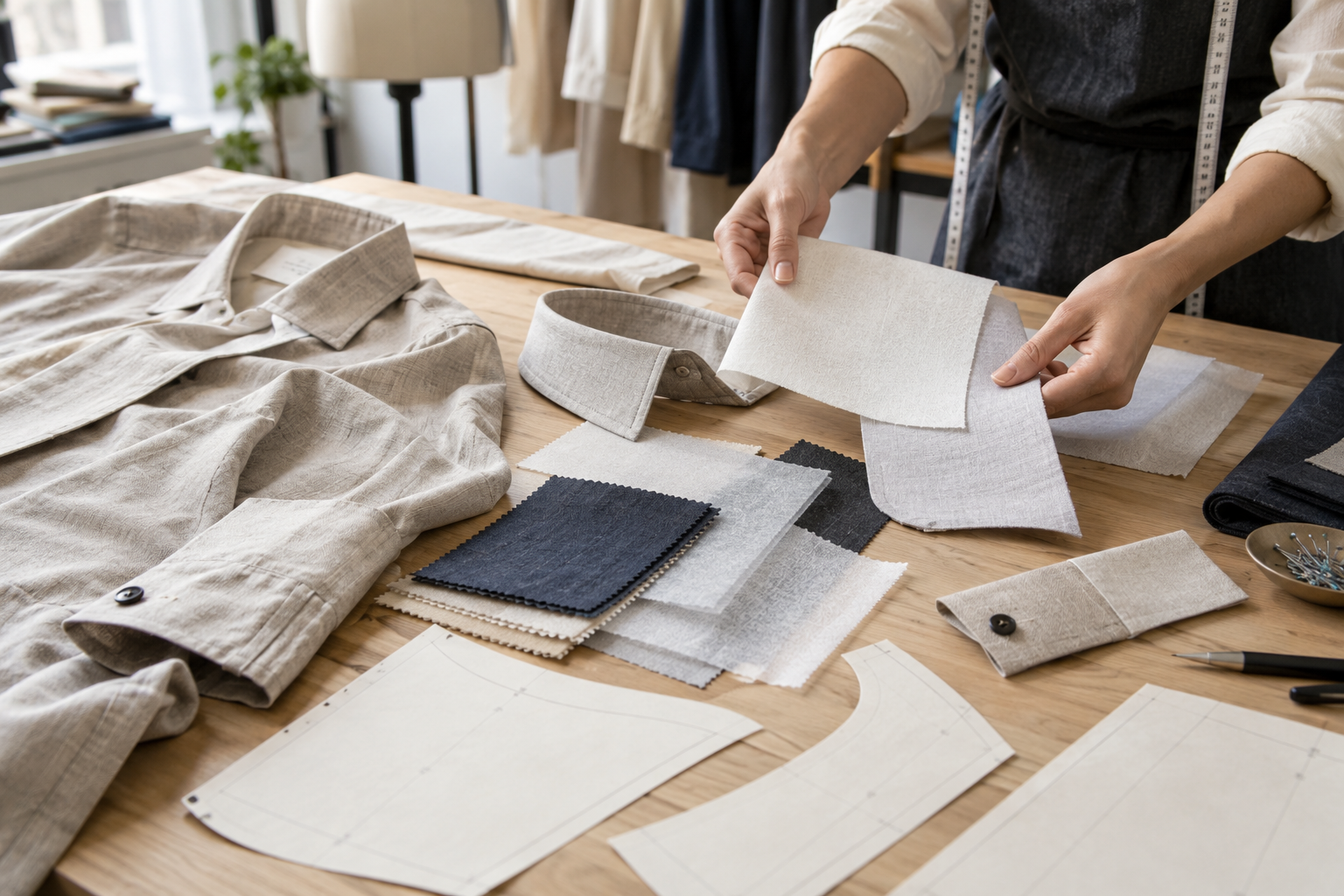
Construction details deserve the same attention as the main fabric. Seam type, reinforcement, lining, pocket bags, elastic, closures, and edge finishing affect comfort and longevity. The manufacturer needs these decisions recorded before bulk production. Review the relevant garment construction details with the product’s use case in mind, particularly at high-stress areas such as armholes, crotches, openings, and pockets.
Use samples to test decisions, not just to approve appearance
A sample is the best place to discover whether the plan works in three dimensions. It can reveal a fabric that becomes transparent under stretch, a collar that rolls after washing, a print that sits differently on a finished garment, or a measurement that needs adjustment across sizes. Treat each sample stage as a decision point with a defined purpose.
Before sending feedback, compare the sample to the tech pack and note the issue, location, desired correction, and whether it applies to all sizes or colors. Marked photos and a single consolidated feedback file are usually easier to act on than scattered comments. This approach also creates a traceable path from the approved sample to the production specification.
Fit should be reviewed on the intended body or a suitable fitting form, in the size the brand has selected for approval. If the range includes more sizes, identify where grading needs special attention. This fit sample feedback guide can help turn observations into clear, actionable comments.
Plan quantities, color, and packaging together
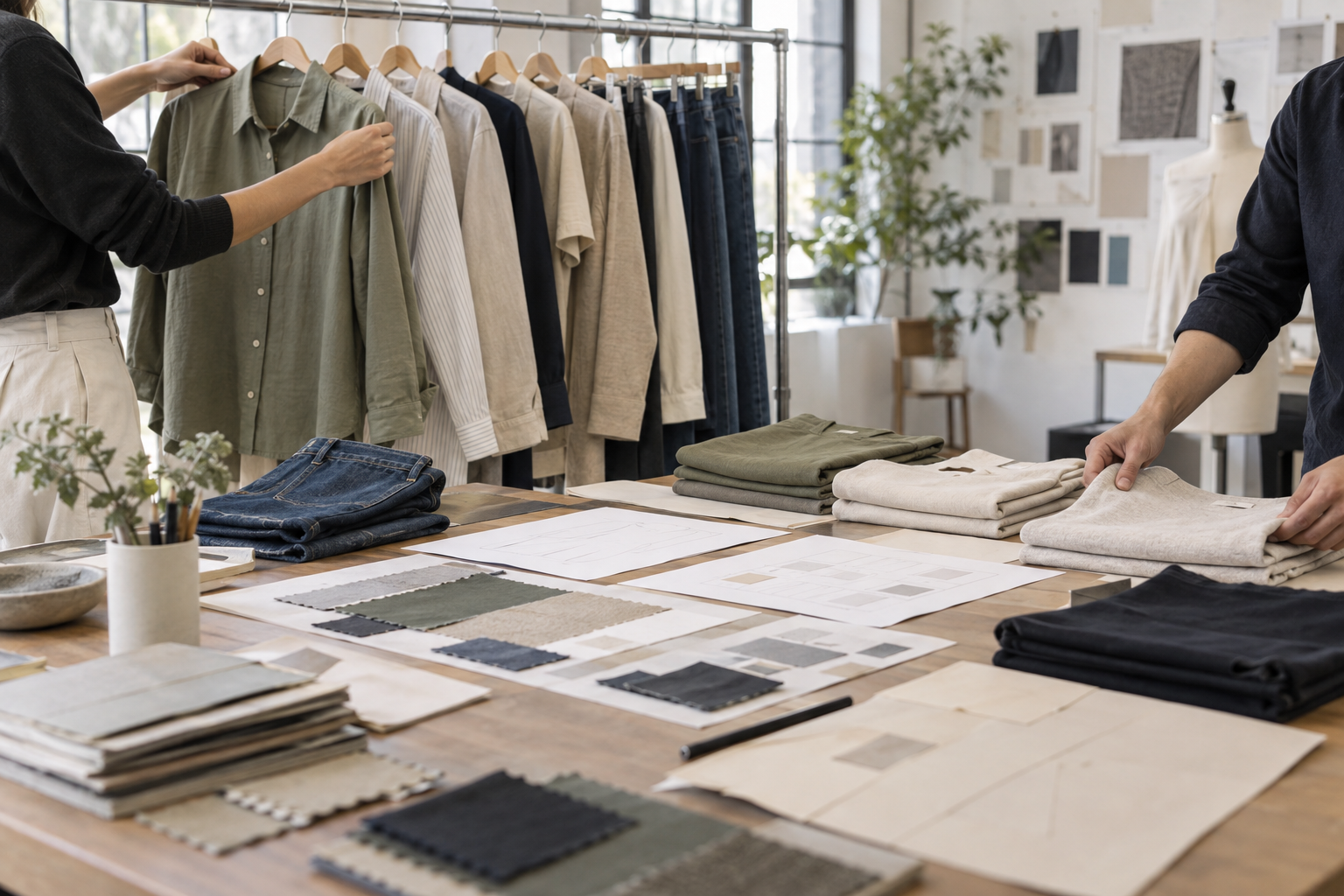
Sustainable clothing manufacturing also involves choosing a production plan that the brand can manage. An overly broad size-color matrix can create slow-moving variants and make reorders less predictable. Review past demand where it exists, set a rational initial assortment, and understand any material, dye, trim, or packaging minimums before confirming quantities.
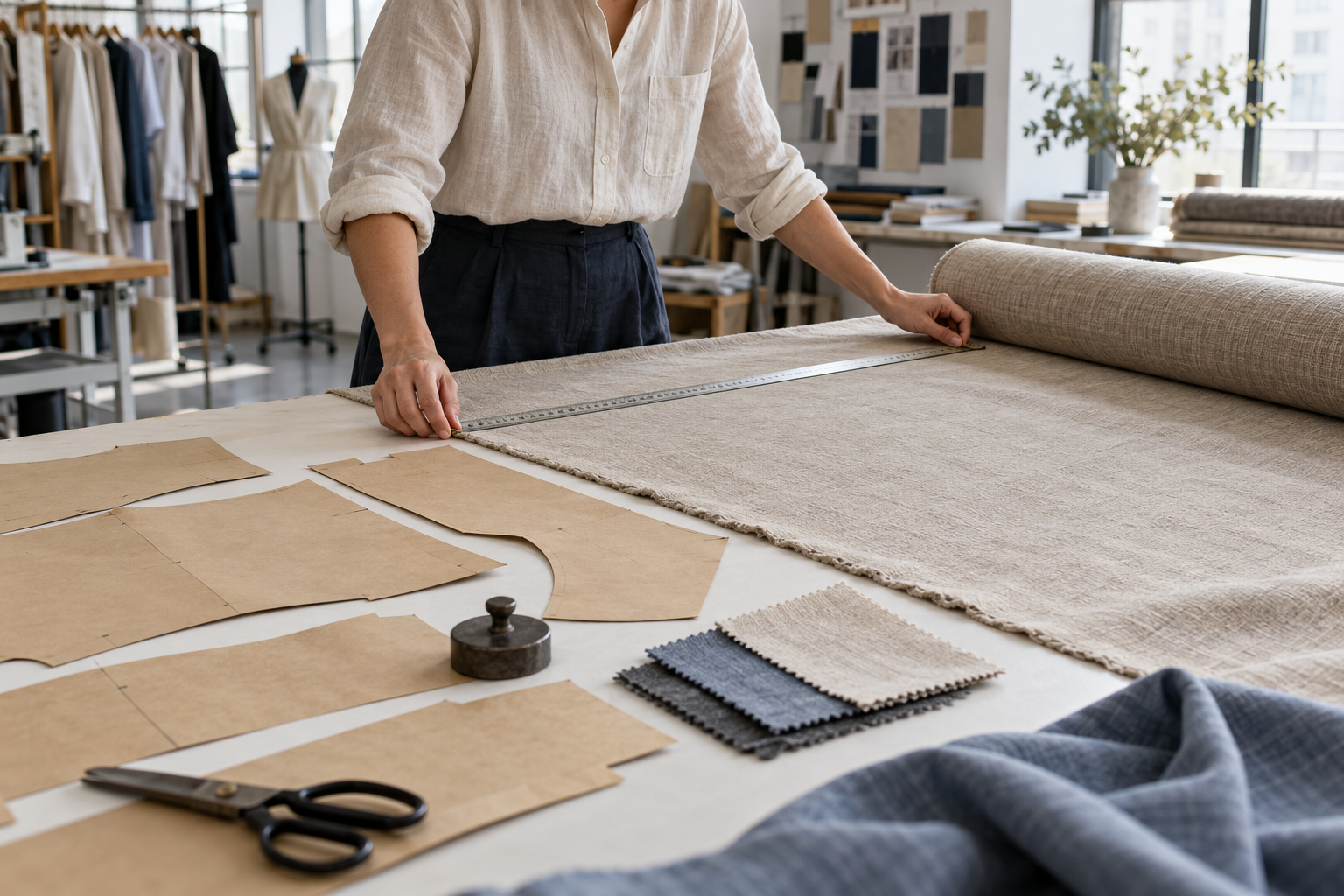
Color must be controlled before bulk cutting. A color name is not a production standard. Approve physical standards or lab dips when relevant, record the accepted reference, and clarify how variations will be reviewed. The same principle applies to printed artwork and trims: approval should reflect the actual material and technique rather than a screen preview alone.
For packaging, specify what is necessary to protect the garment and support the customer experience. Define folding, polybag requirements if used, size stickers, hangtags, cartons, and shipping marks. Avoid implying that a packaging format has a particular environmental benefit unless the underlying information supports that claim.
Build a production handoff that can be checked
The transition from development to bulk production is where a promising concept becomes an operational product. Before production begins, gather the approved sample, final measurements, bill of materials, artwork files, label and packaging specifications, color references, and written comments that resolved earlier issues.
Use a pre-production review to confirm that the factory and brand are working from the same version. It is useful to check the approved sample against the latest documents, not against memory. The pre-production approval checklist provides a practical structure for this handoff.
Agree in advance how the brand wants to receive updates and how a question should be escalated. Clear communication is particularly important if a material substitution, shade variation, or construction issue appears. A fast, documented decision can avoid inconsistent production; an informal assumption can create costly rework.
Make claims only when the evidence supports them
Responsible marketing is part of responsible sourcing. A brand should keep the source information, specifications, and approvals that support its statements about a garment. The evidence needed depends on the exact claim and the market where the product is sold. If the evidence is incomplete, use narrower factual language or wait until the information is available.
For example, it is safer to describe a verified material composition than to make an unqualified claim about a garment’s overall impact. A product story can still be compelling when it explains tangible design choices: a durable construction, a carefully selected material, a considered fit, or a planned reorder program. Accuracy builds more confidence than a sweeping promise.
A practical sustainable clothing manufacturing checklist
- Define the wearer, use case, performance needs, and the few priorities relevant to the style.
- Document fabric, trim, construction, labeling, and packaging requirements in the tech pack and bill of materials.
- Request and review swatches, color references, and any material information before communicating product claims.
- Sample the garment, test its real fit and care needs, and consolidate feedback in writing.
- Confirm the size-color assortment, material availability, and all applicable minimums before placing an order.
- Complete a pre-production approval using the final, consistent set of documents and approved references.
- Retain the records that support how the product is described to customers.
FAQ
What does sustainable clothing manufacturing mean for a startup brand?
For a startup, it means making deliberate, documented choices that suit the product and budget: selecting materials carefully, approving fit and construction before bulk production, reducing avoidable revisions, and using only claims the brand can support. It does not require making broad promises or launching an overly complex first range.
Is one “sustainable” fabric enough to make a garment sustainable?
No. Fabric is important, but a garment’s durability, fit, construction, care, trim, packaging, production planning, and the accuracy of its claims also matter. Evaluate the whole product brief rather than relying on one descriptor.
How can I reduce sample revisions?
Provide a complete tech pack, approved material references, clear measurement and construction details, and consolidated sample feedback. Each sample should answer specific questions so the next revision has a clear purpose.
What should I ask a clothing manufacturer before production?
Ask how the approved sample, bill of materials, measurements, colors, artwork, trims, labels, packaging, and production comments will be checked before bulk work begins. Also clarify how questions and potential substitutions will be communicated.
Bring a clearer brief to your next collection
Sustainable clothing manufacturing becomes more practical when a brand turns intentions into specifications and approvals. If you are preparing a custom apparel collection, contact Huilin Fashion with your tech pack, reference images, material direction, size range, and expected quantity to begin a more focused production conversation.