Wholesale Apparel Manufacturing: Preparing a Buyer-Ready Collection
A wholesale meeting is not simply a styling exercise. Buyers need to see a coherent range, understand what each style is, and feel confident that the collection can be translated into an orderly production handoff. For an emerging apparel brand, that means connecting creative direction with the practical decisions that make wholesale apparel manufacturing easier to manage.
A buyer-ready collection does not need to be large. It needs to be deliberate. Each style should have a role, the materials and colors should work as a system, and the information behind the samples should be clear enough to support accurate costing, ordering, and follow-up. The guide below helps brands prepare that bridge before they approach a clothing manufacturer or present a range to wholesale partners.
Start with a range that has a clear job
Wholesale buyers often assess a collection as a group before they examine individual garments. Begin by deciding what the range is meant to accomplish: introduce a new season, establish a core category, test a new customer, or offer coordinated replenishment pieces. This decision helps prevent a collection from becoming a series of unrelated samples.
Give every style a defined role. For example, a range may include an attention-getting piece, a dependable core style, a layering option, and an easy add-on. The roles will vary by brand, but naming them makes editing more objective. If two styles solve the same problem, decide whether both are necessary before time and sampling effort are committed.
Use a concise range map
A simple range map can list the style name or code, category, target customer use, fabric, color options, planned sizes, and the relationship to the other pieces. It is not a replacement for development documents; it is a decision tool. It also gives a manufacturer useful context when reviewing the collection sequence.
As the range takes shape, keep a buyer-facing apparel line sheet in mind. A line sheet should make the assortment understandable at a glance, while the factory requires deeper specifications behind it. Keeping those two purposes distinct avoids crowding a sales document with production notes or leaving production without the details it needs.
Build consistency before developing every variation
Consistency is where a collection starts to feel intentional. It can come from repeatable silhouette proportions, a controlled material story, compatible colors, shared trims, or a recognizable level of finish. The aim is not to make every garment identical. It is to make the customer understand why the pieces belong together.
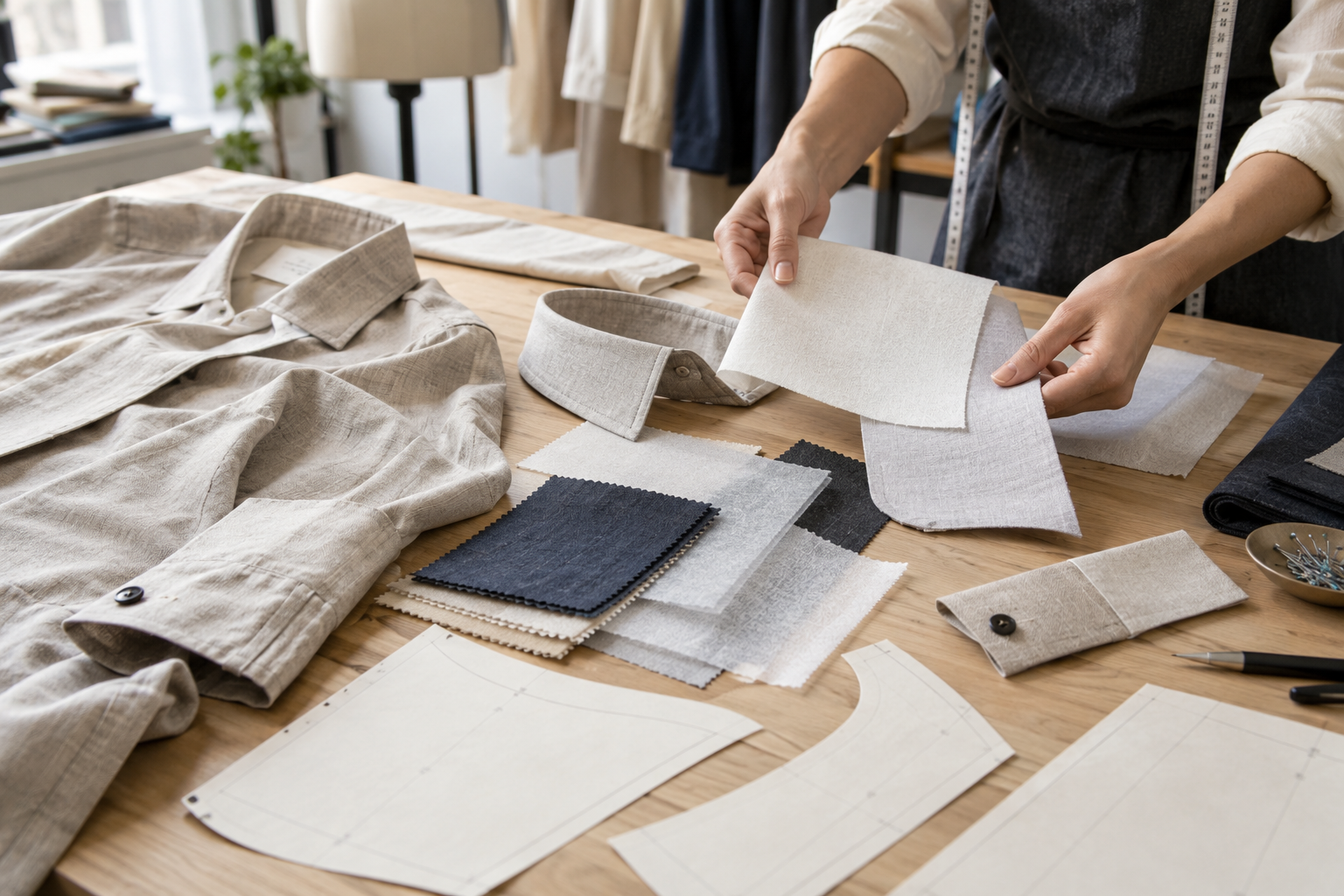
Choose a focused material palette early. When several styles can use related fabrics, linings, buttons, labels, or thread colors, approvals and substitutions are easier to track. However, do not force a material into a role it cannot perform. A fabric that suits a relaxed overshirt may not provide the recovery, opacity, or drape required by another style. Record the desired performance for each garment rather than relying on a fabric name alone.
Color planning needs the same discipline. Define the core colors, any seasonal accents, and which colorways apply to each style. Reference physical swatches or agreed color standards when available. A clear approval record helps the team distinguish a creative change from an unintended production variation later.
Turn samples into decision-making tools
Samples are most valuable when each review has a specific purpose. A first sample may answer questions about proportion and construction; a later sample may confirm fit, fabric behavior, trim placement, or finishing. Before each review, prepare a short list of questions so feedback is not limited to a general impression.
Review the full assortment as well as each garment. Hang related styles together, compare sleeve and body proportions, look at color balance, and assess how fabrics behave side by side. A piece that works alone can look out of place within the range. Equally, an attractive sample may still need a change if its measurements, construction, or approved components are not documented clearly.
Keep feedback consolidated and versioned. Mark whether each point is an observation, a required revision, or an approved detail. A structured feedback process helps reduce conflicting comments and gives the manufacturer one reliable source for the next action.
Create the production information behind the presentation
A buyer can respond to a sample quickly; production needs a more complete record. Before confirming a wholesale order, make sure every intended style has current information on measurements, construction, material composition, trim specifications, labeling, packaging direction, colorways, and size range. The level of detail should be sufficient for a manufacturer to identify questions before bulk work begins.
A tech pack is a practical home for much of this information. It can connect sketches, points of measure, graded size requirements, stitching notes, artwork placement, and a bill of materials. The goal is not to create a document that looks complicated. The goal is to prevent the production team from having to guess. Brands building or revising their documents can use this apparel tech pack guide as a starting point.
Make changes visible
Collection development is iterative, so change control matters. Use a revision date or version identifier for each style document and keep a record of what changed: a new fabric, revised measurement, updated label placement, or removed colorway. When a decision affects more than one style, update the range map and supporting documents together. This small habit prevents an old sample, an outdated line sheet, and a current purchase order from telling three different stories.
Check commercial readiness without inventing certainty
Before a brand takes orders, it should know what information is confirmed and what remains open. Avoid presenting estimates as promises. If a material, trim, color, or construction detail is still under review, flag it internally and resolve it with the relevant supplier or manufacturer before it becomes a buyer expectation.
For each style, clarify the order information a production partner will need: style code, confirmed colorways, size breakdown, quantity by variant, approved sample reference, packaging direction, shipping or delivery requirements, and the named contact responsible for approval. A production-ready apparel purchase order gives this information a consistent format once orders are placed.
It is also useful to separate collection-level decisions from order-level decisions. The collection defines the designed assortment; each order defines the actual mix a buyer selected. Maintaining that distinction helps a brand track which colors and sizes are approved for the line versus which are being requested for a particular run.
Prepare for the manufacturer conversation
A clothing manufacturer can give more useful guidance when the brand shares a well-organized brief. Send the range overview alongside the technical information for the priority styles. Identify which details are fixed, which alternatives are acceptable, and which questions need a recommendation. This makes it easier to discuss construction feasibility, material options, sample sequence, and the information needed for a quote without overstating what has already been finalized.
For a first outreach, use a focused manufacturer inquiry brief. Include enough context for the recipient to understand the collection, but keep source files orderly and current. A manufacturer should not have to choose between several similarly named versions of the same drawing.
A practical buyer-ready collection checklist
- Every style has a defined role within the collection.
- Fabric, color, and trim choices support the range and are tracked by version.
- Samples have been reviewed both individually and as an assortment.
- Feedback and approvals are consolidated into current production documents.
- The line sheet communicates the assortment clearly without replacing technical specifications.
- Order inputs can be captured accurately for each buyer and variant.
- Open decisions are visible rather than presented as confirmed facts.
FAQ
How many styles should a wholesale apparel collection include?
There is no universal number. Start with the smallest assortment that expresses the brand’s point of view and gives each style a clear role. A focused collection with complete information is generally easier to present and manufacture than a larger range with unresolved details.
Should I finalize samples before speaking with a manufacturer?
Not necessarily. A manufacturer can be involved while materials, construction, and sample details are being developed. Share what is known, identify open questions, and keep formal approvals clear before bulk production.
What is the difference between a line sheet and a tech pack?
A line sheet is a concise sales and assortment reference. A tech pack is a production document containing the specifications needed to develop and make a style. Both should agree on the basic product information, but they serve different readers.
Move from collection concept to production-ready clarity
Wholesale apparel manufacturing becomes more manageable when a collection is treated as a connected system: a thoughtful range, samples with a purpose, current specifications, and orderly order information. That preparation supports clearer conversations with both buyers and production partners.
If you are organizing a new apparel collection for development, contact Huilin Fashion to discuss your product brief, samples, and next production steps.