Apparel Fabric Consumption Planning: A Practical Guide for Clothing Brands
Fabric consumption is one of the most useful planning inputs a clothing brand can bring to product development. It connects design choices to material purchasing, costing conversations, sample preparation, and later production approvals. A reliable estimate is not a promise of final usage; it is a documented working assumption that becomes more accurate as the pattern, fabric, and size range are confirmed.
For brands sourcing custom apparel, the goal is not to guess a single number early. It is to give a manufacturer the right context, ask the right questions, and keep a clear record of what changes the estimate. This guide explains how to plan apparel fabric consumption before bulk production without treating early calculations as final commitments.
What apparel fabric consumption means
Apparel fabric consumption is the amount of a main fabric needed for a garment or a planned assortment. It may be expressed as length per garment, weight per garment, or a total requirement for an order. The most useful unit depends on the material: a woven fabric is often discussed by length and usable width, while knitted materials may also be tracked by weight.
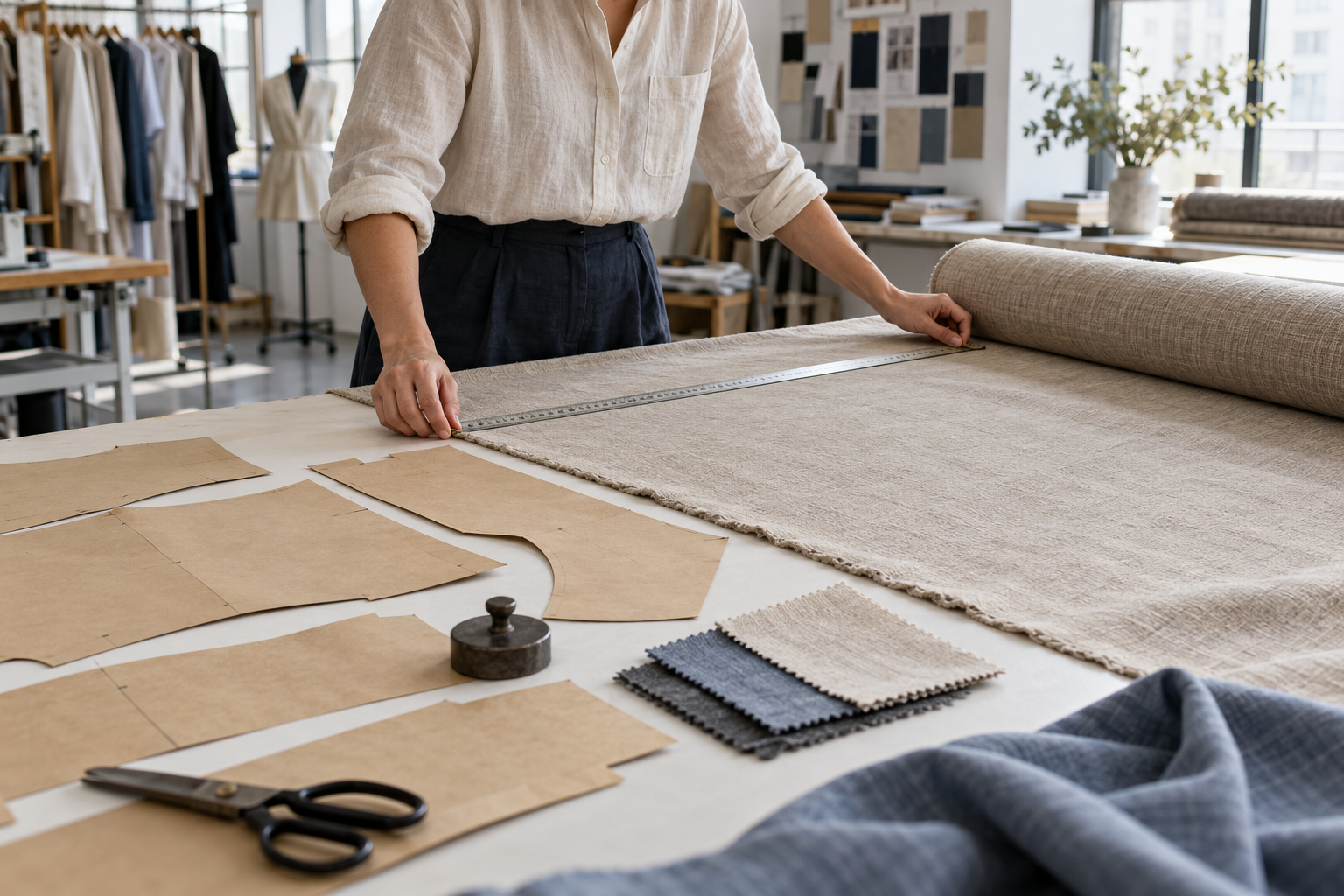
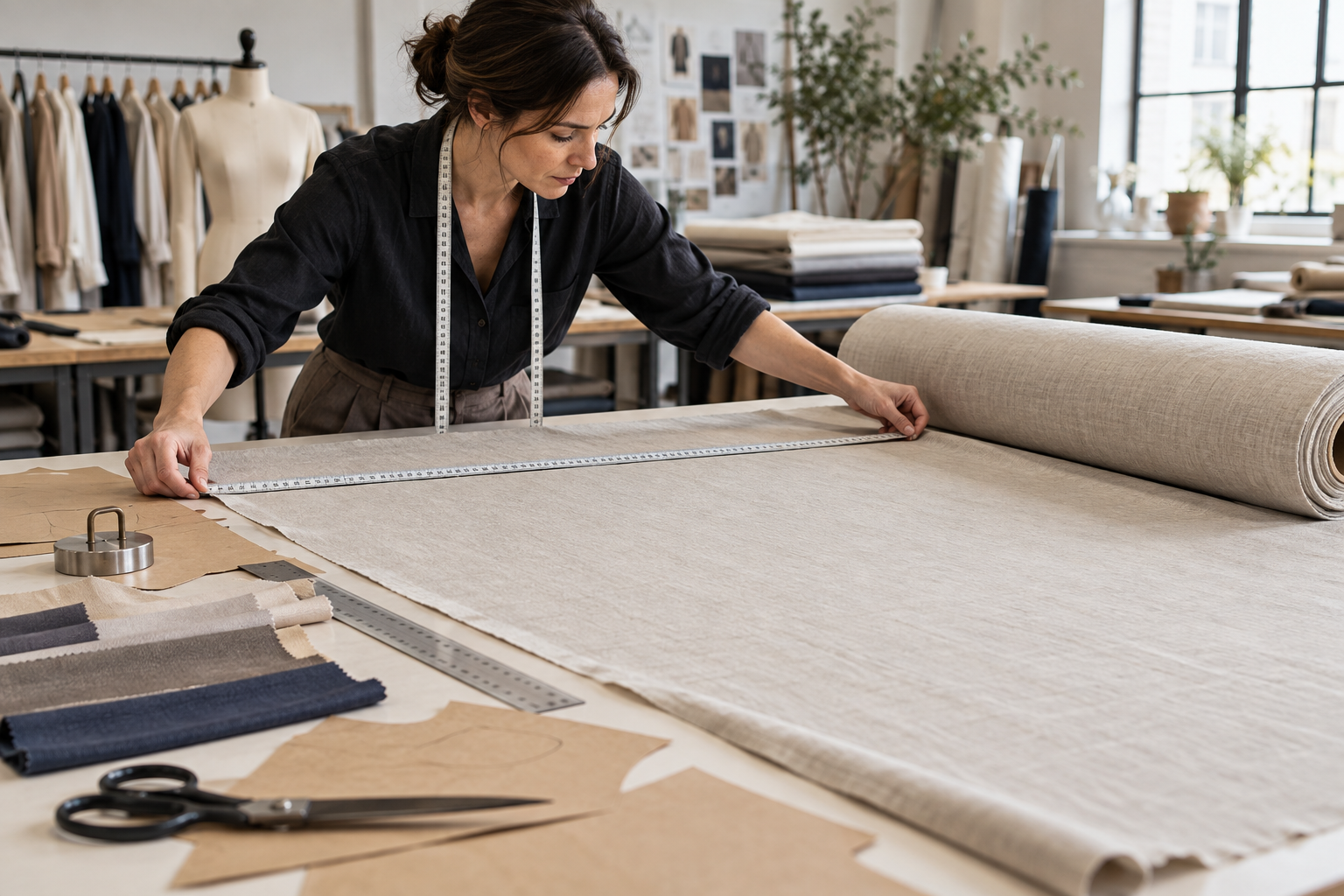
A preliminary estimate usually starts with the garment pattern and a proposed size. A production-ready figure depends on a completed marker or layout that places all pattern pieces across the actual usable fabric width. The distinction matters. A neat sketch, a sample, or a supplier’s broad estimate can guide an early discussion, but it does not replace a confirmed production marker.
Separate main fabric from every other material
Keep the main body fabric separate from lining, pocketing, rib, contrast panels, bindings, labels, elastic, and trims. Combining them into one vague “fabric” line makes it harder to review alternatives or understand what changes when a design is revised. A simple bill of materials creates a better home for each component and makes revisions easier to trace.
Inputs that change fabric consumption
Two garments that look similar can require meaningfully different material layouts. Build your estimate around the actual development inputs rather than a comparison garment alone.
Pattern pieces and garment construction
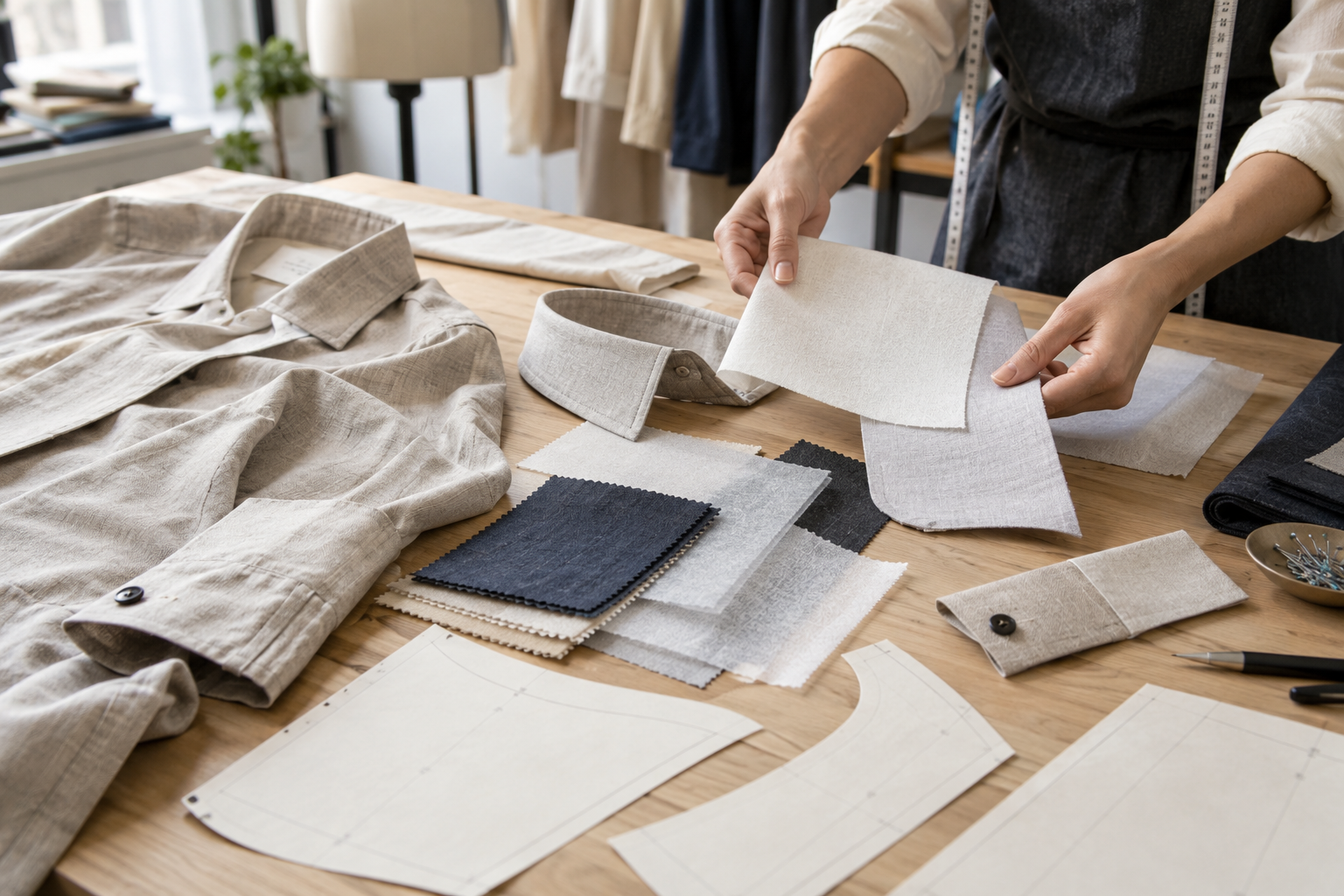
More panels, shaped seams, large collars, facings, hoods, patch pockets, belt loops, and wide hems all influence the layout. A style with a simple visual silhouette may still have many pieces once the inside construction is included. Provide construction details and, when available, pattern files or a technical package. The pattern itself is central to the calculation, so it helps to understand the development stages described in this garment pattern making guide.
Usable fabric width, not only nominal width
Fabric is sold with a stated width, but the edge area may not always be suitable for every pattern piece. Selvages, uneven edges, or a specification that defines a narrower usable area can affect the marker. Record the supplier’s stated width and ask which width should be used for planning. The selected material’s construction and finish matter too, so keep the agreed specification close to the estimate; this fabric selection guide offers a helpful starting point.
Grain, direction, and design placement
Pattern pieces normally follow a specified grain direction. Stripes, plaids, directional prints, nap, pile, shading, or placed artwork can reduce the flexibility of a marker because pieces must align or face the same way. A print that continues across a seam can add another constraint. Name these requirements in writing, and share the repeat size or artwork placement reference where relevant.
Size range and grading
Consumption is rarely identical across a size range. Larger sizes can need longer or wider pattern pieces, and the size mix in an order affects the total. Avoid applying one sample-size estimate to every unit. Instead, identify the base size, list the intended size range, and request consumption by size or by agreed size group when the pattern is ready.
Fabric behavior and finishing
Shrinkage, relaxation, stretch recovery, and finishing can change the fabric available to cut or the way pattern dimensions are prepared. These are material-specific questions, not automatic percentages to add without evidence. Ask how the approved fabric will be evaluated and document the agreed approach. This fabric shrinkage guide can help teams frame that conversation.
A practical workflow for early planning
1. Create a clearly labeled starting brief
Start with a product image or sketch, target sample size, measurement chart, construction notes, fabric composition, expected weight or quality, stated width, and any print or matching constraints. Mark unknowns as unknown. This is better than presenting an early estimate as settled information, because it tells the development team where confirmation is still needed.
2. Request an estimate with its assumptions
When discussing fabric consumption with a manufacturer or material supplier, ask them to state the base size, fabric width, pattern status, and any allowances or limitations used in the estimate. A useful response distinguishes a preliminary planning figure from a marker-based figure. Save the assumptions next to the number so later revisions can be traced.
3. Compare design alternatives before locking them
Consumption can be a useful design decision tool. For example, a contrast yoke, a different pocket shape, a shorter sleeve, or a changed hood construction may affect the material layout. Compare options using the same fabric and size assumptions. Do not choose solely on the lowest estimate: fit, function, appearance, and manufacturability matter as well.
4. Review after the first pattern and sample
Once a pattern exists, re-check the early figure against the sample and the latest construction. Sample feedback may change length, ease, pocket dimensions, seam details, or the size chart. Capture the revision and ask whether it affects consumption. This creates a clean handoff between product development and costing.
5. Confirm the production basis before material purchase
Before bulk fabric is purchased or allocated, make sure the approved fabric, width, colorway, pattern version, size range, and order mix are visible in the production record. Confirm whether the final figure is based on a production marker and whether any design-specific matching rules were included. The purpose is alignment, not false precision.
How consumption supports better costing conversations
Fabric consumption is only one part of garment cost, but it is a major input to a useful discussion. Pair it with the correct fabric specification, colorway, finish, and order quantity. If a change is being considered, identify exactly which input changes rather than asking for a general “new price.” For a broader framework, use this apparel costing sheet guide alongside the consumption record.
Keep source documents versioned. A material quote tied to one width, composition, or finish may not apply after another is selected. Likewise, a consumption figure developed for a solid fabric may not carry over to a plaid that requires matching. Clear records make it easier for a buyer to compare like with like.
Common planning mistakes to avoid
- Treating a sample-size estimate as the full order total. Account for the size range and order mix.
- Using nominal width without confirming usable width. Record both when the supplier provides them.
- Ignoring directional or matching constraints. Flag stripes, plaids, nap, repeats, and placement requirements early.
- Mixing components into one number. List main fabric, lining, and contrast materials separately.
- Leaving revisions undocumented. Tie every refreshed estimate to a pattern, fabric, and specification version.
A buyer-ready consumption worksheet
A concise worksheet can prevent many misunderstandings. For each style, include the style name and version, base size, size range, fabric code and composition, supplier-stated width, usable width if confirmed, colorway, construction notes, pattern status, matching restrictions, preliminary or marker-based status, date, and owner. Add a separate line for each material component. If an estimate changes, preserve the earlier version and note why.
This format gives a clothing brand a practical way to ask focused questions before a purchase decision. It also helps a manufacturer review a request without inferring important product details. When your range is ready to move forward, share the worksheet with the latest tech pack and request that open assumptions be confirmed before production planning.
FAQ
Is fabric consumption the same as fabric yield?
They are related but not identical. Consumption describes the material needed for a garment or order. Yield generally describes how efficiently fabric is used in a layout or marker. Ask the party preparing the estimate how each term is being used, because reporting conventions can vary.
Can a manufacturer estimate fabric consumption before a pattern is finished?
Yes, an early estimate can support planning if it is labeled as preliminary and includes its assumptions. A confirmed production figure should be reviewed after the pattern, approved fabric details, and relevant size information are available.
Should brands add an arbitrary buffer to every estimate?
It is better to discuss the reason for any allowance than to apply a universal number. Material behavior, matching requirements, order mix, and the stage of development all affect what needs to be considered.
What should a brand send for a consumption review?
Share the latest tech pack or construction brief, measurement chart, size range, fabric specification and width, colorway information, and any stripe, plaid, print, or placement requirements. State which elements are still provisional.
Turn an estimate into a clearer production decision
Thoughtful fabric consumption planning gives your team a shared language before bulk production. Bring together the latest product details, fabric information, and size plan; label preliminary figures honestly; and confirm the final basis as development progresses. If you are preparing a custom apparel inquiry, include this worksheet with your specification package so the conversation can begin with the details that matter.