Fabric Width for Clothing Production: A Practical Guide for Apparel Brands
Fabric width is one of the quiet details that shapes how a style moves from a sketch to a production-ready order. It influences how pattern pieces can be laid out, which print direction is workable, how much material a style may need, and whether the approved sample can be repeated consistently. For a brand buyer, treating width as a line on a fabric sheet rather than a development decision can create avoidable questions later.
This guide explains how to discuss fabric width with a clothing manufacturer, what to record in a tech pack, and how to turn an early fabric choice into a clearer production handoff. The goal is not to estimate a garment’s final material requirement from a generic rule, but to give your team the inputs needed to validate the style properly.
Start with the difference between nominal and usable width
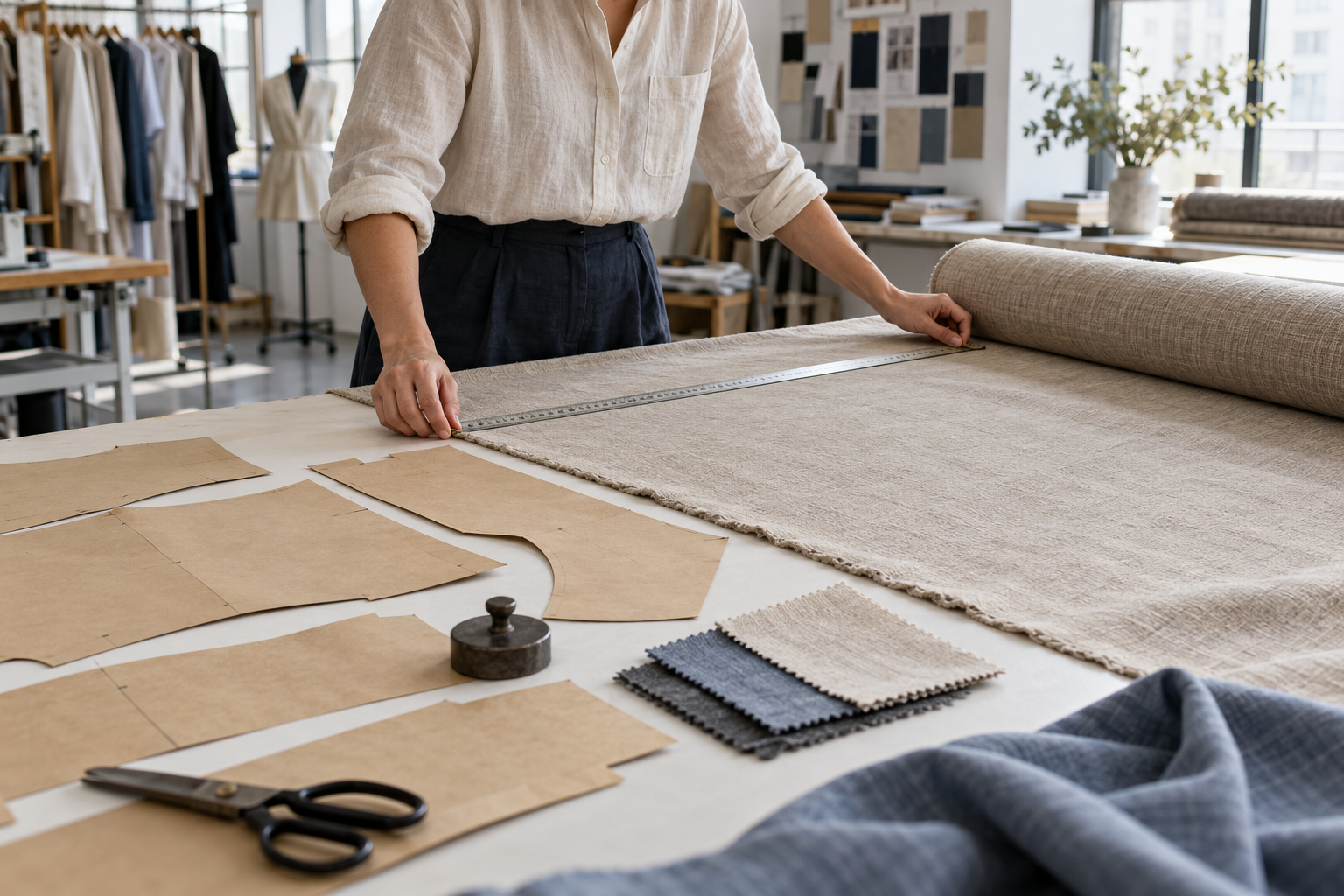
Suppliers may describe a fabric by its nominal width: the approximate width of the roll from edge to edge. That figure is helpful, but it does not always equal the space available for pattern placement. The edges can include selvedges, uneven areas, coating variation, or zones that a cutter should avoid. Usable width is the practical cutting area after those considerations are understood.
Ask for both figures in writing. A simple fabric record can include the nominal width, usable width, construction, composition, color reference, and the date or version of the submitted swatch. This keeps a conversation about width connected to the exact material being reviewed rather than to a vague fabric name.
Why usable width deserves its own field
A few centimeters of unusable edge may not matter for one small pattern piece, yet it can change how an entire marker is arranged. This becomes more important when a style has long panels, wide sleeves, a bias component, or a large placement print. Recording usable width early lets the pattern and cutting teams evaluate the real working area instead of assuming every edge of a roll is available.
Connect width to the pattern before approving the fabric
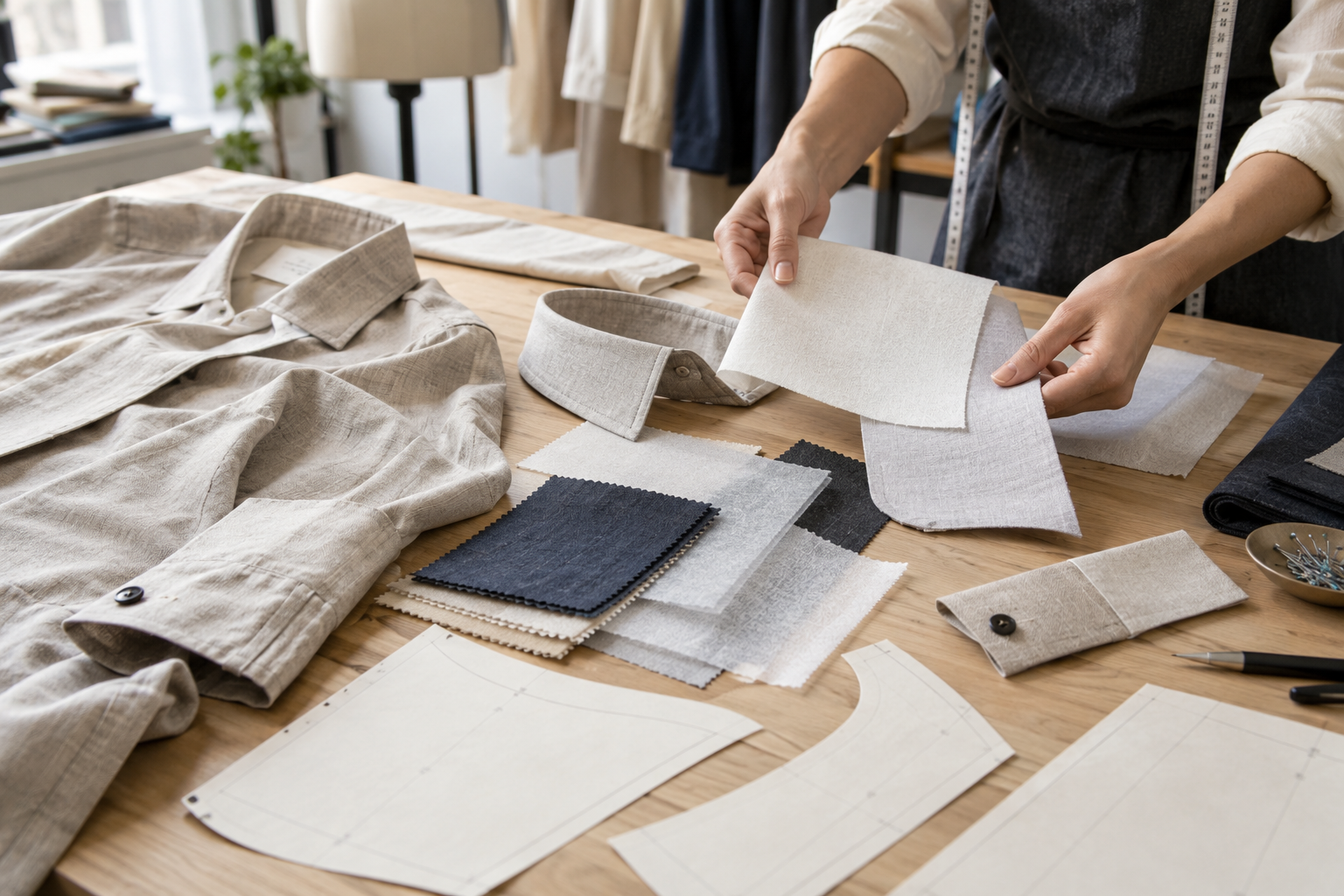
The pattern is where fabric width becomes a product-development input. Each piece has a grainline, direction, size, and cutting requirement. A pattern maker can use those details to test whether the pieces fit efficiently within the stated usable width. This is often called marker planning or marker making.
Brands do not need to create the marker themselves, but they should provide enough information for a meaningful review. Your pack should identify the approved sample size, all intended sizes, whether pieces must be cut on the straight grain or bias, and whether left and right pieces need to be mirrored. A complete garment pattern is the foundation for that review.
For early development, it is reasonable to ask the manufacturer which fabric-width range they are evaluating. Before bulk production, replace that range with the width associated with the approved fabric submission. This helps prevent a sample from being made with one roll format while the production conversation assumes another.
Plan for directional fabrics, stripes, and placement prints
Not every fabric can be turned freely during cutting. One-way nap, brushed surfaces, directional prints, borders, stripes, plaids, and engineered artwork all constrain placement. A fabric may technically be wide enough for a pattern piece, but the piece may need to face a particular direction or align with another piece. That can reduce layout flexibility.
For these styles, add clear visual instructions to the tech pack. Show the intended stripe match, print location, or direction with annotated flats or artwork files. State whether the design is acceptable with a conventional repeat or needs a specific match across seams. When decoration is involved, keep the material plan and artwork placement instructions together so the cutting requirements are visible to every reviewer.
Do not treat sample width as a permanent production assumption
Sampling is an opportunity to learn, not a guarantee that every future roll will arrive with identical characteristics. A sample yardage or development cutting may be supplied from a small roll, an available stock lot, or a different stage of a fabric program. Before a bulk order is released, reconfirm the specified usable width against the material selected for production.
Also discuss changes that can affect the effective cutting area. Relaxation, finishing, washing, and shrinkage may influence how a fabric behaves after it is received or processed. The relevant question is not simply “What is the width?” but “At what stage was this width measured, under which handling conditions, and does it match the approved development record?” Your material notes should sit alongside the shrinkage checks outlined in a fabric shrinkage approval process.
Give the manufacturer a production-ready width brief
A concise width brief makes it easier for the manufacturer to raise the right questions before cutting. It does not need to be complicated. The useful point is to connect the fabric record, pattern requirements, and approval status in one version-controlled place.
Include these details in the tech pack or material sheet
- Fabric supplier or material reference, color reference, composition, and construction.
- Nominal width and confirmed usable width, with the unit stated clearly.
- Whether the width was taken before or after washing, finishing, or relaxation.
- Grainline, nap, stripe, plaid, border, or print-direction requirements.
- The approved sample size and the intended size range.
- Any pieces that are especially wide, long, bias-cut, paired, or placement-sensitive.
- The source, date, and approval status of the fabric swatch or roll information.
Use the same document version across design, development, and production contacts. If width changes, record the revision and ask what needs to be rechecked: marker efficiency, material requirement, artwork placement, sample fit, or a combination of these. A documented change is far easier to review than a width adjustment mentioned only in a message thread.
Ask questions that lead to a useful review
Good questions are specific enough to be answered and open enough to uncover constraints. Instead of asking whether the fabric is “enough,” ask:
- What usable width is being used for the marker review?
- Are selvedges or other edge areas excluded from cutting?
- Does the print, stripe, nap, or grainline reduce placement options?
- Which pattern pieces drive the layout?
- Is the review based on the approved sample size and all planned sizes?
- What should be reconfirmed if the production fabric width differs from the development fabric?
These questions invite the manufacturer to explain the assumptions behind the plan. They also give your brand a practical approval trail without asking anyone to make unsupported promises about final consumption or outcomes before the actual material and marker are confirmed.
Use a staged approval process
Width decisions work best when they are reviewed at the same points as other fabric and sample decisions. First, identify the intended width range while sourcing. Next, test the chosen material against the pattern during sample development. Then, before bulk cutting, confirm the usable width and all directional requirements against the approved production material. Finally, keep that approved record with the order’s production documents.
This sequence supports better communication across teams. It also keeps width in context with fabric weight, stretch, recovery, color, finish, and construction. If your team is still defining the fabric itself, use a fabric weight (GSM) guide alongside the width record so the key material variables are considered together.
FAQ: Fabric width for clothing production
Is fabric width the same as usable width?
Not necessarily. Fabric width can describe the full roll width, while usable width is the portion considered suitable for placing pattern pieces. Ask for both so cutting assumptions are clear.
Why can the same style need a width review for each fabric?
Different fabrics can vary in width, edge condition, stretch, print direction, and surface behavior. Those differences can change how pattern pieces are arranged, even when the garment design is unchanged.
Should a startup brand decide fabric usage from a general formula?
A general estimate can be useful for early thinking, but a production decision should be checked against the actual pattern, size range, usable width, and approved material. Treat a marker review as the more reliable development step.
What happens if the production fabric width changes?
Record the change and ask the manufacturer to identify what must be reviewed again. Depending on the style, that may include pattern placement, directional matching, material planning, artwork location, or sample confirmation.
Make fabric width part of the brief, not an afterthought
Clear fabric-width information helps a clothing brand connect material sourcing with patterns, samples, and production documentation. By distinguishing nominal from usable width, flagging directional constraints, and approving the relevant details in stages, your team can hand off a more complete brief for review.
When you are preparing a custom apparel style, contact Huilin Fashion with your tech pack, fabric reference, size range, and width requirements so the development discussion can begin with a shared record.