How to Reduce Sampling Rounds in Custom Clothing Manufacturing
Sampling is where a fashion idea becomes a real garment. It is also where many startup and growing apparel brands lose time because feedback is unclear, construction details are missing, or fabric decisions change after the first prototype. Reducing sampling rounds does not mean rushing development or accepting an imperfect product. It means giving your clothing manufacturer better information, reviewing each sample with a clear method, and locking decisions before bulk production starts.
For B2B apparel buyers, the goal is simple: fewer avoidable revisions, cleaner communication, and a smoother path from design concept to production-ready order. This guide explains how brands can reduce sampling rounds in custom clothing manufacturing while still protecting fit, quality, and brand standards.
Why Sampling Rounds Increase
Most extra sampling rounds are not caused by one large mistake. They usually come from a chain of small gaps that compound over time. A measurement point may be unclear. A fabric may be selected by color but not tested for handfeel or stretch. A trim may be approved visually but not checked against the garment construction. A fit comment may say “make it better” without explaining which area needs adjustment.
When a manufacturer receives incomplete or subjective feedback, the next sample becomes an interpretation rather than a controlled revision. That can lead to a new issue even when the original problem is fixed. Brands that want efficient sampling need to treat every round as a decision point, not just a preview.
Start With a Production-Ready Tech Pack
A strong tech pack is one of the most effective ways to reduce sampling rounds. It should translate the brand’s design intent into information a pattern maker, sample room, and production team can use. At minimum, it should include flat sketches, fabric requirements, trims, measurement specifications, construction details, artwork placement, label placement, and finishing notes.
If your tech pack is still mostly visual inspiration, the manufacturer has to fill in the blanks. That may be acceptable for early concept discussion, but it is risky once sampling begins. Before requesting a sample, review your files against a practical apparel tech pack guide and confirm that each design decision is documented clearly enough for production.
Information That Prevents Revisions
- Exact garment measurements with tolerance notes where appropriate.
- Clear construction callouts for seams, hems, closures, pockets, waistbands, cuffs, and necklines.
- Fabric composition, weight, stretch, surface texture, and performance expectations.
- Approved trims, labels, packaging basics, and placement references.
- Artwork files with placement, scale, technique, and color instructions.
Align on Fabric Before the First Sample
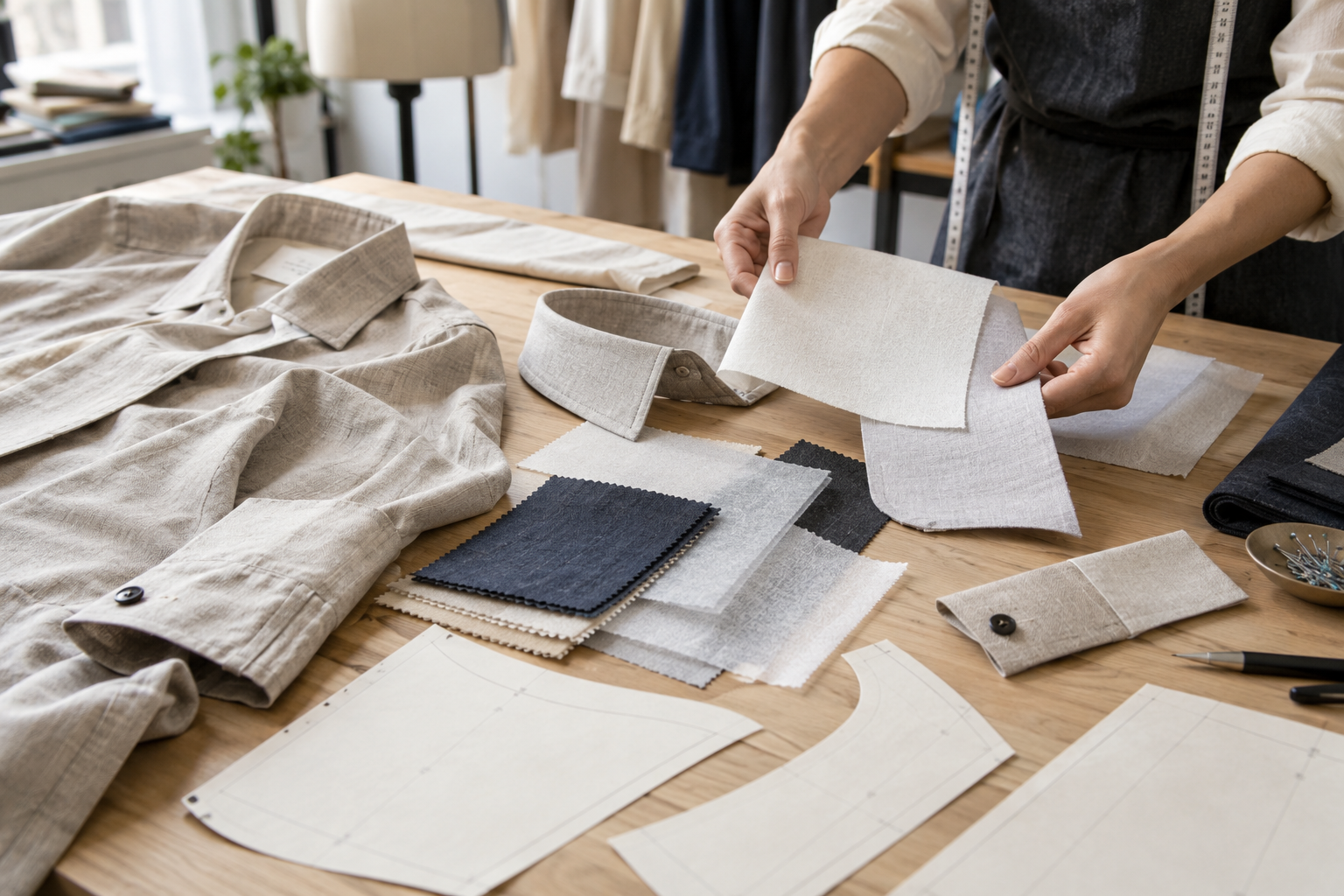
Fabric changes are a common reason samples need to be remade. A garment that fits well in one knit, woven, fleece, or rib may behave differently in another. Weight, drape, stretch recovery, shrinkage, and surface finish can all affect fit and construction. If the first sample is made in a substitute fabric, the brand should understand which judgments are reliable and which ones must wait for the correct fabric.
Before the first sample, ask whether the sample fabric is the intended bulk fabric, a close development substitute, or a temporary reference. If it is a substitute, document the difference. For example, a sample made in a similar color but different GSM may be helpful for checking silhouette, but it may not be enough to approve final fit or sewing behavior.
For deeper planning, use a structured fabric selection process for private label clothing before sampling. Fabric should not be treated as a late-stage styling choice; it is part of the engineering of the garment.
Limit the Scope of Each Sample Round
One reason sampling becomes inefficient is that brands try to evaluate everything at once without defining the purpose of the round. A prototype sample, fit sample, size set sample, pre-production sample, and salesman sample can each serve a different purpose. When the purpose is unclear, the brand may reject a sample for issues that were not meant to be finalized in that round.
Before each sample is made, agree on what it is supposed to prove. Is the sample checking silhouette and fit? Is it confirming construction? Is it validating fabric and trims? Is it approving artwork placement? When everyone knows the purpose, feedback becomes sharper and the manufacturer can prioritize the right corrections.
Useful Sample Round Questions
- Which details must be approved in this round?
- Which details are still placeholders?
- Which measurements are critical to review?
- Which changes would require a new physical sample?
- Which changes can be approved by photos, swatches, or written confirmation?
This approach helps avoid unnecessary remakes. It also makes it easier to decide whether a sample is ready to move forward or needs another controlled revision.
Give Fit Feedback That a Pattern Maker Can Use
Fit feedback should be specific, measured, and visual whenever possible. Comments such as “too loose,” “strange shape,” or “not premium enough” are hard to act on because they do not explain the cause or the expected correction. A stronger comment identifies the garment area, the issue, the requested adjustment, and the reference point.
For example, instead of saying “sleeves are wrong,” a buyer might say: “Sleeve opening feels too wide on size M. Reduce sleeve opening by 1 cm flat measurement and maintain current sleeve length.” If the issue is visual rather than measurable, use marked-up photos from front, side, and back views. Keep the garment on a consistent model, mannequin, or flat surface so comparisons are easier.
Brands can also improve feedback by separating fit problems from styling preferences. Fit comments should focus on balance, movement, measurements, and comfort. Styling comments should address silhouette, proportion, design lines, and brand intent. Mixing these together often creates confusion.
Control Measurement Specs Early
Measurements can reduce sampling rounds only when they are clear and consistently taken. If the brand measures a sample differently from the factory, both sides may believe the other is wrong. Before judging a sample, confirm the measurement method and points of measure. Important points may include chest, body length, shoulder, sleeve length, waist, hip, inseam, rise, bicep, cuff, and hem depending on the product type.
A measurement spec should also reflect the product category and fabric behavior. A relaxed knit hoodie, structured woven shirt, ribbed active top, and stretch leggings cannot be reviewed using the same assumptions. Each garment needs specs that match its intended fit and material.
When possible, review measurements together with wearing fit. A garment can be technically within measurement tolerance and still look wrong if the balance, pattern, or fabric behavior does not match the design intent.
Freeze Approved Details Before Adding New Changes
Sampling becomes expensive in time when every round reopens decisions that were already close to approval. After each review, record what is approved, what is revised, and what remains pending. Approved details should not change unless there is a clear reason, because new changes can affect pattern, sewing, material consumption, and production planning.
A simple approval log can help. It does not need to be complex. List the garment part, current decision, approval status, responsible person, and date. This creates a shared record and prevents old comments from returning in later rounds.
Check Construction Before the Pre-Production Stage
Construction issues should not be left until the final pre-production sample whenever they can be solved earlier. Seams, reinforcement, stitch type, hem finish, waistband structure, zipper insertion, pocket shape, lining, binding, and label placement all influence both appearance and manufacturability.
If construction is important to the brand’s positioning, include reference garments or detailed photos. A manufacturer can often match the intention more accurately when the brand shows the expected finish instead of relying only on written descriptions.
Before moving toward bulk production, connect sample review with a garment quality control checklist. Quality expectations should be visible before production starts, not introduced only after goods are finished.
Know When Another Sample Is Worth It
Reducing sampling rounds should never mean approving a garment that is not ready. Some corrections require another physical sample, especially when they affect pattern, fit, fabric behavior, construction, artwork placement, or customer-facing quality. Other minor updates may be confirmed through photos, measurements, trim cards, or written approval depending on the risk.
The key is to make this decision deliberately. Ask what could go wrong if the change is not physically sampled. If the answer affects fit, comfort, production quality, or the buyer’s trust in the final garment, another sample may be justified. If the change is simple and verifiable, a controlled confirmation method may be enough.
Prepare for Sampling as a Production Process
Sampling should be treated as the first stage of production discipline. The habits a brand builds during sampling often carry into bulk manufacturing: clear documentation, fast decisions, consistent approvals, and practical quality standards. A well-managed sample process makes it easier to move into pre-production approval and bulk order execution.
If you are still planning the first stages of development, review the broader clothing sample development process so your team understands how design ideas, technical files, materials, fit comments, and production approvals connect.
FAQ
How many sampling rounds should a custom clothing project need?
There is no universal number because the answer depends on product complexity, fabric, fit requirements, artwork, trims, and how complete the initial information is. A simple style with clear files may move faster than a complex garment with new materials or detailed construction. The better question is whether each round is solving defined issues and moving the garment closer to approval.
Can a brand skip sampling to save time?
Skipping sampling is risky for custom apparel because the brand has not physically checked fit, construction, fabric behavior, or finishing. Even if the design looks simple, sampling helps confirm that the garment can be made to the expected standard. Brands should focus on reducing avoidable sampling rounds, not removing the development step entirely.
What should be included in sample feedback?
Good sample feedback should include photos, measurement notes, fit comments, construction comments, material observations, and a clear list of required changes. Each comment should identify the garment area and the requested correction. When possible, mark photos directly so the manufacturer can see the issue.
Final Thoughts
Reducing sampling rounds in custom clothing manufacturing is less about speed and more about control. Brands that prepare complete tech packs, align on fabric, give measurable feedback, and freeze approved details can make each sample round more productive. The result is a smoother development process and a better foundation for bulk production.
If your brand is preparing a custom apparel project, organize your tech pack, sample references, fabric expectations, and fit comments before requesting the next sample. Clear preparation helps your manufacturing partner understand the garment faster and reduces the chance of avoidable revisions.