Custom Underwear Manufacturing: A Development Guide for Apparel Brands
Underwear is a close-to-skin product, so small product decisions carry unusual weight. Fabric hand feel, recovery, seam placement, elastic tension, gusset construction, and size grading all affect whether a customer reaches for a style again. For an apparel brand, a reliable development process turns those decisions into clear checkpoints before bulk production begins.
This guide explains how to prepare for custom underwear manufacturing. It is written for brands developing briefs, trunks, boxers, bralettes, or other intimate-apparel styles with a manufacturing partner. The goal is not to prescribe one material or construction, but to help you build a specific, reviewable brief.
Define the product role before choosing a fabric
Start with the wearer and use case. A lightweight everyday brief, a supportive boxer brief, a relaxed woven boxer, and a soft bralette each ask the fabric and construction to do different jobs. Describe when the garment will be worn, the desired fit sensation, the level of coverage, and the visual position within the collection. These choices give a manufacturer useful context before the first pattern is made.
Turn broad language such as “comfortable” or “premium” into practical priorities. For example, identify whether smooth seams, breathable material, a stay-put leg opening, gentle waist pressure, or shape retention matters most. A short product statement helps a team make coherent trade-offs when a fabric, elastic, or construction option changes during development.
Separate inspiration from specifications
Reference images are valuable, but they should be annotated. Note which qualities you want to borrow: perhaps the rise, the waistband width, the leg length, the neckline, or the finish at an opening. Also note what should not be copied. This avoids treating a visual reference as a complete technical instruction.
Your measurement points should be organized in a garment measurement specification. Include the body dimensions and garment dimensions that define fit, along with where and how each point is measured. For stretch styles, also state the condition for measurement, such as relaxed versus extended, so the sample review is consistent.
Select materials for skin feel, recovery, and care
Fabric selection for underwear is more than fiber content. Hand feel, weight, stretch direction, opacity, surface appearance, recovery after extension, and care behavior all shape the finished product. A soft fabric that feels good on a swatch may behave differently after it is sewn, washed, or held under waistband tension.
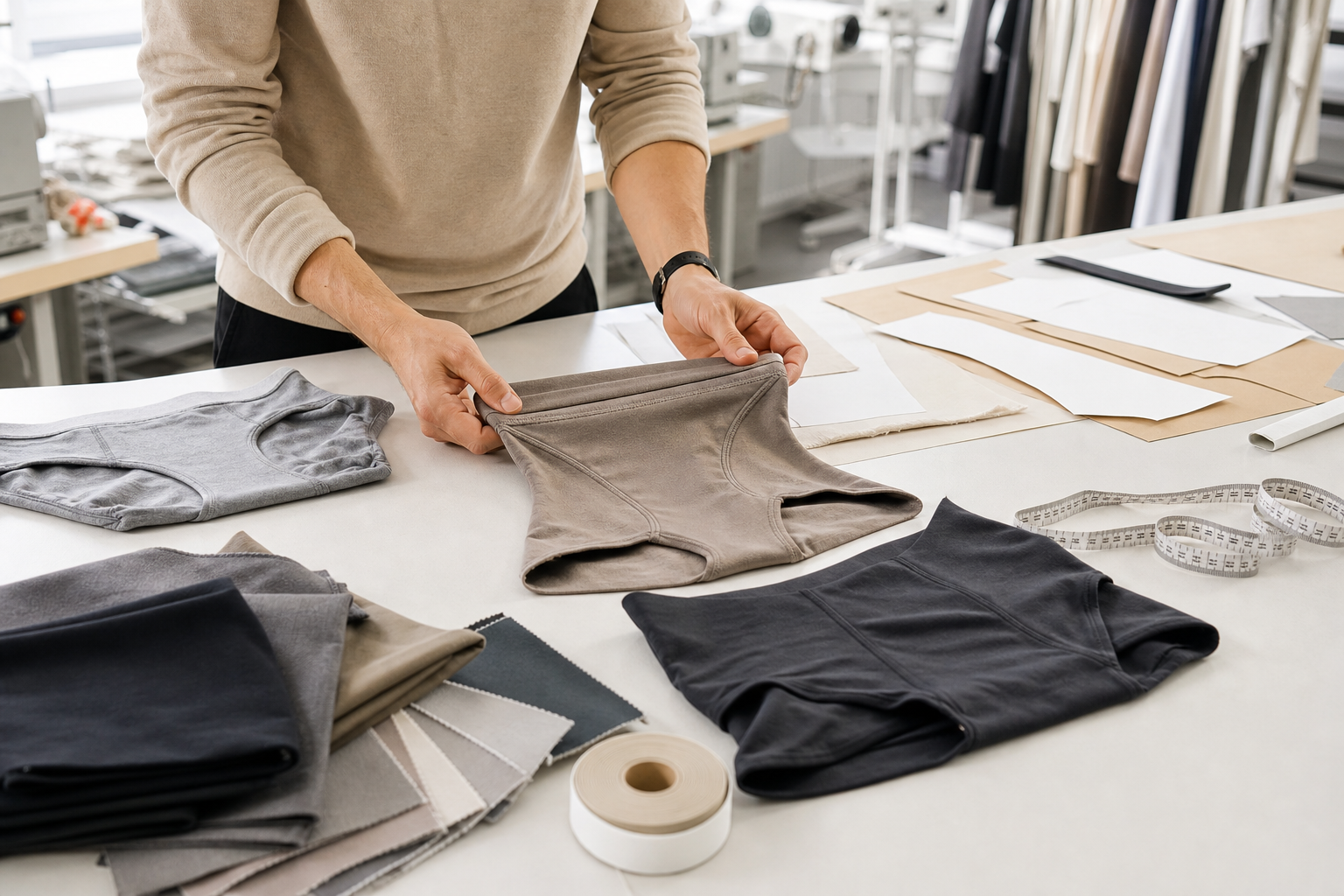
Ask to review fabric swatches alongside the intended elastics and trims whenever possible. The combination matters: a very soft body fabric paired with a firm elastic can produce a different wearing experience than either component suggests on its own. A structured fabric-selection process helps a brand record the option, color, composition information supplied by the mill, and the approval decision.
Plan stretch in the direction it is needed
Consider both horizontal and vertical stretch, as well as the fabric’s ability to recover its shape. The needed balance depends on the style. A close-fitting boxer brief may need dependable recovery through the body and leg opening, while a woven boxer may prioritize softness and a comfortable, less restrictive shape. Avoid assuming that a fabric with high stretch percentage automatically suits the style; review it in a sewn sample.
For light colors or fine gauges, assess opacity under normal wearing stretch. For brushed, ribbed, or textured surfaces, inspect whether seams and stitches remain visually neat. If the garment will receive a wash, dye, print, or other finish, approve the fabric in its intended finished state rather than relying only on an unfinished swatch.
Specify elastic, trims, and seam finishes early
Elastic is a functional component, not merely decoration. Waistbands, straps, binding, and leg elastics influence support, comfort, appearance, and long-term shape. Record the width, color, surface finish, stretch feel, placement, and visible branding requirements where relevant. If a decorative elastic is involved, clarify the artwork, repeat direction, and alignment expectations in the tech pack.
Seam construction deserves the same attention. Some styles may use coverstitch, overlock, binding, flat seams, or another appropriate finish. The right choice depends on the fabric, design, equipment, and intended sensation against the skin. Describe which seams must lie flat, which edges require clean coverage, and where bulk should be minimized. A clear construction brief gives the sample room less guesswork.
Include the gusset or lining plan
For styles that use a gusset, lining, cup lining, or layered panel, specify the material, shape, placement, seam allowance treatment, and attachment method. These components affect comfort and stability, and they are difficult to assess from a flat sketch alone. Mark them in the technical drawing and call them out in the bill of materials so the pattern, cutting, and sewing teams work from the same information.
Build a fit brief that works across the size range
Underwear fit is especially sensitive to small changes in rise, crotch length, leg opening, waist tension, and body width. Establish a base size and identify the intended fit on the body: close, supportive, relaxed, or softly skimming. Add notes on where the waistband should sit and whether the leg should remain in place or move more freely.
Size grading should be considered during development, not only after the base sample is approved. A proportion that works in one size may not translate automatically to every size. Ask the manufacturer to review the grade rules against the style’s critical areas, and compare graded patterns or samples when the range and product complexity warrant it. The principles in an apparel size-grading guide can help teams frame those questions.
Use samples to test decisions, not just appearance
A first sample should be reviewed as a working prototype. Check the garment on the intended form or wearer where appropriate, then compare it with the measurement spec, pattern notes, fabric approval, and trim plan. Photograph issues, identify the affected area, and make comments that describe the desired result rather than simply saying “adjust fit.”
Useful review questions include:
- Does the fabric return to shape after normal movement and handling?
- Does the waistband feel aligned with the intended level of support?
- Do seams, labels, or elastics create unnecessary bulk or irritation?
- Are the leg openings, gusset, and panels balanced and secure?
- Do measurements match the approved tolerances in the stated condition?
Keep feedback consolidated in one version-controlled document. A disciplined fit-sample feedback process helps prevent a previous request from disappearing when several stakeholders comment at once. If a change affects materials, measurements, or construction, update every connected document before the next sample is made.
Prepare the production handoff
Before moving into bulk production, gather the approved sample, final tech pack, measurement chart, grade rules, bill of materials, color approvals, artwork files where applicable, labels, packaging requirements, and written comments from the final review. The purpose is to create one current source of truth, not a folder of partial decisions.
Review the production details that are easy to overlook: label placement, care-label information provided by the brand, fold method, individual packing expectations, carton marking requirements, and any approved reference sample that should accompany the order. A final pre-production approval checklist can help the team confirm that the approved version—not an earlier sample—is the one being released.
FAQ
What should a brand send before requesting an underwear sample?
Send a technical drawing, measurement chart, size range, fabric direction, color or artwork direction, elastic and trim details, label and packaging requirements, and annotated references. If some details are still open, identify them clearly instead of leaving them implied.
How can a brand judge underwear comfort during sampling?
Review the sample for fabric hand feel, recovery, seam bulk, elastic tension, movement, and the behavior of openings and panels. Comfort is subjective, so connect comments to observable issues and the intended wearer experience.
Why is the tech pack important for intimate apparel?
It connects the design intent to the pattern, materials, construction, measurements, and approval history. Because close-fitting garments have many interconnected details, a clear tech pack reduces room for interpretation throughout sampling and production.
Move from concept to a reviewable underwear brief
Custom underwear manufacturing works best when fabric, elastic, fit, construction, and production documentation are developed as one connected system. The more clearly a brand defines the intended wearing experience and approval checkpoints, the easier it is to evaluate samples and prepare a consistent production handoff.
If you are preparing an underwear style or a broader apparel range, contact Huilin Fashion to discuss your development brief and the information needed for the next step.