Custom Shorts Manufacturing: A Development Guide for Apparel Brands
Shorts can look simple on a line sheet, but turning a concept into a production-ready style involves a set of connected decisions. Inseam, rise, leg opening, fabric weight, pocket construction, elastic, hardware, and wash all influence how the finished garment fits and performs. For a new apparel brand, the most useful approach is to make those decisions deliberately before bulk production begins.
This guide explains how to prepare for custom shorts manufacturing, whether you are developing tailored shorts, casual woven styles, fleece shorts, cargo shorts, or a more technical product. The goal is not to prescribe one construction, but to help you give a manufacturer a clear, reviewable brief.
Start with the product’s role in the collection
Define what the shorts are meant to do before choosing a fabric or silhouette. A relaxed jersey short for everyday wear, a structured chino short, and a utility cargo short may all share a basic garment category, yet they need very different fit, material, and construction choices.
Write a short product statement that covers the intended wearer, occasion, season, styling direction, and desired price positioning. Then identify the non-negotiables: perhaps a longer inseam, a secure phone pocket, a clean waistband, or a fabric with a particular drape. These priorities make later trade-offs much easier to assess.
Describe the silhouette in practical terms
Terms such as “relaxed” and “modern” are helpful creative direction, but they are not measurable specifications. Add details such as intended waist position, rise, thigh ease, leg-opening shape, finished inseam, and desired visual length on the body. Include reference images with notes explaining what to borrow and what to avoid. For example, you may like the proportion of one reference but not its pocket shape or waistband finish.
A well-organized garment measurement specification turns those choices into checkpoints that can be reviewed during sampling. It also helps keep feedback focused on the sample rather than on assumptions.
Choose fabric for movement, structure, and finishing
Fabric selection changes more than the look of a short. It affects how the waistband behaves, how a pocket opening holds its shape, whether seams lie flat, and how the garment responds to washing. Consider the fabric’s weight, stretch or mechanical give, recovery, opacity, surface character, and how it will be finished.
For woven shorts, think about whether the fabric has enough body for the desired silhouette and pocket construction. For knitted or fleece-based shorts, consider recovery at the waistband and the effect of heavier contents carried in pockets. If the design uses a lining, mesh pocket bag, contrast panel, or binding, review how those materials behave together rather than evaluating each swatch in isolation.
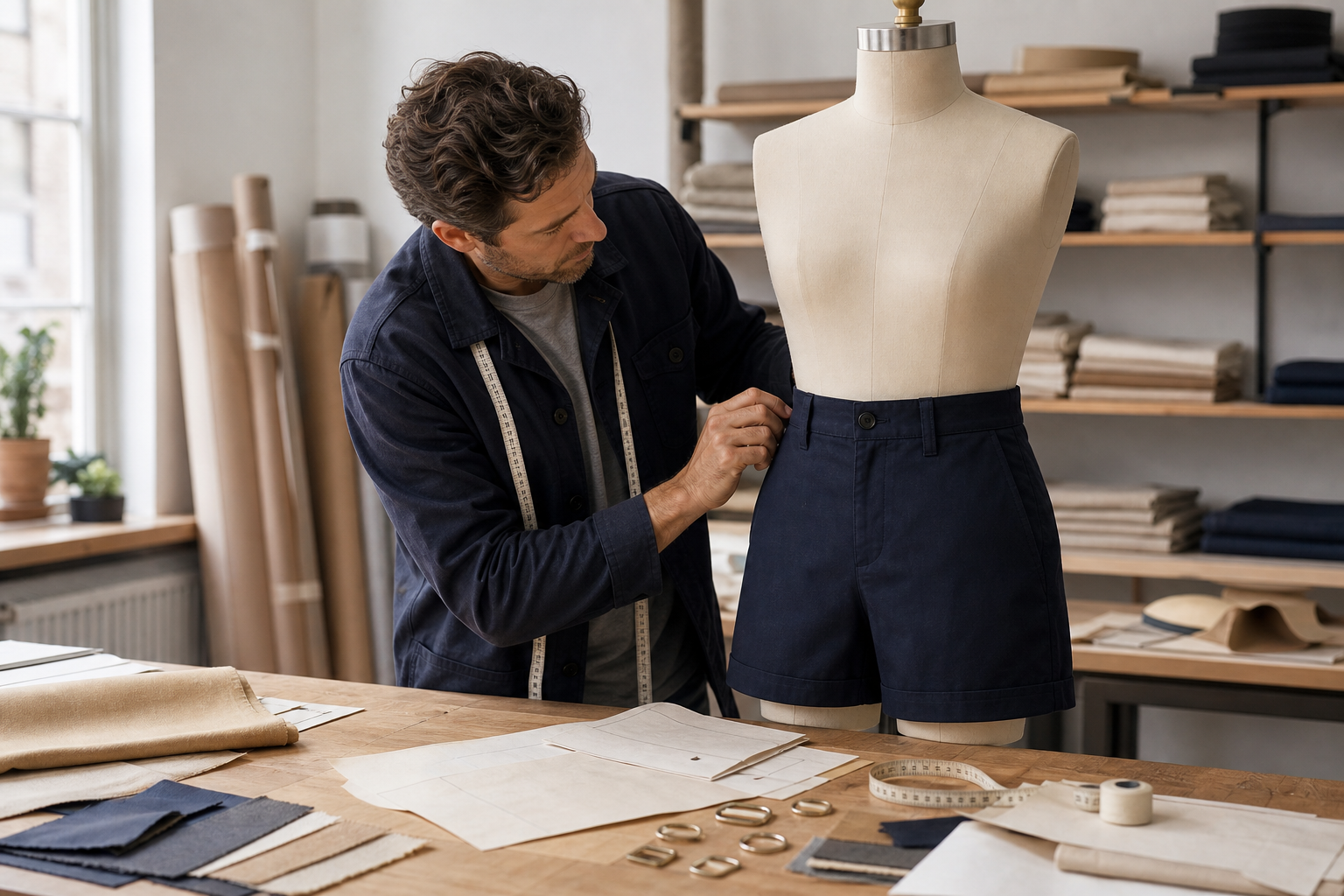
Ask for labeled swatches and record the exact approved material, color, and finish. Compare each option against the intended wear experience and visual result, rather than selecting from appearance alone.
Build the waistband and closure around the wearer experience
The waistband is often the first point of fit feedback. Decide whether the style uses a full elastic waist, an elastic-back construction, a fixed waistband with a fly, drawcord adjustment, belt loops, or another approach. Each decision affects fit tolerance, comfort, component choices, and assembly.
Specify how elastic is enclosed and secured, where a drawcord exits, whether it is functional or decorative, and the intended closure components. If the design includes a button, zip fly, hook, snap, or cord end, identify the desired appearance and placement in the technical package. Do not rely only on a sketch; a close-up reference or construction callout reduces ambiguity.
Plan pockets as functional components
Pockets deserve their own review because their shape and anchoring affect both appearance and use. State the pocket type, opening length, pocket-bag material, depth, stitch detail, reinforcement, and any closure. A cargo pocket may need a clear flap and gusset specification. A side-seam pocket may need a method to prevent the opening from spreading. For a back welt or patch pocket, clarify placement from key body points and whether it should support a phone or wallet.
Translate the design into a complete production package
Your manufacturer can respond more accurately when the development information is collected in one place. A useful package includes a flat sketch, bill of materials, measurement chart, graded-size approach, colorways, artwork placement if applicable, construction callouts, labels, packaging requirements, and sample comments.
A detailed apparel tech pack does not need to be complicated to be effective. Its purpose is to make every important choice visible to the people developing and producing the style. Keep the source file versioned, and record changes after each sample round so that an old measurement or trim choice does not re-enter the process by mistake.
For multi-component styles, a bill of materials is especially valuable. List the shell, pocket bag, elastic, drawcord, labels, hardware, thread, and packaging components with enough detail to distinguish approved choices from similar alternatives.
Use samples to test the whole garment, not just one measurement
When the first sample arrives, review it against the product brief, technical package, and approved materials. Start with the overall silhouette, then work through the waistband, rise, seat, thigh, leg opening, inseam, pocket function, construction quality, and trim placement. Put the garment on the intended fit model when possible; a flat measurement alone cannot reveal whether the balance of the short feels right in motion.
Test practical actions relevant to the design: sitting, walking, bending, using pockets, or adjusting the waistband. Note where the garment pulls, twists, gapes, or restricts movement. If the fabric has stretch or a wash treatment, make sure the review happens after the condition that reflects the approved product.
Give sample feedback that can be acted on
Group feedback by location and make it specific. Instead of “make the fit better,” identify the issue, its direction of change, and the reference point: for example, “reduce front rise at center front,” “increase finished pocket-bag depth,” or “move back pocket upward from the waist seam.” Annotated photos and a revised measurement chart reduce interpretation gaps.
Use the same discipline described in this fit sample feedback guide: distinguish required corrections from optional preferences, and confirm which version is the approved basis for bulk production.
Confirm production readiness before bulk manufacturing
A good bulk handoff confirms the final approved sample, complete specification package, approved fabric and trim choices, color standards, labeling, packaging, and any agreed inspection points. It should also make clear which version controls if multiple files or comments exist.
Before giving final approval, compare the sample, measurements, materials, and construction details against the latest documents. This last review is a chance to catch disconnected updates, such as a changed drawcord without an updated trim list or a revised inseam without corresponding grade rules. A structured pre-production approval checklist helps turn that review into a repeatable process.
FAQ about custom shorts manufacturing
What should a brand prepare before requesting a shorts sample?
Prepare a clear silhouette brief, references, measurement targets, fabric direction, colorways, pocket and waistband details, artwork if relevant, label requirements, and any target sample date. If some choices are still open, identify them as decisions to review rather than leaving them unstated.
How do I choose between elastic-waist and fixed-waist shorts?
Choose based on the product’s intended fit, styling, and use. An elastic waistband can support ease and adjustment, while a fixed waistband and fly can create a more tailored appearance. The decision should be reflected in the fabric, rise, closure, and fit-testing plan.
Which measurements matter most for shorts?
Waist, hip, front and back rise, thigh, leg opening, inseam, and outseam are common starting points. Pocket opening, pocket-bag depth, waistband height, and placement of functional details can be equally important depending on the design.
Move from concept to a clearer production brief
Custom shorts manufacturing becomes more predictable when fabric, fit, pockets, waistband, and sample feedback are treated as one connected development process. A clear brief will not remove every decision, but it gives your team and manufacturer a practical way to resolve them before bulk production.
If you are developing a shorts style or a wider collection, contact Huilin Fashion to discuss your product brief and the information needed to begin custom apparel development.