Apparel Bill of Materials Guide for Custom Clothing Production
An apparel bill of materials is one of the most practical documents a clothing brand can prepare before sampling or bulk production. It lists the fabrics, trims, labels, packaging items, finishes, colors, placements, and approval references required to make each garment. When the BOM is clear, a manufacturer can source more accurately, build samples with fewer assumptions, and keep production details consistent.
For startup and growing fashion brands, the BOM is especially useful because it turns creative decisions into production instructions. A sketch may show the look of a garment, but the BOM explains what has to be purchased, matched, approved, attached, packed, and checked. This guide explains how to build a practical apparel BOM for custom clothing production without making claims your product files cannot support.
What Is an Apparel Bill of Materials?
An apparel bill of materials, often called a BOM, is a structured list of every physical component used in a garment. It normally sits inside or alongside the tech pack. While the tech pack describes the whole garment, the BOM focuses on the materials and components that must be sourced and controlled.
A useful BOM may include main fabrics, lining fabrics, rib, interlining, thread, buttons, zippers, cords, eyelets, elastic, tapes, patches, care labels, brand labels, size labels, hangtags, poly bags, stickers, cartons, and any special packaging items. It can also include supplier references, color codes, material specifications, placement notes, usage per garment, and approval status.
If your brand is still organizing the wider product file, start with a structured apparel tech pack for custom clothing production and then use the BOM to make the material side more specific.
Why the BOM Matters for Clothing Brands
A garment can fail even when the design concept is strong. The wrong rib may change the fit of a hoodie. A zipper pull may not match the intended finish. A label may be placed in the wrong location. A packaging instruction may be missing until final packing. These issues are not always caused by poor workmanship; they often come from unclear references.
The BOM gives the brand and manufacturer a shared reference for what must be used. It helps the production team check whether the sample, pre-production approval, and bulk order follow the same component decisions. It also makes conversations more efficient because each item can be discussed by name, specification, color, and status instead of through scattered messages.
It reduces sourcing ambiguity
Manufacturers need enough information to identify suitable materials. A note such as “soft cotton fabric” is not specific enough for reliable sourcing. A better BOM entry may state the fabric type, fiber content direction, weight range, stretch expectation, color reference, finish, and intended garment panel. The brand does not need to know every technical answer at the first conversation, but it should separate confirmed requirements from open decisions.
It supports sample review
During sample review, the BOM helps the brand check whether the correct materials were used. If a sample includes temporary fabric or placeholder labels, the BOM should say so clearly. Otherwise, a temporary detail can be mistaken for an approved production detail.
It protects consistency in bulk production
Once materials are approved, the BOM becomes part of the production standard. The team can compare incoming materials, trims, labels, and packaging items against the approved references before they are used in finished garments.
Core Sections to Include in an Apparel BOM
A BOM can be simple or detailed depending on the product. A basic T-shirt may need fewer entries than a lined jacket, but both should be clear enough for sourcing, sampling, and inspection.
1. Main fabric and secondary fabrics
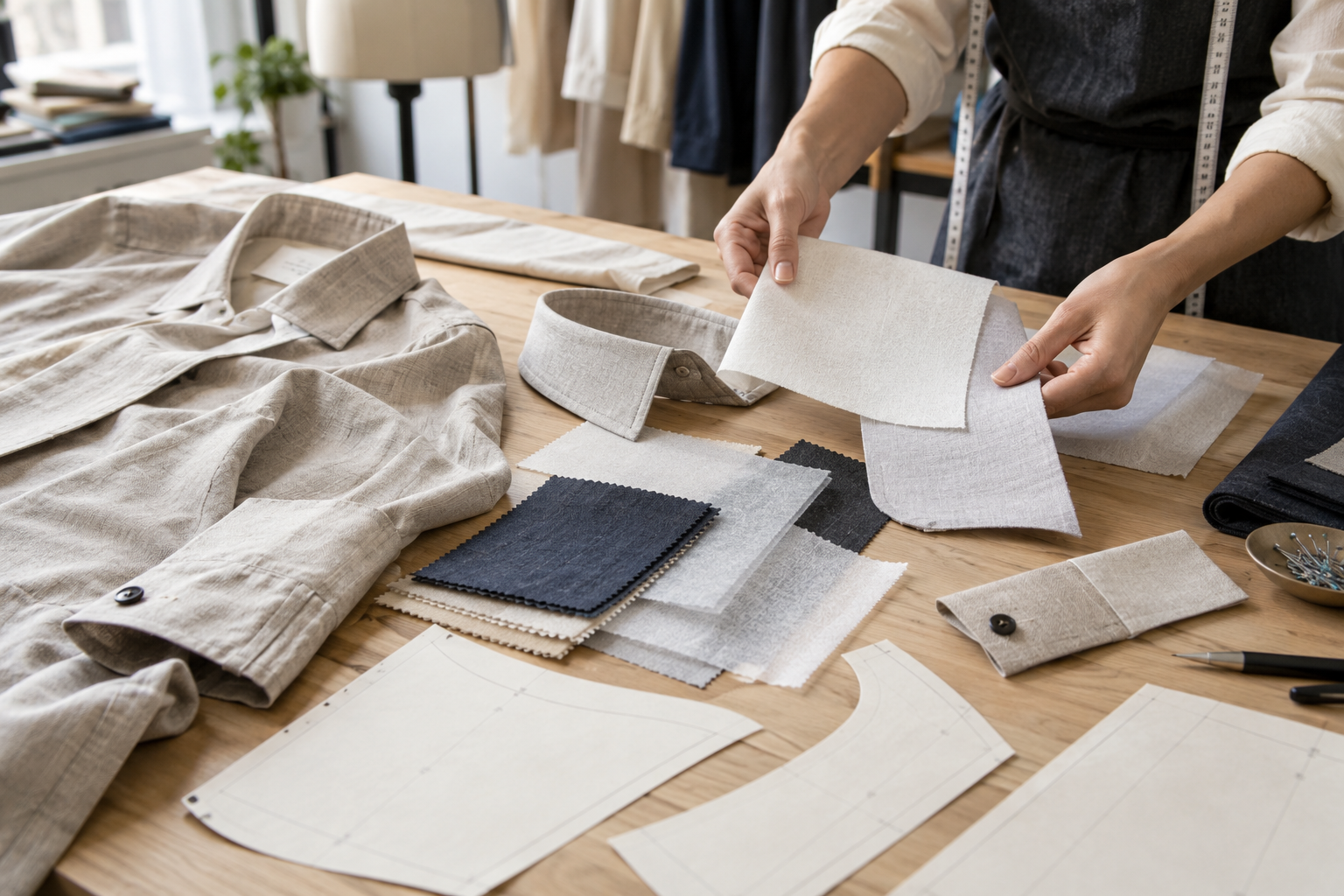
List every fabric used in the garment. Include the body fabric, contrast panels, lining, pocketing, rib, mesh, interlining, or reinforcement materials when relevant. For each item, note the fabric type, composition direction, weight or hand feel target, color, finish, stretch requirement, and where it is used.
Fabric choices affect fit, drape, comfort, shrinkage, opacity, decoration results, and care performance. If the fabric decision is not final, mark it as pending and explain the target. For a deeper buyer-side framework, review this guide to fabric selection for private label clothing.
2. Sewing thread and construction supplies
Thread is easy to overlook, but it affects appearance and durability. The BOM should identify thread color, stitch visibility, contrast requirements, and any special needs for stretch garments or heavy fabrics. If the garment uses elastic, twill tape, binding, shoulder tape, drawcord tips, fusible, padding, or reinforcement, list those items separately.
3. Hardware and trims
Buttons, snaps, zippers, sliders, buckles, eyelets, cord stoppers, rivets, and similar components should be specified with enough detail to avoid substitution problems. Include size, finish, color, material direction, placement, and any reference images or approved samples. If a trim must match a specific metal tone or brand look, provide a visual reference and approval process.
4. Branding labels and artwork items
Private label production often involves woven labels, printed neck labels, care labels, size labels, patches, embroidery, screen prints, heat transfers, hangtags, stickers, and carton marks. Each item needs artwork files, dimensions, material notes, placement, color direction, and approval status. Label and packaging details can affect compliance and customer presentation, so they should not be left until the end of production.
For more detail on this area, see Huilin Fashion’s guide to private label clothing labels and packaging.
5. Packaging materials
Packaging may include hangtags, safety pins, tissue, poly bags, barcode stickers, size stickers, carton labels, inner cartons, master cartons, and folding instructions. The BOM should identify what is used for the individual garment and what is used for shipping cartons. If packaging is still undecided, note the intended retail or warehouse requirement so the manufacturer can discuss practical options.
Useful Columns for a Production-Ready BOM
The format can vary, but the strongest BOMs are easy to scan. Use columns that make responsibilities and approvals visible. For each component, consider including:
- Item name and category
- Style code or garment reference
- Component placement or usage area
- Material specification or construction note
- Color reference and finish
- Size, width, length, or dimension when relevant
- Artwork file name or supplier reference
- Usage per garment if known
- Approval status, such as pending, sample approved, or production approved
- Notes about acceptable alternatives
Do not fill a BOM with guesses simply to make it look complete. If a detail is unknown, mark it as open and explain the target result. Clear uncertainty is better than false precision.
How to Use the BOM During Sampling
Sampling is the first serious test of the BOM. Before a sample is made, share the current BOM with the manufacturer and identify which materials are confirmed, which are being sourced, and which may be substituted for sample purposes. This prevents confusion when the sample arrives.
After reviewing the sample, update the BOM immediately. If the fabric changes, revise the fabric line. If the zipper finish changes, revise the trim line. If the neck label placement moves, revise the label line. The BOM should reflect the current approved direction, not an outdated version from the first design meeting.
Brands planning low quantity launches should be especially disciplined here. When style counts, colors, and trims are fragmented, the BOM helps the team identify which components can be shared and which components create sourcing complexity. This makes the document useful not only for sourcing, but also for keeping a focused production plan realistic.
Common BOM Mistakes to Avoid
Using vague material descriptions
Descriptions such as “premium fabric,” “nice zipper,” or “good packaging” do not guide production. Replace vague language with observable details: fabric type, hand feel target, color reference, finish, trim size, placement, and sample approval status.
Forgetting hidden components
Many garment components are not visible in front-view sketches. Pocketing, interlining, reinforcement tape, elastic, thread, fusible, lining, wash labels, and packaging stickers still need to be listed if they affect the finished product.
Failing to track revisions
If a brand changes a fabric or trim after sampling, the BOM must be updated. Otherwise, the team may follow an old version during purchasing or inspection. Keep revision dates and file names consistent so everyone knows which version is current.
Approving samples with placeholder materials
Sometimes a sample is made with substitute fabric, temporary labels, or available trims. That can be acceptable during development, but it must be documented. Do not let a placeholder become a silent production approval.
A Practical Apparel BOM Checklist
- List every visible and hidden garment component.
- Separate confirmed details from open sourcing decisions.
- Include fabric, trim, label, artwork, and packaging requirements.
- Use clear color, size, placement, and finish references.
- Attach artwork files or reference samples when needed.
- Mark sample materials that are temporary or substituted.
- Update the BOM after every approved revision.
- Review the BOM before pre-production approval and final inspection.
FAQ
Is a BOM the same as a tech pack?
No. A BOM is usually one section of a tech pack or a related document. The tech pack covers the full garment specification, while the BOM focuses on materials, trims, labels, packaging, and component approvals.
Do startup clothing brands need a BOM?
Yes, especially when the garment uses custom fabrics, trims, labels, or packaging. A simple but clear BOM can reduce confusion during sampling and make manufacturer discussions more productive.
What if I do not know the exact fabric or trim yet?
Mark the item as pending and describe the target result. For example, state the intended fabric type, hand feel, weight direction, stretch level, or trim finish. The manufacturer can then discuss suitable options.
When should the BOM be finalized?
The BOM should be reviewed throughout development and confirmed before bulk production begins. It should match the approved sample, final artwork, selected materials, label details, and packaging instructions.
Turn Material Decisions Into Production Clarity
An apparel BOM does not need to be complicated, but it does need to be current, specific, and connected to sample approvals. For custom clothing production, it gives both the brand and manufacturer a practical way to control materials, trims, labels, packaging, and sourcing decisions.
If your brand is preparing a custom apparel collection and needs support organizing materials, samples, labels, and production requirements, send your product details through the Huilin Fashion contact page to start a practical manufacturing discussion.