Knitwear vs. Woven Apparel Manufacturing: A Brand Guide
Choosing between knitwear and woven apparel is not only a design decision. It shapes how a garment is specified, sampled, sourced, and reviewed before bulk production. For a fashion brand, the most useful starting point is to understand what the customer should feel, how the product needs to move, and which construction details are essential to the design.
This guide helps apparel buyers compare knitwear and woven apparel manufacturing in practical terms. It is designed for teams preparing a new collection, discussing a factory-ready brief, or deciding whether a concept should become a tee, sweatshirt, cardigan, shirt, trouser, overshirt, or tailored outer layer.
Start with the construction, not the label
In apparel manufacturing, “knit” and “woven” describe how the fabric is built. Knit fabrics are made from interlocking loops. Woven fabrics are made by crossing lengthwise and crosswise yarns. That structural difference influences stretch, recovery, drape, edge behavior, seam choices, and how a garment reacts to wear and care.
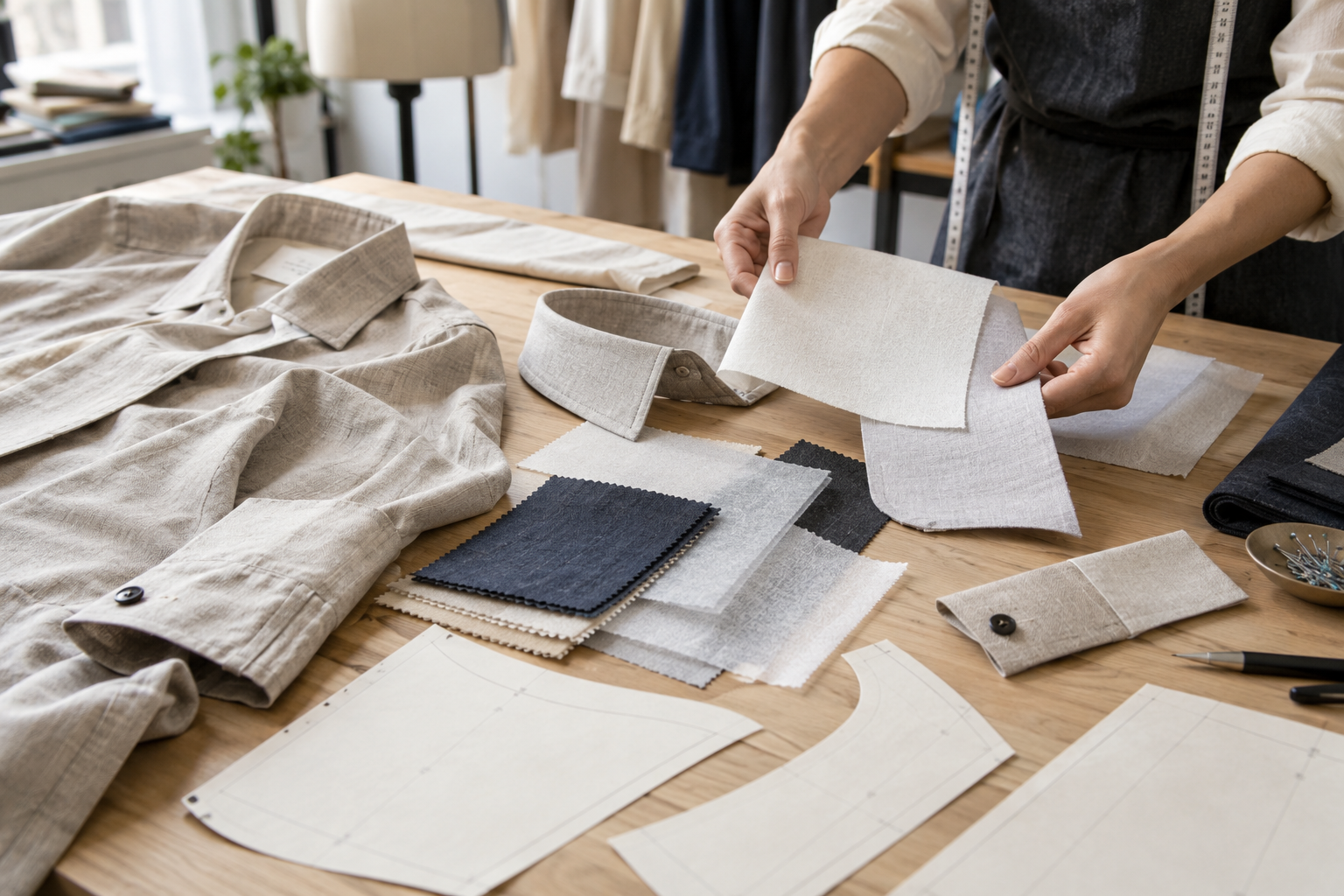
A knit garment is often selected when comfort, movement, softness, or body-hugging shape matters. Jerseys, fleece, rib, interlock, and sweater knits are familiar examples. Woven apparel is often selected when the product needs a more defined silhouette, a crisp surface, a stable pocket or collar shape, or a structured finish. Poplin, twill, denim, canvas, and many shirting fabrics are woven.
Neither route is inherently better. The right route is the one that supports the product promise without adding avoidable complexity to development.
Compare the customer experience first
When knitwear may suit the concept
Knit constructions can be a strong fit for products where ease and movement are central: T-shirts, polos, leggings, sweatshirts, hoodies, close-fitting tops, lounge pieces, and many active-inspired styles. A fabric with stretch may allow a garment to feel forgiving across movement, but the amount and direction of stretch must still be defined. Do not assume that two fabrics with a similar weight will perform the same way.
For fully fashioned or cut-and-sew sweater projects, the yarn, gauge, stitch structure, and finishing process also influence the final hand feel and shape. Describe the intended appearance and function clearly instead of relying only on a reference photo.
When woven apparel may suit the concept
Woven construction is often appropriate for shirts, overshirts, trousers, skirts, dresses, jackets, uniforms, workwear, and many structured fashion pieces. Wovens can hold pleats, collars, pockets, plackets, and sharper silhouette lines well. They may have little natural stretch unless the fabric construction or fiber blend provides it, so ease and measurement tolerances deserve careful attention.
A structured garment can still feel comfortable. The practical question is how the design creates room to move: pattern shape, pleats, vents, elasticated sections, adjustable closures, or a fabric with controlled stretch may all play a role.
Define the fabric behavior your product needs
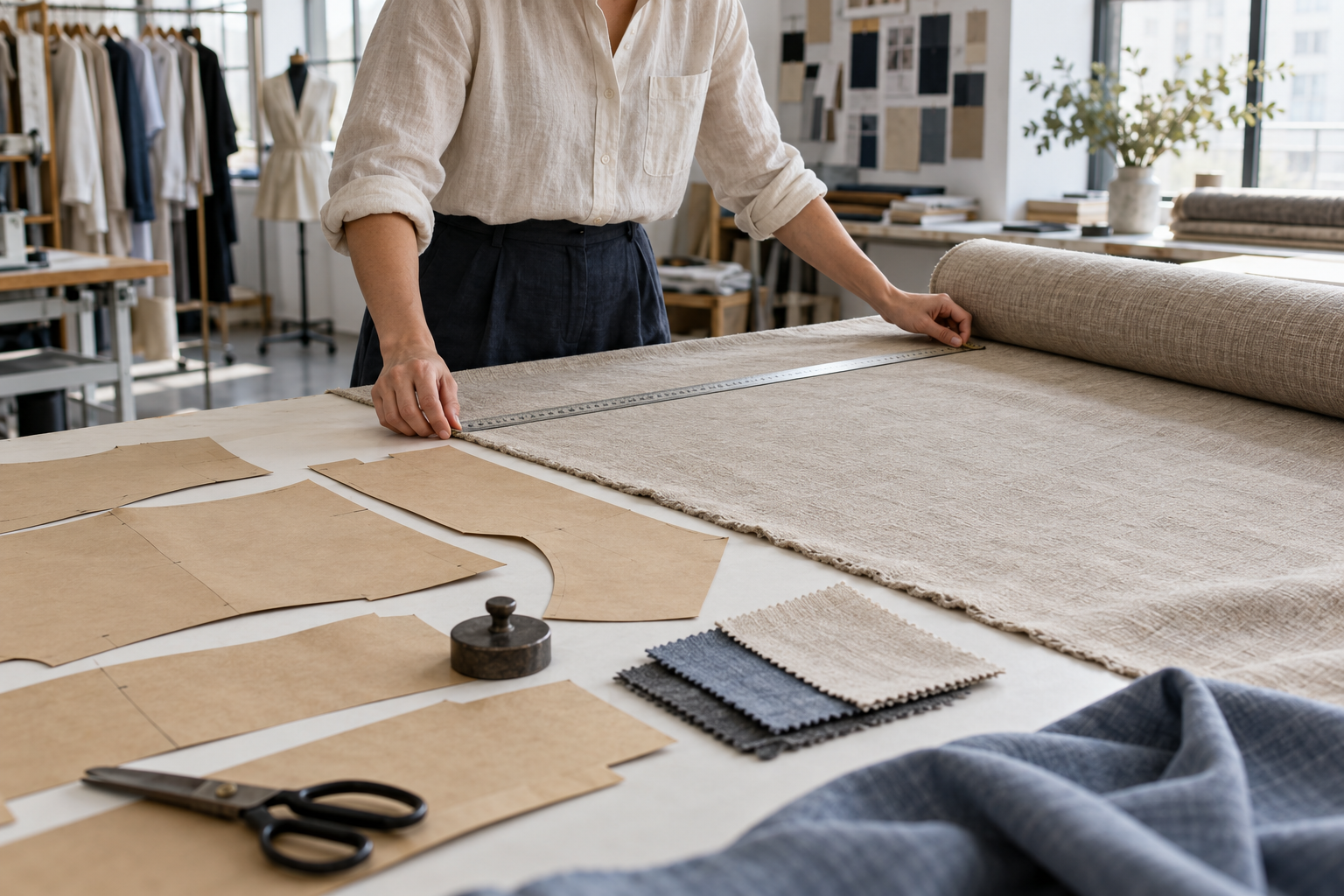
Before asking for a quote, translate the aesthetic direction into observable requirements. A useful fabric brief states the intended hand feel, thickness, surface appearance, stretch or stability, drape, opacity, and expected care considerations. The more concrete the brief, the easier it is to compare sample options fairly.
For knitwear, clarify whether the design needs two-way stretch, four-way stretch, recovery after wear, a brushed or smooth surface, a compact or relaxed hand, and a particular neck or cuff behavior. For woven apparel, clarify whether the fabric should feel crisp, fluid, dense, lightweight, textured, or durable; specify whether the garment needs to hold a defined shape.
Fiber content alone is not enough to predict the result. Fabric weight, construction, finishing, and color can all affect how the material looks and behaves. Use the fabric selection guide for private label clothing as a starting point for framing those conversations.
Adjust your technical package to the production path
A clear technical package reduces guesswork for either construction type. The same core documents still matter: flat sketches, measurement specifications, bill of materials, color references, artwork placement where relevant, and notes about workmanship. The details should change with the garment.
For a knit cut-and-sew style, include seam type, stitch appearance, rib dimensions, stretch direction, and any wash or finish expectations. For woven styles, include placket construction, collar and cuff dimensions, pocket placement, reinforcement details, lining or interfacing notes, and visible topstitching. For sweater knits, communicate gauge, yarn composition, stitch references, trims, linking or seaming expectations, and finishing appearance.
Use unambiguous visuals and version-controlled measurements. The apparel tech pack guide explains how to turn those product decisions into a supplier-readable document.
Plan sampling around the main risks
Sampling should test the points most likely to change the customer experience. With knit garments, this may include neckline recovery, seam appearance, twisting, pilling risk, shrinkage behavior, or how a print and embroidery behaves on a stretch surface. With woven styles, check balance, collar roll, seam puckering, pocket shape, placket alignment, opacity, and whether the garment moves as intended.
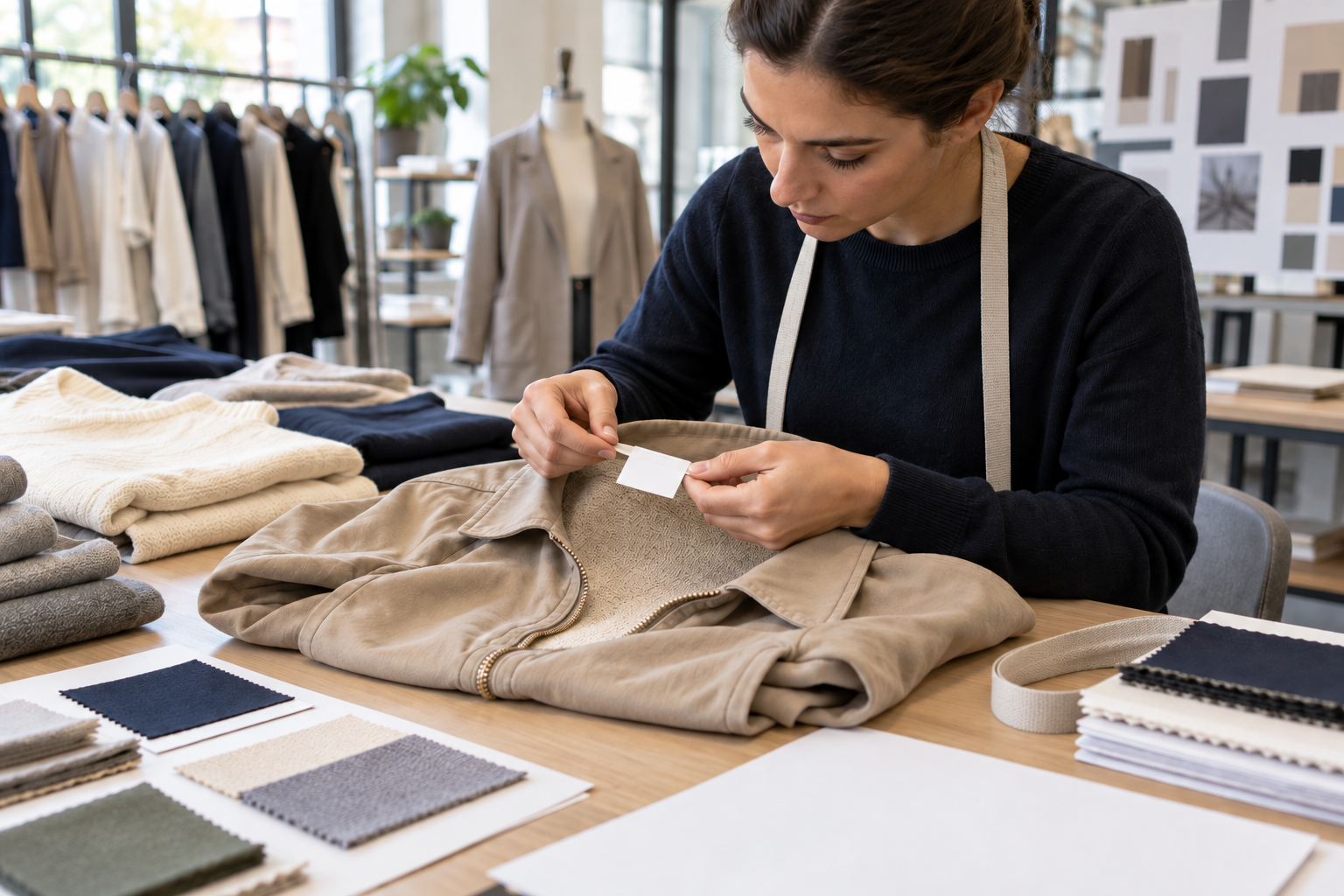
Review the sample as a complete product, not as a collection of isolated details. Compare it with the approved spec and reference images. Wear it, move in it, inspect it inside and out, and record revisions in one consolidated feedback file. If a change affects a measurement, material, trim, or construction method, call it out directly so the next sample has a clear purpose.
Consider order planning without making assumptions
Material availability and supplier requirements can affect whether a design is practical for an initial order. A fabric, yarn, color, finish, or specialized trim may have its own purchase conditions. The garment order quantity is only one part of the discussion. Ask the manufacturer to review the complete specification, planned colors, size range, and desired packaging before treating any production plan as confirmed.
For brands moving from a simple jersey item to a tailored woven capsule, or from a standard hoodie to a sweater program, it is especially useful to discuss the product range as a whole. Shared materials and components may simplify development; too many one-off variations may make approvals harder to manage. This is a planning conversation, not a rule with a universal answer.
Use the right manufacturing vocabulary
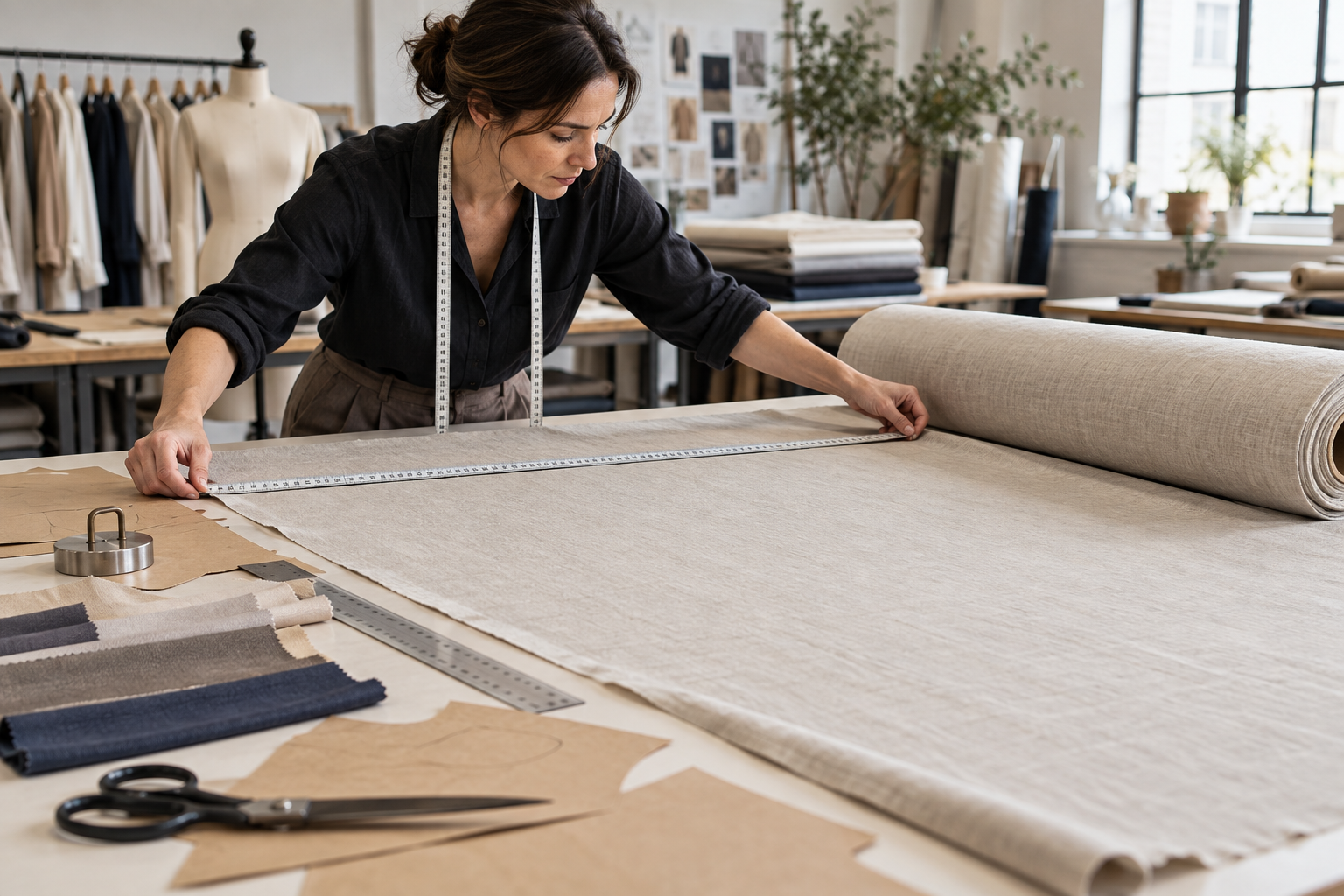
Good sourcing conversations become easier when a buyer can name the product route. “Cut and sew” generally refers to garments made by cutting fabric pieces and sewing them together. Both knit and woven fabrics can be used in cut-and-sew production. A sweater made from knitted panels may involve a different workflow from a jersey T-shirt, even though both are described as knitwear.
Be specific about what you are requesting: a cut-and-sew knit garment, a woven shirt or jacket, or a sweater knit program. The cut and sew clothing manufacturing guide offers useful context for that production route.
Common mistakes to avoid
- Choosing from a photo alone. A visually similar fabric can have very different stretch, weight, opacity, or recovery.
- Leaving fit assumptions unstated. State the intended silhouette, ease, key measurements, and size range rather than using “regular fit” as the whole brief.
- Ignoring supporting materials. Interfacing, rib, lining, elastic, thread, and labels can all affect the finished garment.
- Changing several variables during sampling. Keep a record of what changed so the next review can identify the real result.
- Comparing quotes with different scopes. Align fabric, construction, trims, finishing, packaging, and sample assumptions before comparing options.
A practical decision checklist
- Write the wearer experience in plain language: soft, structured, stretchy, crisp, relaxed, or protective.
- Identify the construction route: knit cut-and-sew, woven cut-and-sew, or sweater knit.
- Prepare reference images and note which features are essential versus aspirational.
- Build a technical package with measurable requirements and material notes.
- Request samples that test the biggest fit and fabric risks.
- Consolidate approval feedback before any next-stage production decision.
FAQ
Is knitwear always more comfortable than woven apparel?
No. Knit fabrics often offer stretch, but comfort also depends on pattern, weight, finish, seam placement, fit, and the intended activity. A well-designed woven garment can be highly comfortable, and a poorly specified knit can feel restrictive.
Can the same style be made in knit or woven fabric?
Sometimes, but it may need pattern and construction changes. Moving a design between fabric types can alter fit, drape, seam behavior, pocket shape, closure choice, and the way the garment holds its silhouette. Treat it as a development decision, not a simple fabric swap.
What should I send a clothing manufacturer before requesting a quote?
Send clear flat sketches or reference images, a measurement specification, proposed materials and trims, colorway information, branding or artwork requirements, sample expectations, and your planned order structure. State any questions that still need a manufacturing review.
Move from concept to a clearer production brief
Choosing knitwear or woven apparel is easier when the product is defined through performance, fit, construction, and material behavior—not just a mood board. If you are preparing a custom apparel range, contact Huilin Fashion with your product brief, references, and development questions to start a focused manufacturing discussion.