Garment Wash and Finish Approval Guide for Custom Clothing Brands
A garment can match its approved pattern and still miss the intended product if its wash or finish is not controlled. A softener can change hand feel, a garment wash can shift color, and a finish can affect drape, measurements, or the appearance of seams. For a fashion brand, these are not small details: they shape the customer’s first impression and the consistency of the production run.
This guide explains how to build a practical garment wash and finish approval process before bulk production. It is written for brands working with a custom clothing manufacturer, whether the product is a pigment-washed tee, a brushed fleece hoodie, a garment-dyed overshirt, or a woven style with a particular surface effect.
Why wash and finish approval needs its own checkpoint
Fabric approval is essential, but it does not answer every question that appears after a garment is sewn. Cutting, sewing, washing, drying, pressing, and finishing all interact. A fabric swatch may feel stable and smooth, while the finished garment may show seam twisting, puckering, uneven color, unexpected shrinkage, or a different hand feel.
That is why approval should be based on the finished garment whenever the style includes a wash, dye, softening process, peaching, brushing, enzyme treatment, or another finishing step. The goal is not to chase a vague idea of “better” quality. It is to turn the intended look and feel into an approval standard that the brand and factory can use consistently.
A useful process connects early fabric selection with the finished product. It also gives the production team a clear reference before bulk work begins.
Start with a finish brief that can be reviewed
Words such as “vintage,” “soft,” or “washed” are helpful creative direction, but they are not enough on their own. Different teams can interpret them differently. A finish brief should make the visual and tactile target reviewable.
Describe the intended appearance
State what the finished garment should look like as specifically as possible. For example, identify whether color should be clean and even, gently faded, visibly mottled, or intentionally irregular. Note whether edges, seams, ribs, or pocket areas should look lighter or remain uniform. If the garment is garment-dyed, explain whether tonal variation is part of the design and where variation would become unacceptable.
Reference images can help, but label what each image is meant to show. One image may be a color-direction reference, another may show surface texture, and a third may show the desired level of fading. Do not assume one retail image defines every technical requirement.
Define the hand feel and surface
Hand feel is subjective, so combine sensory language with comparison. Describe whether the fabric should feel crisp, dry, smooth, plush, brushed, broken-in, compact, or fluid. If possible, provide a physical reference swatch or an approved garment to compare against. Also note whether the surface should remain flat, develop a peach-skin effect, show brushing, or retain a natural texture.
Flag construction-sensitive details
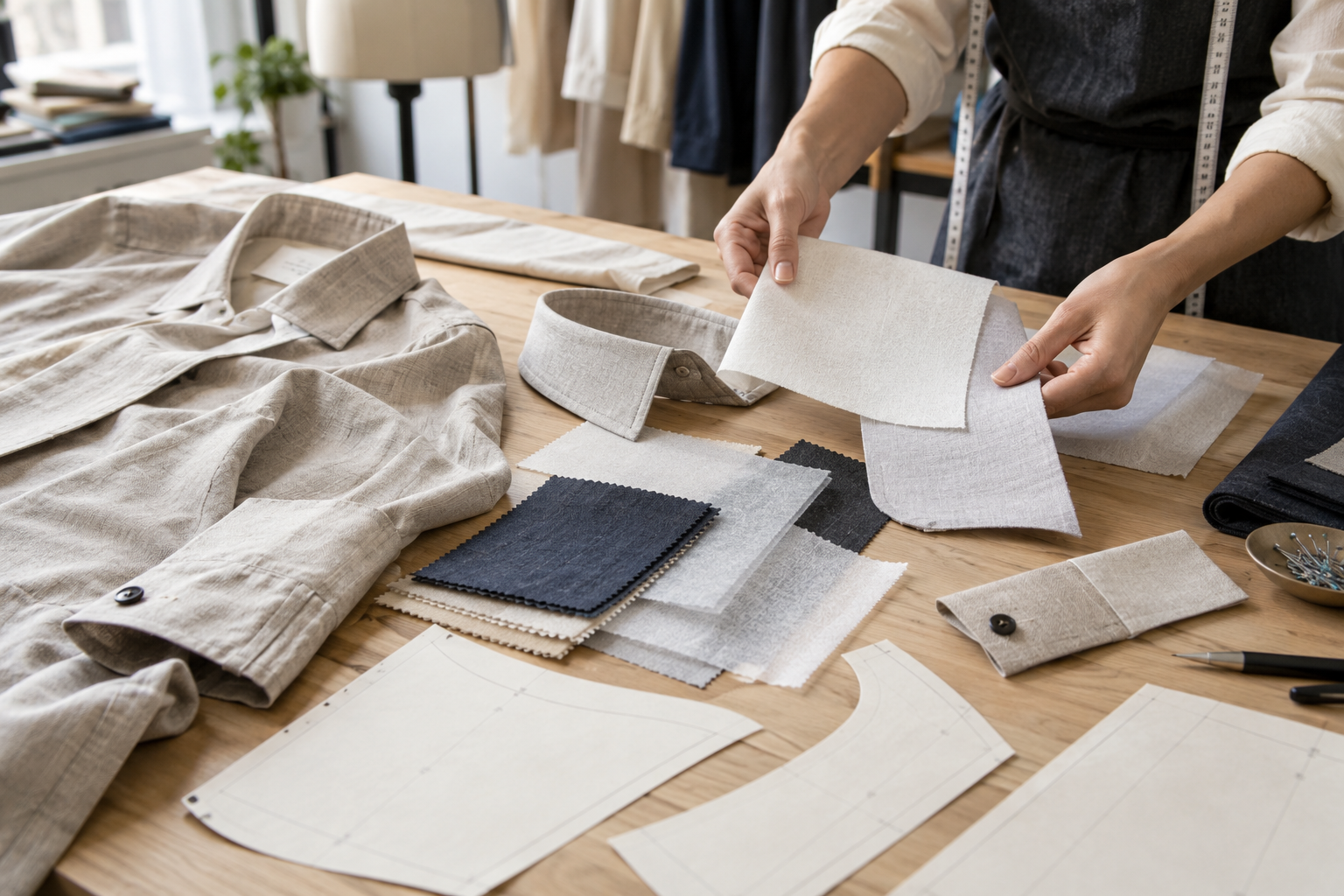
Some design details react strongly to laundering and finishing. These include contrast panels, appliqué, printed areas, embroidery, elastic, rib trims, drawcords, coated hardware, and light-colored stitching. List those details in the brief so the sample review covers the full garment rather than only the main body fabric. The same clarity used in an apparel tech pack makes the finish discussion easier to action.
Choose the right approval sample
An approval sample should reflect the process that will be used for the intended production style. An early prototype is useful for fit and design direction, but it may not be sufficient for wash approval if it uses substitute fabric, different trims, or a simplified process.
Ask the manufacturer which sample stage is appropriate for the decision. For a wash- or finish-sensitive style, the most useful sample normally includes the intended fabric, construction, trims, and finish route. If several colorways are planned, decide whether every color needs a finished sample or whether representative color groups should be reviewed. Dark, bright, pale, and mélange colors can react differently; a single sample is not always representative.
Keep the approved sample, images, and written comments together. This creates a reference set, not merely an email trail. It also makes later questions easier to resolve during pre-production review.
Review the finished garment in a disciplined order
A repeatable review sequence helps teams spot issues without getting lost in preferences. Lay the garment flat, view it under consistent neutral light, then handle and measure it. Review more than one piece when samples are available, because variation is often easier to see side by side.
1. Check color and visual consistency
Compare the sample with the approved color reference and intended finish direction. Look across body panels, sleeves, ribs, collars, pockets, and seams. Check whether wash effects are balanced where they should be balanced, and whether intended variation looks designed rather than accidental. Review the garment both flat and worn or draped, since folds can reveal streaking or contrast that is less obvious on a table.
2. Check measurements after processing
Measure the garment after the full wash and finish sequence, not before it. Compare the results against the approved measurement specification and tolerance. Pay close attention to body length, sleeve length, width points, rib openings, inseam, rise, and any area likely to be affected by shrinkage or torque. If the process changes measurements, resolve the pattern or process before bulk production instead of treating the change as a final-stage exception.
3. Check hand feel, drape, and recovery
Handle the garment consistently: feel the body, seams, ribs, cuffs, collar, and any reinforced areas. Does the finish create the intended touch? Does the fabric feel overly stiff, limp, rough, or coated? Lift and drape the garment to assess weight and movement. Stretch elasticized areas gently to see whether they recover appropriately. These observations should be written as clear approval comments, not only as a general “looks good.”
4. Check workmanship after washing
Washing can expose construction issues that are hidden in an unwashed garment. Inspect seam twisting, puckering, skipped stitches, uneven hems, distorted necklines, loose trims, damaged prints, and changes around embellishments. Use a structured garment quality-control checklist as a companion, while keeping the finish-specific requirements visible.
Separate acceptable character from unacceptable variation
Many washed products are designed to have some individuality. The challenge is making that individuality intentional and commercially consistent. Before approving, agree on what may vary and what must remain controlled.
- Usually define as controlled: garment measurements, structural integrity, trim function, unsafe or damaged surfaces, and major color mismatch within a colorway.
- May be design-led: mild tonal movement, local fading, grain variation, or a slightly broken-in appearance—only when these are part of the approved direction.
- Needs a written decision: contrast at seams, wash marks near logos or prints, shade difference between lots, and the acceptable range of distressing or abrasion.
Photograph the approved sample from useful angles, including close-ups of important areas. Images do not replace the physical standard, but they make the agreed direction easier to communicate across product development, sourcing, and quality teams.
Turn feedback into a production-ready approval
The most effective sample feedback distinguishes between observations, decisions, and actions. An observation might be “sleeves appear darker than the body.” The decision is whether that contrast is acceptable. The action states what should happen next: adjust the wash route, revise the construction, provide another sample, or proceed with the existing standard.
When comments are needed, make them specific:
- Identify the garment area and colorway.
- Describe the desired change relative to the approved direction.
- State whether the item needs resubmission or can be corrected in production.
- Confirm whether measurements should be checked again after the change.
- Consolidate feedback so the manufacturer receives one clear direction.
For the broader process of giving usable sample comments, see this guide to fit sample feedback for clothing manufacturers. The same principle applies here: precise, consolidated feedback reduces avoidable loops.
Questions to ask before approving bulk production
Before confirming the sample, use a short decision check. Has the final fabric and trim combination been reviewed after washing? Are the measurements checked after the process? Is the intended variation documented? Does the approved sample show the correct color, hand feel, and construction? Has the factory received one final set of comments and a clear proceed or resubmit decision?
If any answer is uncertain, it is usually better to clarify it before bulk production starts. This does not mean requiring perfection in every visual nuance. It means establishing a realistic, shared standard that protects the product intent.
FAQ
Should a brand approve a wash before or after sewing?
Both can be useful, but they answer different questions. A fabric-level trial can indicate color, shrinkage, and hand feel. A finished-garment sample shows how the complete construction, trims, and pattern behave through the intended process. For garment washes and finishes, the finished sample is the key approval reference.
Can a finish change garment measurements?
Yes. Washing, drying, dyeing, and finishing can affect dimensions and shape. Measure after the complete intended process and compare with the approved specification before authorizing bulk production.
How should brands handle intentional wash variation?
Document the visual direction with an approved sample, written notes, and supporting images. Define what variation is acceptable and what would be considered a defect or mismatch. This gives the production team a practical standard without removing the character of the finish.
What if the sample feels right but the color is not right?
Record the hand-feel approval separately from the color decision. A sample can be a useful process reference while still needing a color adjustment or another submission. Do not let approval of one attribute imply approval of all attributes.
Build a stronger production handoff
A well-managed garment wash and finish approval process gives your collection a clearer bridge from design intent to repeatable production. Start with a reviewable brief, approve a representative finished sample, inspect color, measurements, hand feel, and workmanship in order, then document the final standard in one place.
If you are preparing a wash- or finish-sensitive custom apparel style, contact Huilin Fashion with your product brief, reference images, fabric direction, and target finish. A focused early review helps make the sampling conversation more practical and production-ready.