Fabric Weight (GSM) for Clothing Production: A Brand Guide
Fabric weight is one of the earliest choices that shapes how a garment looks, feels, fits, and performs. For apparel brands developing a custom style, GSM—grams per square metre—gives a useful starting point for describing material weight. It is not a quality score, and it cannot replace a physical swatch or sample. Used well, though, it helps a brand and manufacturer discuss the intended body, coverage, durability, and seasonal role of a fabric before sampling begins.
This guide explains how to use GSM as part of a practical fabric brief. The aim is not to select a “correct” number in isolation, but to arrive at a material specification that can be sampled, reviewed, and approved with fewer surprises.
What GSM tells you—and what it does not
GSM measures how much one square metre of fabric weighs. Within the same fabric construction and fibre blend, a higher GSM will often feel more substantial than a lower GSM. It may offer more coverage, structure, or warmth. A lower GSM may feel lighter, airier, and more fluid.
That relationship has limits. A 220 GSM open knit can behave very differently from a 220 GSM compact jersey. Fibre type, yarn size, weave or knit construction, finishing, stretch, and colour all influence the finished result. A heavier fabric is not automatically more durable, more premium, or more suitable for every style.
Think of GSM as one field in the material brief, alongside composition, construction, stretch, width, finish, colour, and the garment’s intended use. For a broader framework, start with fabric selection for private label clothing, then use GSM to make the discussion more specific.
Start with the garment’s job
Before naming a target weight, describe what the garment needs to do. A lightweight fashion top, a year-round jersey tee, and a structured overshirt can all be made from cotton-based fabrics, but they need different levels of opacity, drape, recovery, and body.
Ask these practical questions:
- Will the piece be worn alone, layered, or used as an outer layer?
- Should it skim the body, hold a defined silhouette, or move fluidly?
- Is the priority breathability, warmth, abrasion resistance, stretch recovery, or a particular hand feel?
- Will it carry embroidery, print, pockets, plackets, or other details that need fabric support?
- What climates and seasons are most relevant to the collection?
These answers prevent a common problem: selecting a number because it sounds substantial, only to find that the sample is too stiff, warm, sheer, or difficult to sew for the intended design.
Use ranges, not a single number, at the brief stage
An early brief is usually stronger when it names a preferred range and the desired outcome. For example, a brand might request a medium-weight cotton jersey with a smooth face, moderate body, low show-through, and enough stability for a clean rib neckband. Another style might need a lightweight woven with a soft drape and lining compatibility.
A range gives the supplier room to identify available options while keeping the design intent clear. It also makes it easier to compare swatches fairly. If the project later requires a custom material, the range still helps guide development without implying that GSM alone defines the fabric.
Match weight to construction and finishing
Record the construction with the target weight: jersey, interlock, rib, fleece, twill, poplin, satin, ponte, and other structures create different results at similar GSM values. Also note desired finishing, such as brushed, washed, peached, compacted, or garment dyed. Finishing can change both hand feel and dimensions, so it should be considered before the bulk specification is locked.
Evaluate opacity, drape, and recovery on real swatches
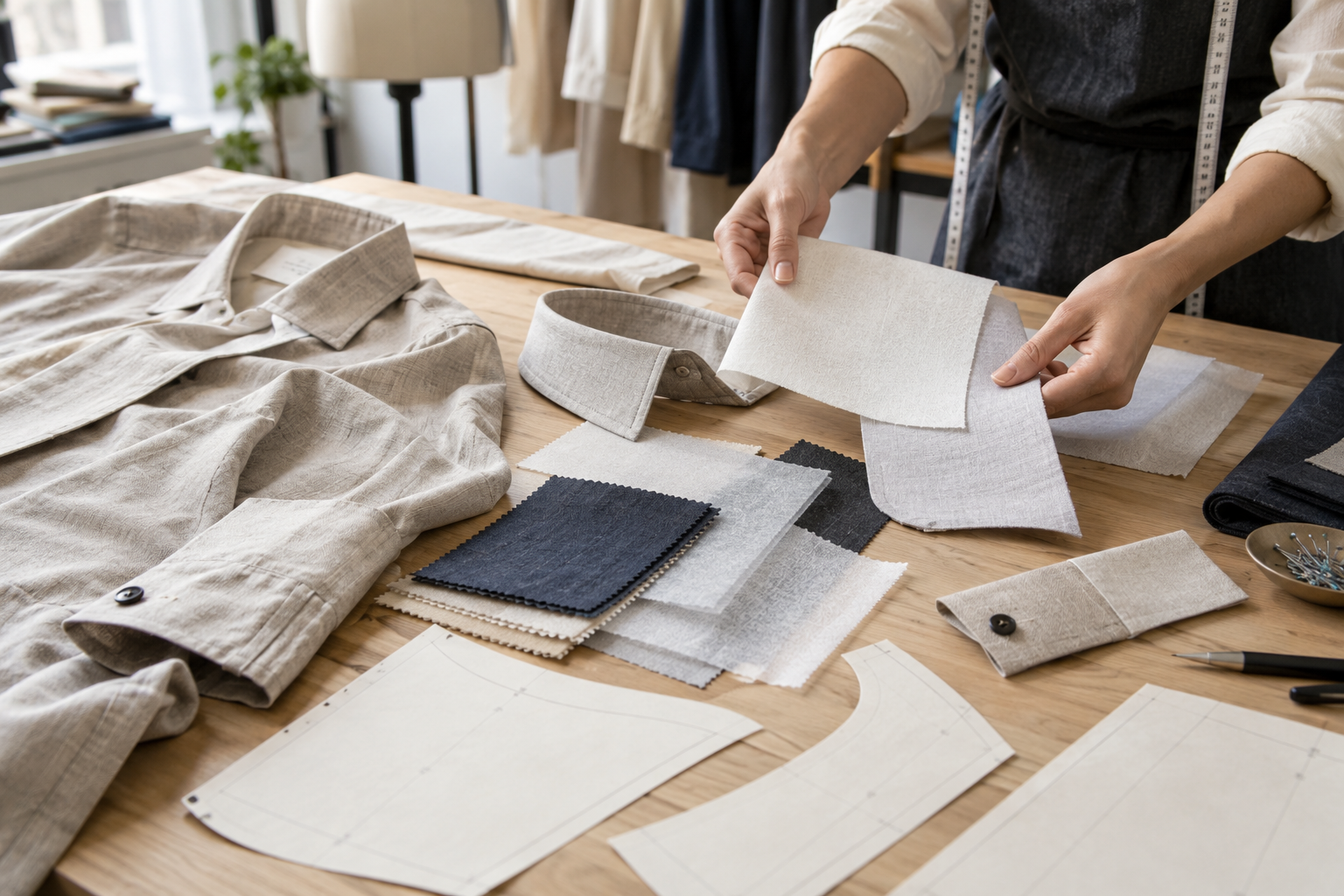
Digital photos and a supplier’s fabric name cannot show the whole story. Request physical swatches where possible, then review them under appropriate light and on the garment type they will become. Hold light-coloured materials up to light, stretch them when relevant, and consider whether seams, pockets, or internal components will show through.
Drape is equally important. Support a swatch at one edge and observe whether it falls softly, springs away, or keeps a crisp shape. For a stretch fabric, gently extend it and let it recover. The behaviour matters more than a nominal GSM figure.
Use a simple review record: swatch reference, supplier, composition, construction, stated GSM, colour, observed hand feel, opacity result, stretch/recovery notes, and the decision. This creates a useful trail when the team compares alternatives or reviews a later sample.
Consider GSM alongside fit and construction
Fabric weight affects how a pattern reads on the body. A softer or lighter fabric can reveal more of the body and respond more visibly to small pattern changes. A heavier or more stable fabric may support a boxier shape, but can add bulk at seams, hems, collars, and gathers. The same measurement specification may therefore need different construction choices when the fabric changes.
Make the material reference part of the fit-sample brief. The sample should use the intended fabric, or the closest approved equivalent, before fit is finalized. Pair the review with clear measurement tolerances so the team distinguishes an expected material response from an avoidable measurement issue.
Details deserve attention too. Heavy fabric can create thick seam stacks; very light fabric may need reinforcement behind a placket, zipper, button, or embroidery. Ask the manufacturer to flag areas where the material and construction do not work comfortably together.
Build GSM into sampling without over-specifying
Sampling is where a written preference becomes an informed production decision. Include the fabric reference in the tech pack or sample request, but ask for the actual batch or swatch reference used. If substitutions are proposed, compare them against the approved requirements rather than accepting a vague description such as “similar quality.”
During the sample review, assess the garment as a whole:
- Does it deliver the intended coverage, shape, and comfort?
- Do the seams, ribs, facings, and trims sit cleanly without excessive bulk or distortion?
- Does the material behave appropriately after the relevant care or finish process?
- Do the colour and surface appearance meet the design brief under normal lighting?
- Is the fabric reference recorded clearly enough for production?
A disciplined clothing sample development process gives these questions a place to be resolved before a bulk order is underway.
Confirm the bulk-production reference
Once a sample is approved, capture the complete material reference in the production documents. That normally includes supplier or mill reference, fibre composition, construction, target GSM or agreed tolerance where appropriate, usable width, colour standard, finish, and any agreed test or wash requirements. Keep an approved cutting or fabric reference swatch with the production file whenever the workflow allows.
Before bulk cutting, confirm whether the material supplied matches the approved reference. This is especially important when a colour, finish, or supplier source changes. A practical pre-production review can connect the fabric approval with trims, artwork, measurements, and the final sample; use a pre-production approval checklist to make that handoff visible.
Common mistakes brands can avoid
- Treating GSM as a quality grade. Weight describes mass per area, not fibre quality, construction, colourfastness, or workmanship.
- Approving from a photo alone. Drape, opacity, and hand feel need a physical review whenever possible.
- Ignoring the garment colour. Pale shades can reveal more than dark shades in the same fabric.
- Finalizing fit in a substitute fabric. Even a close substitute can change how the pattern sits.
- Leaving the material reference vague after sampling. “Same as sample” is less useful than a documented fabric specification and approved swatch.
FAQ
Is a higher GSM fabric always better for clothing production?
No. A higher GSM may suit a structured, warm, or durable style, but it can also reduce drape or add bulk. The right choice depends on the garment’s use, construction, silhouette, and desired hand feel.
Can two fabrics with the same GSM feel different?
Yes. Fibre blend, yarn, knit or weave structure, finishing, stretch, and density can produce noticeably different fabrics at the same stated weight.
Should a brand specify an exact GSM in a tech pack?
Use an exact value when the material has been fully developed and approved. Earlier in development, a range plus construction and performance requirements is often more useful. In either case, link the written specification to an approved physical reference.
Turn a fabric-weight preference into a production-ready decision
The best GSM decision is not made from a chart. It comes from connecting the garment’s purpose to the material’s real behaviour, reviewing a representative sample, and documenting the approved reference for bulk production. That approach helps brands protect the look and feel they intended while giving the production team a clearer basis for execution.
If you are preparing a custom clothing brief, contact Huilin Fashion with your garment concept, intended use, fabric preferences, and reference images to begin a focused material and sampling discussion.