Fabric Grainline in Clothing Production: A Practical Guide for Apparel Brands
Fabric grainline is an easy detail to overlook in an early apparel brief, yet it influences how a garment hangs, stretches, twists, and keeps its intended shape. For a brand working with a clothing manufacturer, a clear grainline decision connects the design idea to pattern development, fabric selection, sample review, and bulk-production instructions.
This guide explains what grainline means in clothing production, where it matters most, and how to document it so a development team can make consistent decisions. The aim is not to turn every buyer into a pattern cutter; it is to help you ask useful questions before a small uncertainty becomes a visible fit or appearance issue.
What fabric grainline means
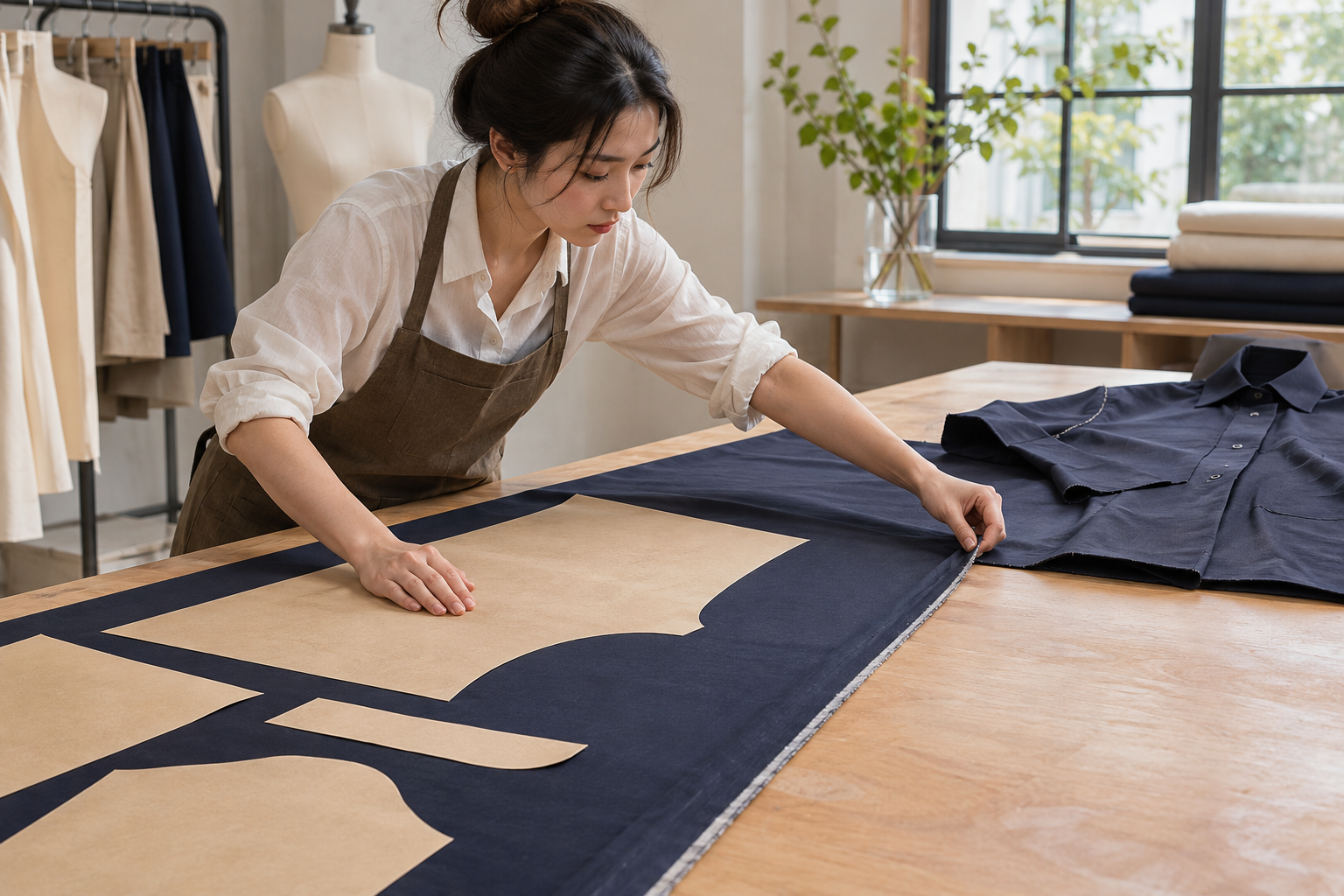
In woven fabric, grainline describes the direction of the yarns. The lengthwise yarns running parallel to the selvage are the warp; the crosswise yarns are the weft. A pattern piece placed parallel to the selvage is generally said to be on the straight grain. A piece may also be placed across the fabric or on the bias, usually at roughly 45 degrees to the straight grain.
These directions do not behave the same way. Straight grain normally offers the most stability for a woven garment. Cross grain can have a different drape or visual effect, depending on the fabric. Bias placement often allows more movement and fluidity, but it can require careful handling because the cut piece may shift or stretch more easily.
For knits, the language is sometimes less formal, but direction still matters. The course and wale direction, stretch direction, recovery, and print orientation should be identified before pattern pieces are nested. A fabric that stretches comfortably around the body in one direction may not perform the same way when rotated.
Why grainline matters to an apparel brand
Grainline is a construction decision with commercial consequences. It can affect silhouette, comfort, repeatability, fabric use, and the consistency of a range across colors or production runs. A good brief does not need to prescribe every pattern-making choice, but it should make the intended effect clear enough for the pattern team to test.
Hang, balance, and silhouette
A shirt front, trouser leg, or dress panel cut off grain may not hang as intended. Seams can appear to spiral, side seams can drift, and a hem can look uneven once the garment is worn. This is especially noticeable on long panels, tailored shapes, and fabrics with a visible stripe, check, rib, or texture. When a style relies on a clean vertical line, say so in the design brief and review the sample on a body or mannequin rather than only on a flat table.
Stretch and recovery
Direction changes how fabric gives under movement. A bias-cut woven slip can feel more forgiving than the same garment cut on straight grain. A knit sleeve or waistband needs stretch in the direction that supports dressing and wear. The right choice depends on the garment function, fabric construction, ease allowance, and intended fit; it should be confirmed through a representative sample rather than assumed from a swatch alone.
Appearance and pattern matching
Directional prints, stripes, plaids, brushed surfaces, and one-way textures need deliberate placement. A garment can be technically sewn correctly but still look inconsistent if one panel is rotated or if a visible motif lands in an unintended position. Record whether the design requires a particular direction, symmetry, or matching across key seams. That gives the manufacturer a clear basis for pattern layout and sample review.
Start with the fabric, not only the sketch
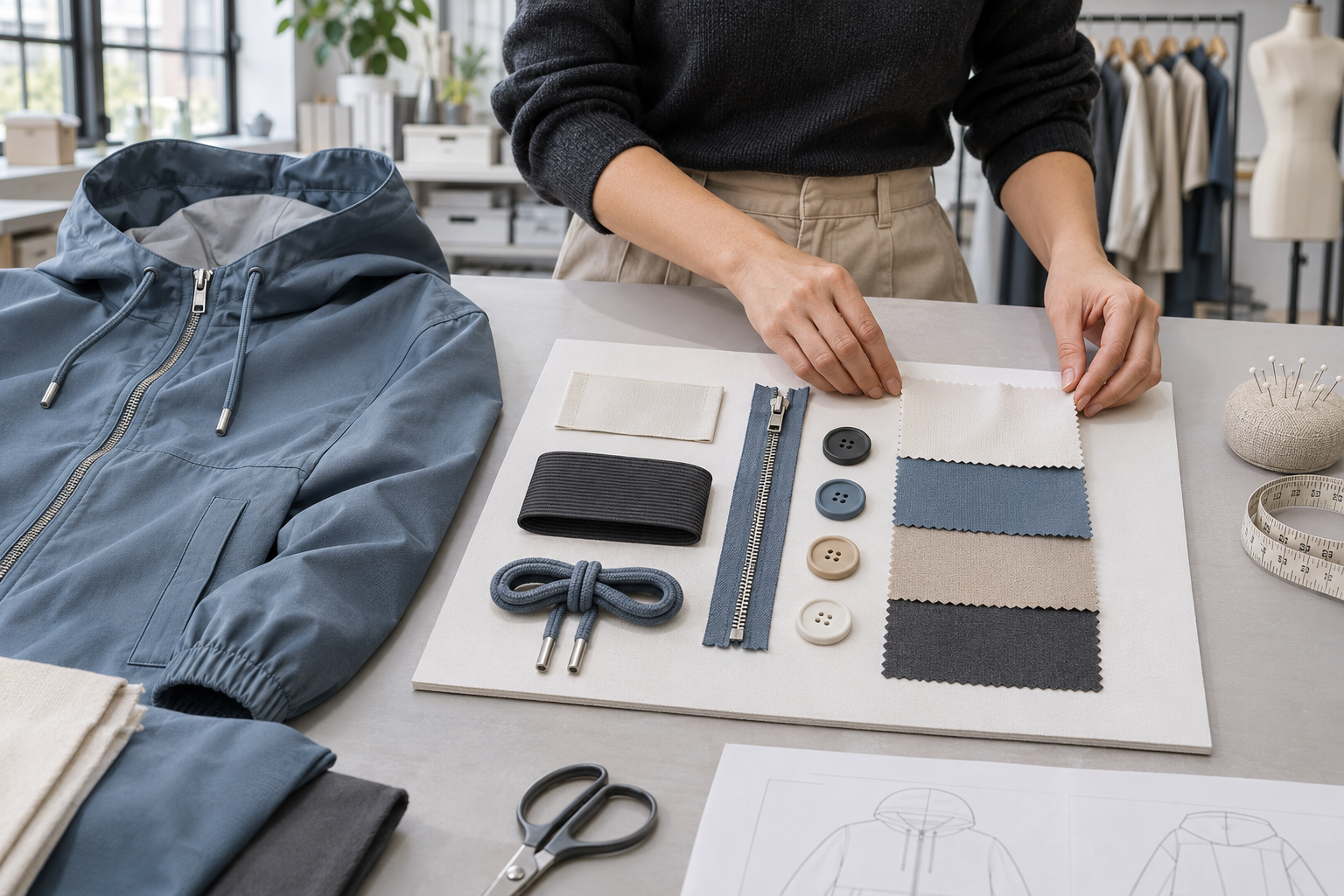
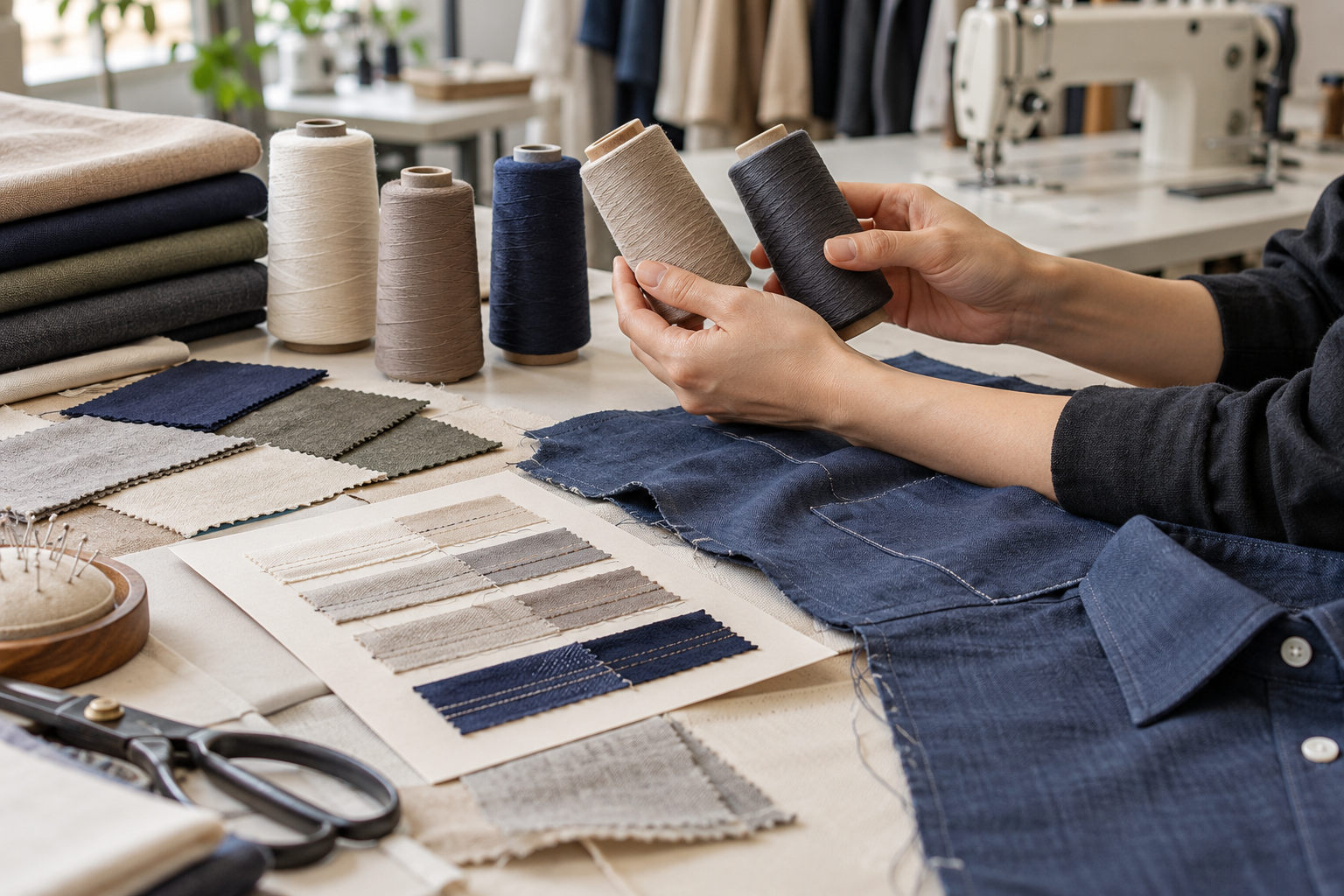
Before finalizing a grainline request, identify the actual fabric intended for development. Fiber content alone is not enough: weave or knit structure, weight, finish, width, stretch, and shrinkage all influence pattern behavior. A concept that works in a stable poplin may need different handling in a fluid twill or a stretch jersey.
Keep the material record tied to the style. Your fabric specification should identify the approved material, colorway, usable width, and any directional feature that affects cutting. If usable width is still being confirmed, use the process outlined in this fabric-width guide for clothing production to make sure the team is discussing the same working width rather than a nominal number.
Decide which pieces need a specific direction
Not every garment piece requires a separate buyer instruction. Focus on components where direction changes the wearer experience or visible finish. For each relevant piece, describe the design intent in plain language, then ask the pattern team to translate it into a production-ready grainline notation.
- Body panels: Confirm the intended direction for fronts, backs, side panels, and long skirts or legs.
- Sleeves: Check stretch direction, stripe orientation, and how the sleeve behaves when the arm moves.
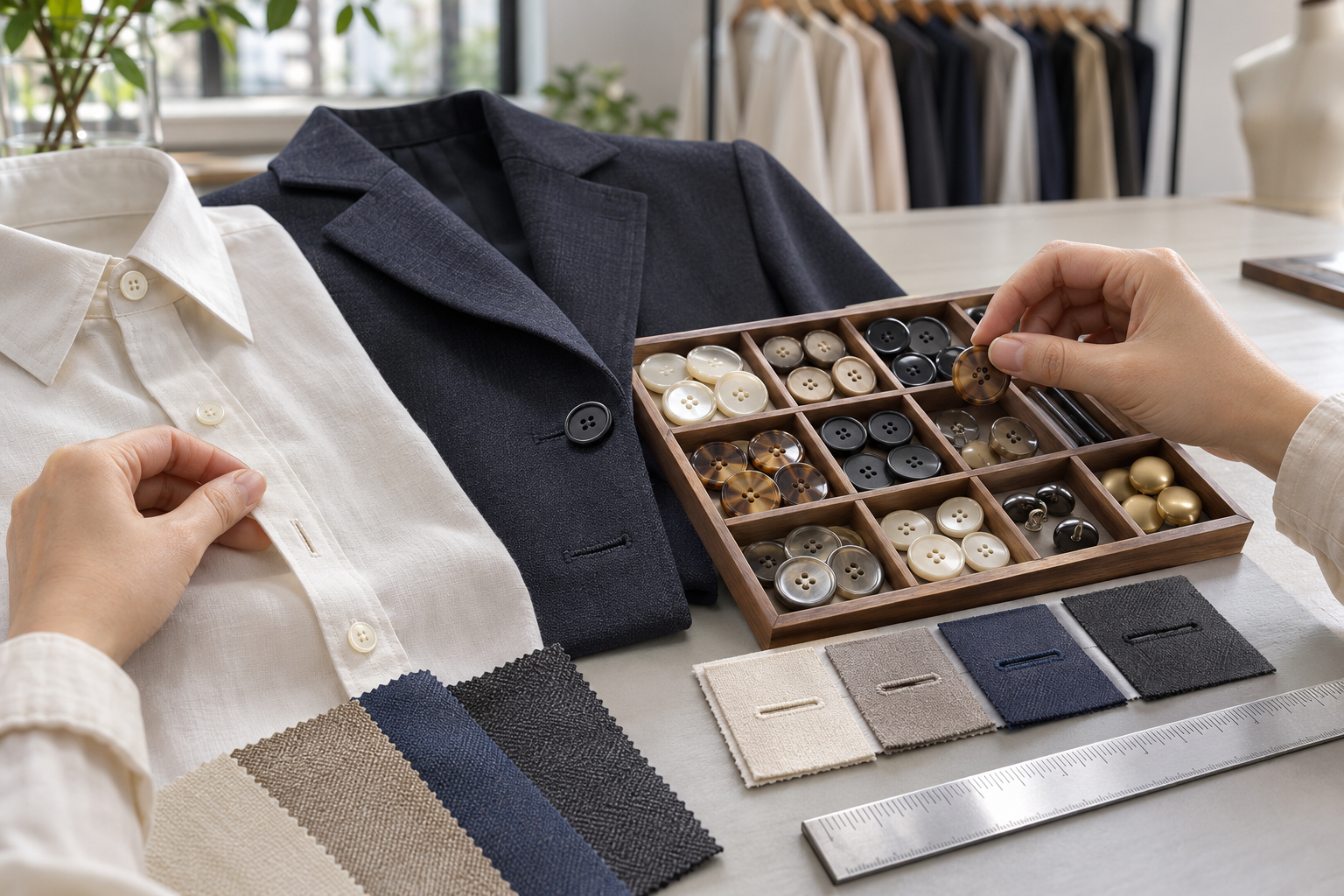
- Collars, cuffs, plackets, and waistbands: Consider stability, interface choices, and whether the fabric direction supports the component’s function.
- Pockets, flaps, yokes, and contrast panels: State whether these should match the body, intentionally contrast, or align with a print.
- Bias details: Identify any binding, piping, bias panel, or draped element that is intentionally cut off straight grain.
Where a fabric has a strong stripe or plaid, mark the visual reference point as well. “Match at side seam” is more useful than a vague request for “good alignment.” If the placement is aesthetic rather than mandatory, label it as a preference so the team can explain the trade-offs during sampling.
Put grainline information in the tech pack
The tech pack is the practical home for buyer decisions that need to survive revisions. Include a flat sketch or construction page that flags directional fabric, pattern matching, or bias-cut details. Add close-up references where placement matters, and keep the instruction connected to the correct style code, colorway, and fabric version.
A concise note can be enough: “Front and back panels on straight grain, parallel to selvage; vertical stripe direction; match stripes at center front and side seams where feasible.” Avoid copying a note from one style to another without checking whether the material and construction are still comparable. For a broader view of the documents that support development, see our guide to apparel tech packs.
Useful fields to include
- style name or code and revision date;
- approved fabric reference and colorway;
- cut direction for any critical pattern piece;
- print, stripe, plaid, nap, or texture orientation;
- matching locations and any acceptable variation;
- bias-cut components and handling considerations; and
- sample checkpoints that must be reviewed before bulk approval.
Review grainline during sampling
A sample is the right place to check whether the direction written on paper produces the intended garment. Inspect the garment laid flat and worn. Look at whether center lines sit straight, whether seams twist after gentle movement, whether stripes or motifs read consistently, and whether panels recover after handling. If the fabric is washed or finished as part of the product concept, assess the relevant sample after that treatment as well.
Give feedback with annotated photos and a single source of truth for revisions. For example, specify the affected panel, the observed result, the desired direction, and whether a new sample check is needed. This keeps pattern, sample-room, and buyer feedback aligned. If shrinkage could change the result after processing, coordinate the review with the considerations in this fabric shrinkage guide.
Balance design intent with cutting practicality
Some grainline choices use more fabric or limit how pattern pieces can be arranged. Large directional prints, strict plaid matching, and bias-cut panels may require a different layout from a plain, non-directional fabric. That is not a reason to avoid them; it is a reason to decide intentionally. Ask the manufacturer to flag material-use or construction implications early, then decide what is essential to the design.
Keep the conversation focused on the product requirement rather than an assumed outcome. You can ask for alternative layout options, representative cut panels, or a revised sample if the first approach does not achieve the desired drape or alignment. This is more productive than changing direction late in the process without revisiting fit, appearance, and documentation.
A buyer-ready grainline checklist
- Confirm the intended production fabric, colorway, and usable width.
- Identify directional features such as stripes, checks, nap, print direction, or one-way texture.
- Flag body panels and components where direction affects fit, stability, or appearance.
- Document the instruction in the current tech pack revision.
- Review grainline, balance, and matching on the sample, both flat and worn.
- Record approved changes before the production handoff.
FAQ
What is the difference between straight grain and bias in clothing?
Straight grain follows the warp direction of a woven fabric and generally provides stable structure. Bias runs diagonally across the fabric and often creates more movement and drape. The suitable choice depends on the fabric and the garment’s intended shape.
Should a buyer specify grainline on every pattern piece?
Usually, no. Focus on pieces where direction changes performance or appearance. The pattern team can apply standard construction practice to routine pieces, while your brief calls out the non-negotiable design requirements.
Can grainline affect a garment after washing?
It can interact with fabric movement and shrinkage, particularly when the material has directional behavior or the garment includes long panels. Review the relevant sample after the treatments that are part of your product plan.
Make the direction clear before production
Clear grainline decisions give a clothing manufacturer a better basis for pattern development, sample evaluation, and production communication. Bring the fabric, sketch, component priorities, and sample feedback together before final approval. If you are preparing a custom apparel brief, contact Huilin Fashion to discuss your style requirements and development documentation.