How to Evaluate a Clothing Manufacturer in China for Your Startup Brand
Choosing a clothing manufacturer in China can be a strong option for startup fashion brands, but the decision should be made with a clear evaluation process. A good factory match means the team can understand your product direction, communicate clearly, support your order size, manage sampling, and keep quality consistent.
For many new brands in the US, Europe, Canada, and Australia, the biggest sourcing challenge is knowing how to compare suppliers before placing a first order. This guide walks through practical questions to ask, documents to prepare, and warning signs to watch for when evaluating a China-based apparel manufacturing partner.
Start With the Product Category You Actually Need
Before contacting any manufacturer, define your product category as specifically as possible. “Custom clothing” is too broad for serious sourcing. A factory that is comfortable with casual knitwear may not be the right match for structured coats, tailored pants, swimwear, uniforms, or outdoor apparel. The clearer your garment type, the easier it is to identify relevant production experience.
Prepare a short product brief that explains the apparel category, target customer, expected fit, season, fabric direction, size range, trims, labels, and packaging needs. If you already have sketches, reference images, measurements, or an existing sample, organize them before the first conversation.
Questions to ask at this stage
- Does the manufacturer regularly make products similar to yours?
- Can they support the fabric, trims, construction, and finishing your design requires?
- Do they understand your market’s expectations for fit, comfort, and finishing?
- Can they discuss both sampling and bulk production, not just quote a single item?
If the answers are vague, slow, or inconsistent, keep looking. Early communication usually reflects how the production relationship will feel later.
Check Whether the MOQ Fits Your Launch Plan
Minimum order quantity is one of the most important issues for startup clothing brands. A low MOQ can help reduce inventory risk, test designs, and gather feedback before scaling. However, low MOQ production still requires discipline. Too many styles, colorways, and fabric variations can make a small first collection difficult to manage.
Instead of asking only, “What is your MOQ?”, explain your planned number of styles, colors, sizes, and approximate units per style. Ask the manufacturer how they would structure the order to make production practical. A focused capsule collection with shared fabrics and trims is often easier to manage than a broad collection with many unrelated materials.
For more planning context, see Huilin Fashion’s startup-focused page on working with a low MOQ clothing manufacturer in China.
Prepare a Clear Tech Pack Before Asking for a Quote
A serious quote depends on serious information. If a manufacturer receives only a mood board or a few inspiration images, the number can change once details become clear. To compare suppliers fairly, provide the same information to each one.
Your tech pack does not need to be overly complicated at the beginning, but it should include enough detail for sampling and costing. Include sketches or reference photos, fabric requirements, measurement points, size specs, stitching details, trims, labels, packaging, color references, and special finishing requirements. If some details are undecided, mark them clearly instead of leaving the factory to guess.
What a manufacturer should be able to clarify
- Which details affect cost or production difficulty
- Which construction methods are realistic for your target product
- Which fabrics or trims may require sourcing alternatives
- Which missing details must be confirmed before sampling
A supplier who asks thoughtful questions is often more valuable than one who sends a fast but shallow quote. Detailed questions show that the team is reading your design carefully and thinking about production risk.
Evaluate Sampling as a Process, Not a Single Step
Sampling is where a clothing manufacturer proves whether it can translate your idea into a wearable product. For startup brands, this stage is also where many hidden issues appear: fabric behavior, pattern balance, fit, stitching quality, label placement, and whether the product still matches the original brand direction after practical adjustments.
Ask how the manufacturer handles prototype samples, fit revisions, pre-production samples, and final approval before bulk production. You should understand what happens after the first sample arrives and how feedback is documented.
When reviewing a sample, avoid giving comments such as “make it better” or “fit is off.” Instead, provide measurable feedback: shoulder width, body length, sleeve opening, seam position, pocket placement, fabric hand feel, label location, or stitching tension. A structured feedback file helps both sides reduce confusion.
If you are building your first collection, review this guide to clothing sample development for startup brands before starting the sampling stage.
Review Fabric and Trim Sourcing Carefully
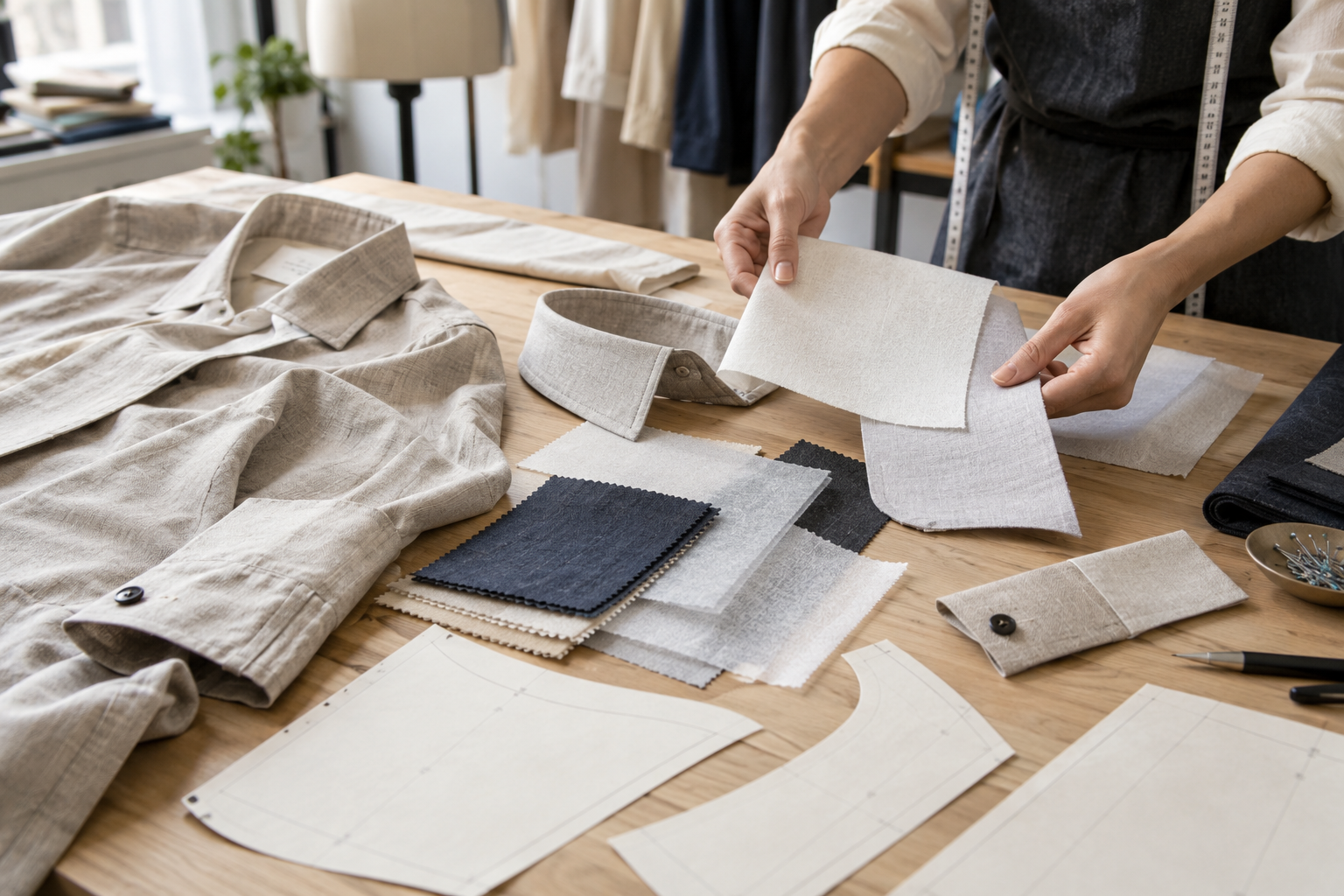
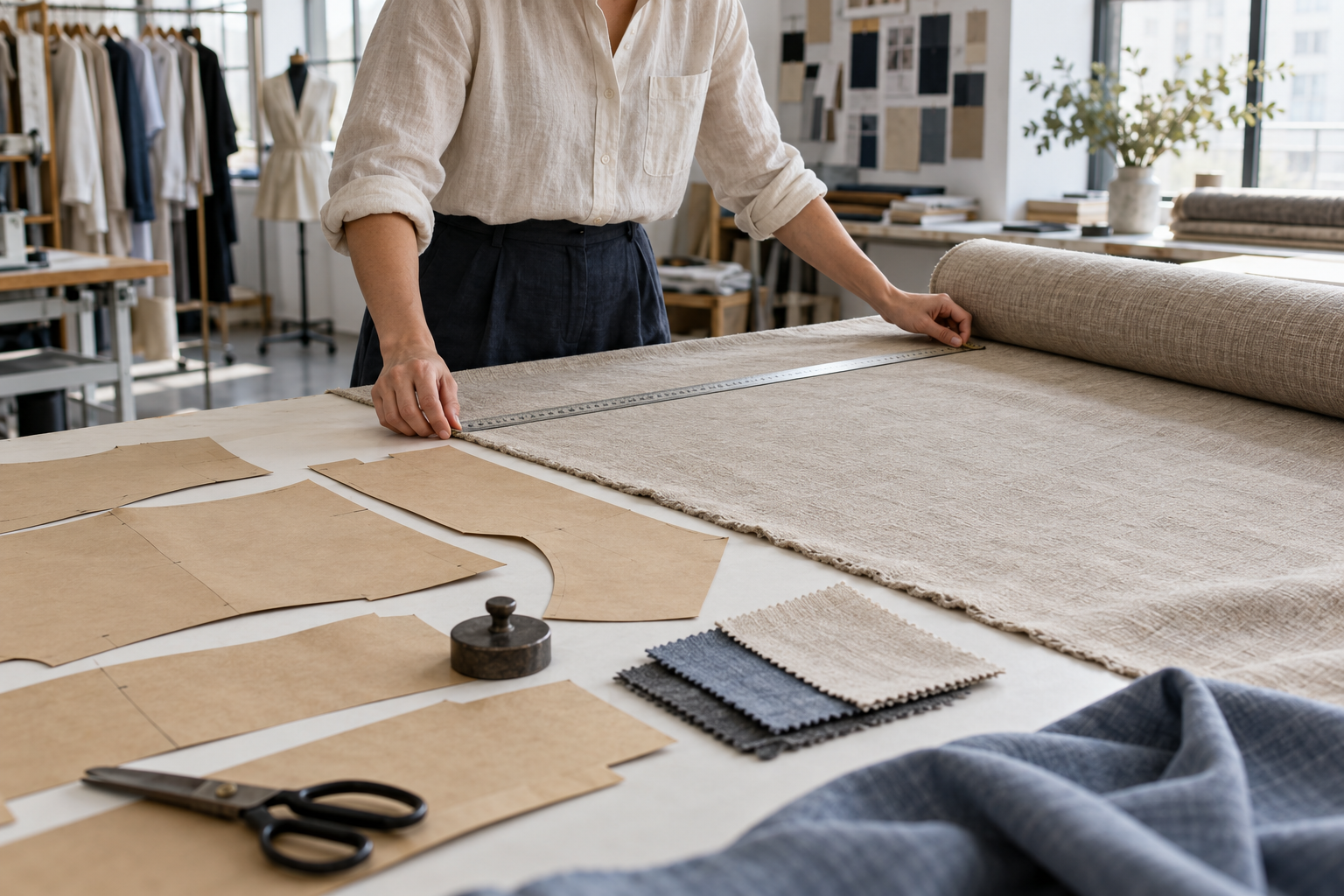
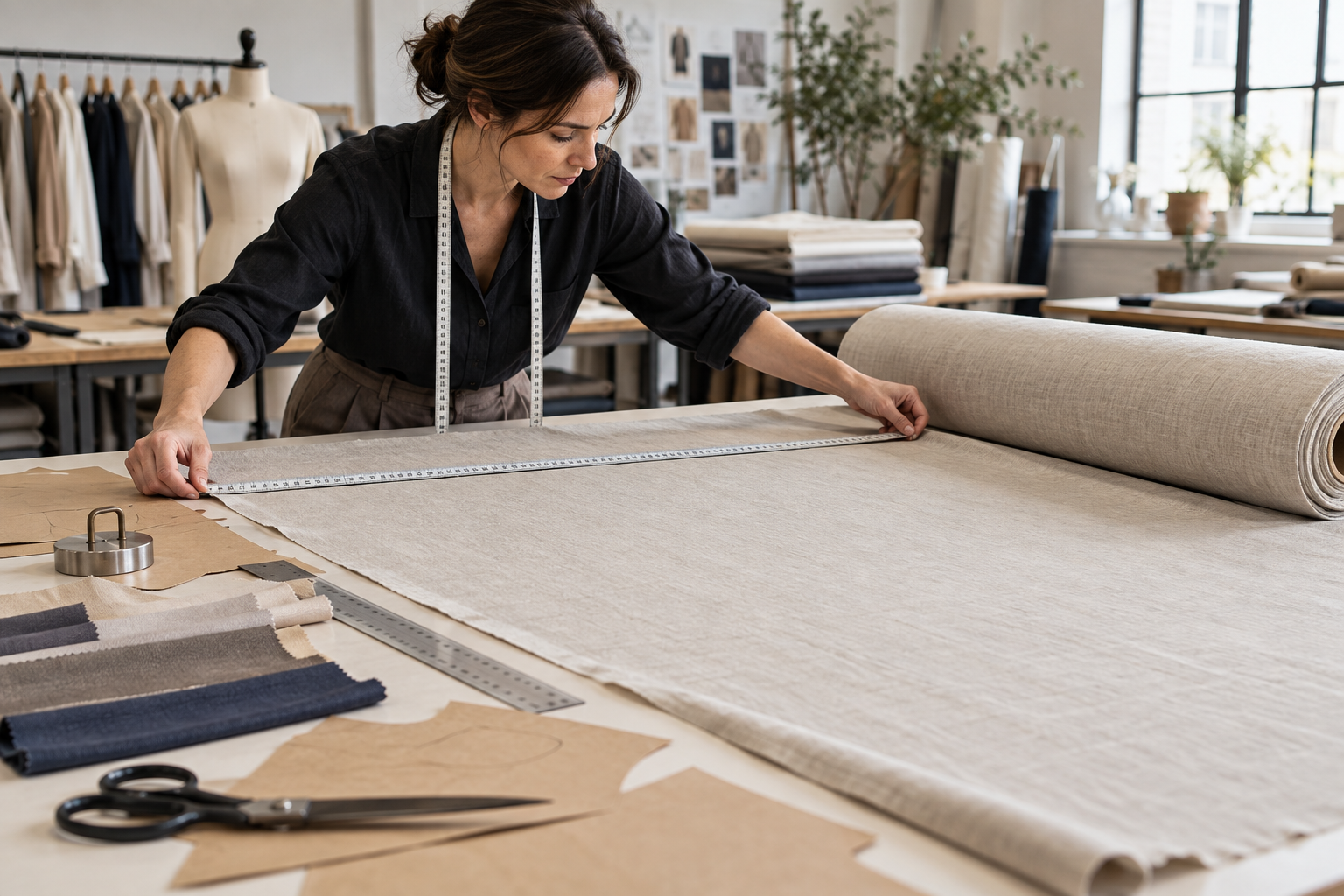
Fabric selection affects product quality, price, fit, comfort, and repeatability. A manufacturer may offer available fabrics, source from local markets, or work with specific mills depending on the product and order requirements. For a startup brand, the key is to make fabric choices that support your customer promise without creating unnecessary production complexity.
Ask for fabric composition, weight, stretch, hand feel, color options, care requirements, and whether the same or similar fabric can be reordered later. If you need custom dyeing, special textures, or exact color matching, discuss this early because these details may affect MOQ, sampling, and production planning.
Do not approve fabric from a photo alone. Photos can distort color and texture. Review physical swatches when possible, and confirm whether the sample garment uses the same fabric intended for bulk production.
For a deeper checklist, read Huilin Fashion’s article on fabric selection for private label clothing.
Ask How Quality Control Is Managed
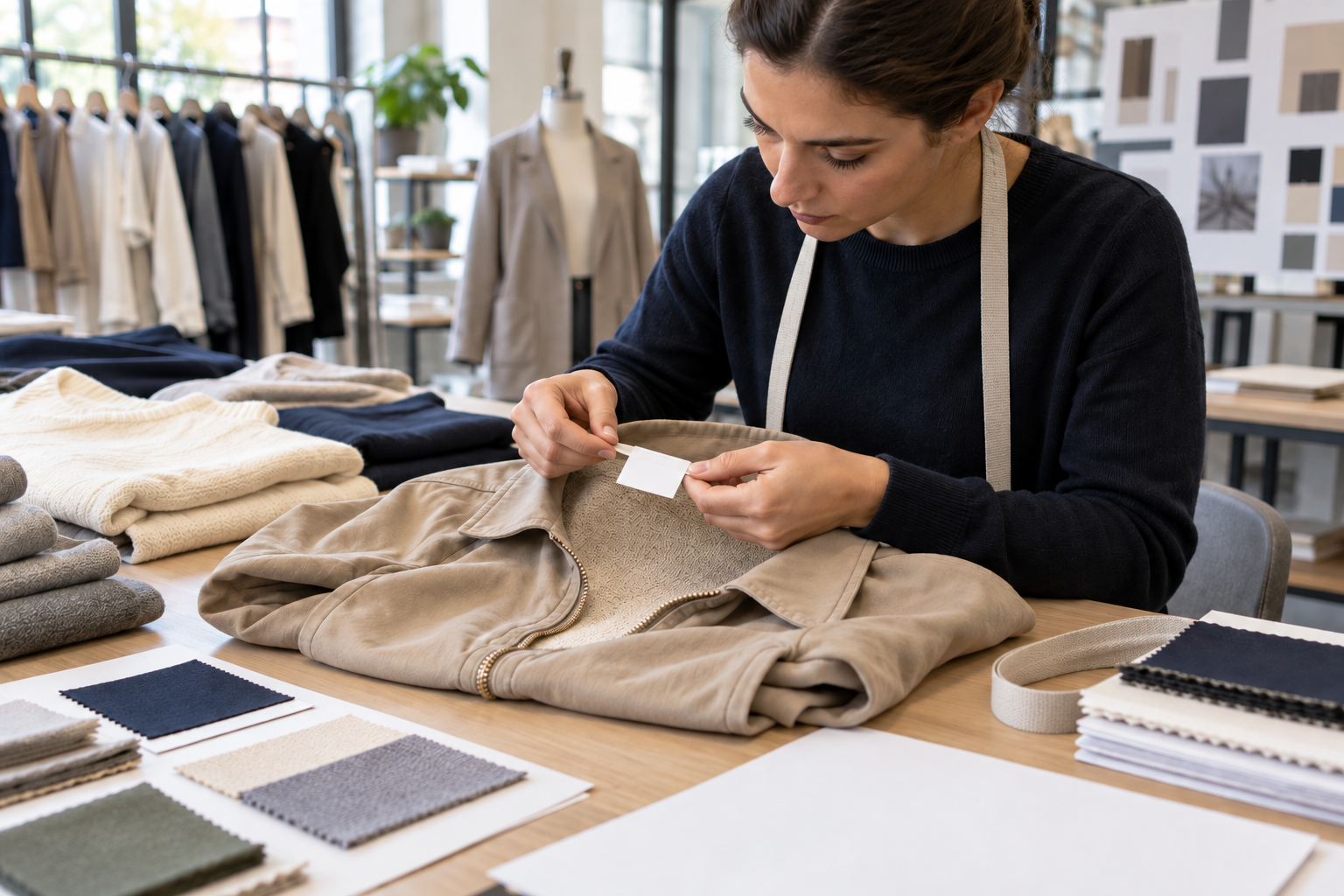
Quality control should not begin only after production is finished. It should be part of the whole workflow, from material checking and sample approval to in-line review and final inspection. When evaluating a clothing manufacturer in China, ask how they check measurements, workmanship, labeling, packaging, and finished goods before shipment.
Useful quality control questions include:
- How are approved samples and comments used during production?
- Are measurements checked against a spec sheet or only against a sample?
- How are fabric defects, sewing defects, stains, loose threads, and packing issues handled?
- Can the manufacturer share inspection photos or reports during production?
- What happens if a defect is found before goods are shipped?
The goal is to see whether the supplier has a practical system and whether they communicate issues before they become expensive surprises. You can also use this garment quality control checklist to organize your own review process.
Look for Communication That Reduces Risk
Communication is one of the clearest signals of whether a manufacturer is a good fit. A strong supplier should explain options, ask for missing information, confirm decisions in writing, and tell you when something is unclear. For cross-border production, this matters as much as technical capability.
Pay attention to how the team handles changes. If you update a measurement, change a fabric, revise a label, or adjust packaging, the manufacturer should confirm the new instruction and explain any impact. Keep one clear decision record instead of scattering instructions across multiple chats, emails, and files.
Positive communication signs
- The supplier asks specific product questions before quoting.
- They explain trade-offs instead of promising everything immediately.
- They confirm details in writing after calls or messages.
- They are willing to discuss sampling, QC, and production planning together.
Compare More Than Unit Price
Price matters, but the lowest unit quote is not always the best sourcing decision. A quote may look attractive because it excludes details you need, uses a different fabric, assumes simpler construction, or leaves packaging and labels unresolved. Compare quotes only after the product scope is consistent.
When reviewing a quote, check what is included: fabric, trims, labels, packaging, sample fees, pattern work, print or embroidery, and shipping terms if discussed. Also consider responsiveness, sample quality, communication clarity, and ability to work with your order size. For a startup, a clearer production path may be more valuable than a number that later changes because the brief was incomplete.
Build a Practical First-Order Checklist
Before selecting a manufacturer, organize your first-order checklist. This does not need to be complex, but it should make responsibilities clear on both sides.
- Final product brief and tech pack
- Approved fabric and trim references
- Size chart and measurement tolerances
- Approved sample comments and final sample status
- Label, hangtag, and packaging instructions
- Color and size breakdown
- Quality control checkpoints
- Shipping and documentation requirements to confirm separately
This checklist helps turn sourcing from a loose conversation into a controlled production project. It also makes it easier to compare manufacturers against the same expectations.
Red Flags to Watch For
Not every supplier will be the right match for every startup brand. Watch for signs that a manufacturer may not be suitable for your project:
- They quote before understanding fabric, construction, size range, or quantity.
- They avoid discussing sampling revisions or quality control.
- They promise very broad product capability without asking product-specific questions.
- They pressure you to place a bulk order before sample approval.
- They are unclear about what is included in the quote.
- They do not confirm important decisions in writing.
A startup brand needs a realistic partner that understands the product, order size, communication process, and quality expectations.
FAQ
What should I prepare before contacting a clothing manufacturer in China?
Prepare a product brief, reference images or sketches, target fabric direction, estimated quantities, size range, label and packaging needs, and any existing samples. A basic tech pack will make the conversation more accurate.
Is low MOQ production suitable for startup clothing brands?
Low MOQ production can be suitable when the collection is focused and the product details are clear. It works best when styles share fabrics, trims, or construction methods instead of spreading the order across too many unrelated designs.
How do I compare clothing manufacturers fairly?
Send the same brief to each supplier and compare more than unit price. Review sampling process, communication, fabric sourcing, QC approach, included services, and whether the manufacturer has experience with your product type.
Should I approve bulk production after the first sample?
Only approve bulk production when fit, fabric, measurements, trims, labels, and construction details are clearly confirmed. If there are unresolved issues, document revisions and request an updated sample or confirmation before moving forward.
Final Thoughts
Evaluating a clothing manufacturer in China is a sourcing decision, product development decision, and risk management decision at the same time. Prepare clear product information, test the relationship through sampling, ask practical QC questions, and compare suppliers based on how well they support your launch goals.
If you are planning a startup apparel collection and need help turning your product idea into a production-ready brief, Huilin Fashion can review your garment details, fabric direction, sampling needs, and low MOQ planning so you can start the conversation with clearer expectations.