Custom Dress Manufacturing: A Development Guide for Apparel Brands
Launching a custom dress is rarely about choosing a beautiful fabric and sending over a sketch. Dresses make the relationship between silhouette, drape, fit, construction, and finishing especially visible. A small change to a neckline, lining, waist seam, or closure can change how the garment hangs and how confidently a customer wears it.
For emerging and established apparel brands, custom dress manufacturing works best when the development brief answers the questions a production team will need to solve before sampling begins. This guide explains how to turn a dress concept into an approval-ready product without treating design, fit, and production as separate decisions.
Start with the dress’s purpose and silhouette
Begin by defining where, when, and how the customer will wear the dress. A relaxed poplin shirt dress, a fitted occasion dress, a slip dress, and a tiered resort style can all be called “a dress,” but they require very different choices in fabric, ease, construction, and finishing.
Write a concise product brief before discussing details. Include the intended wearer, use occasion, target silhouette, desired length, coverage expectations, season, and key design features. Reference images can clarify mood and proportion, but they should be accompanied by written notes identifying what is essential and what is only inspirational.
Translate the design into measurable decisions
For each feature, state what needs to be controlled. For example, “feminine fit” is not a production instruction, while “fitted through the bodice with waist shaping, a gently flared skirt, and below-knee length” is much clearer. Identify the neckline shape and depth, sleeve type, shoulder treatment, waist position, skirt volume, hem shape, and closure location.
A clear measurement specification gives the sample team a reliable starting point. Your garment measurement spec sheet should distinguish body measurements from finished-garment measurements and show how each point is taken. This avoids vague feedback such as “make the waist better” after a sample arrives.
Choose fabric for behavior, not just appearance
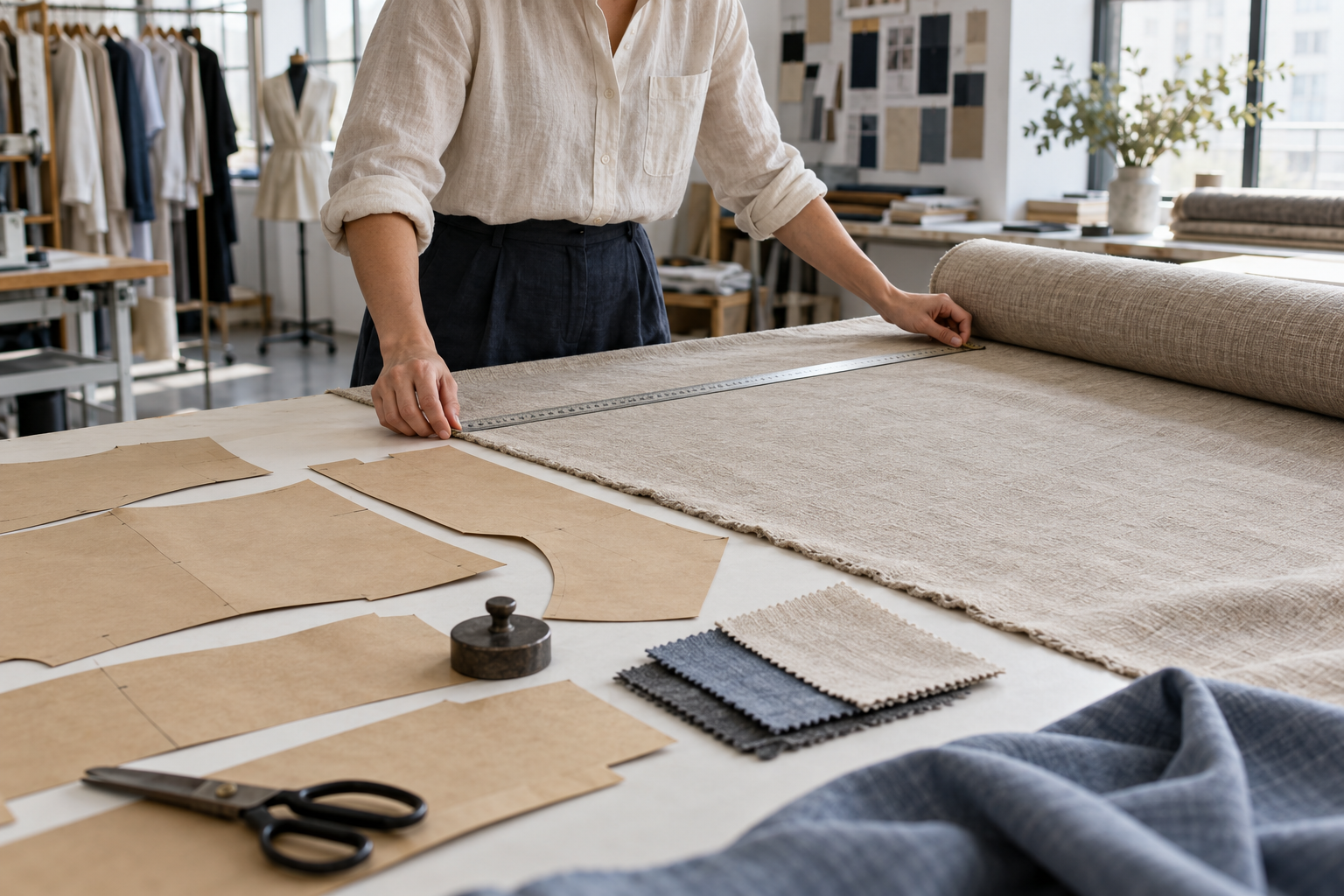
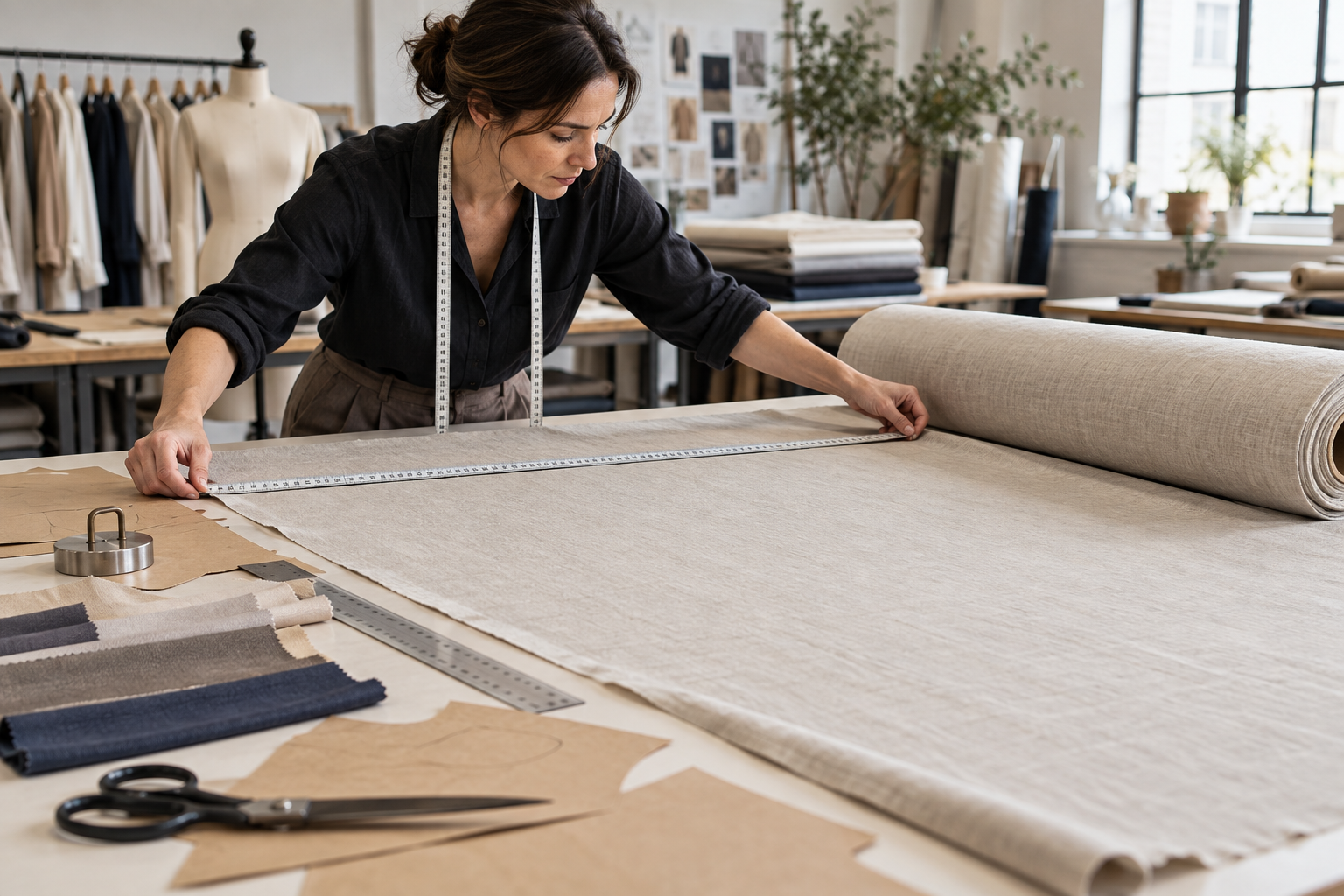
Fabric should support the silhouette you are asking it to create. A crisp woven can hold a structured sleeve or gathered skirt, while a fluid fabric may suit a bias-cut or softly draped dress. Weight, opacity, recovery, surface texture, stretch, and edge behavior all affect the final garment.
Consider the garment as a system. A lightweight shell may need lining, a facing, an underlayer, or a carefully chosen seam finish to provide coverage and stability. A heavier fabric may give shape but create bulk at gathers or seams. Prints, directional textures, and stripes also require planning for pattern placement and visual alignment.
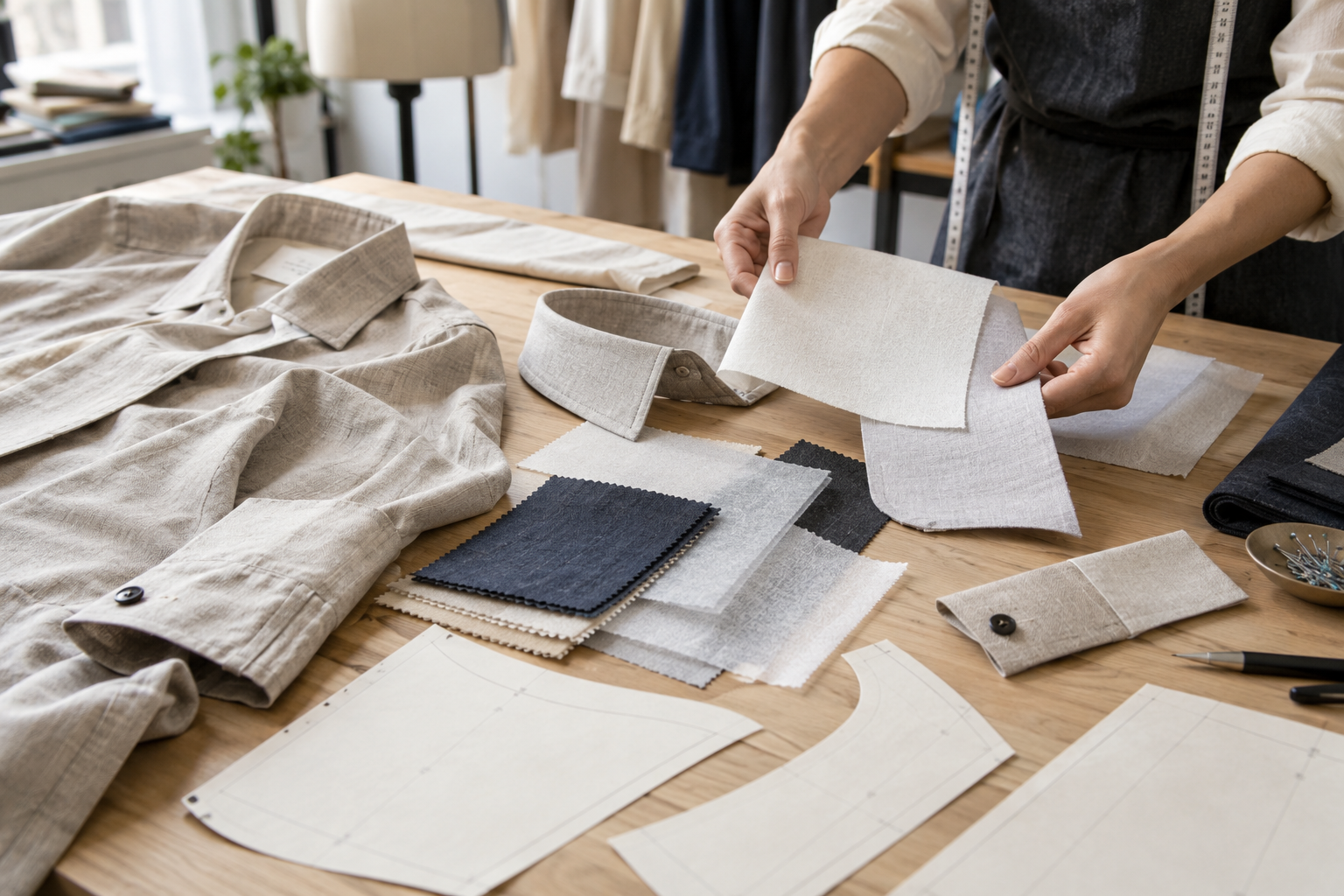
Use fabric swatches to evaluate more than color. Handle the material, drape it over a form, check it in relevant light, and consider what happens at seams, hems, pleats, and closures. The principles in this fabric selection guide for private label clothing can help brands document these choices before committing to a sample.
Plan lining and support early
Lining is a design and construction decision, not an afterthought. It can improve comfort, opacity, clean finishing, and how a garment moves. However, its weight, stretch, color, and attachment method need to work with the shell fabric. Be explicit about which sections are lined and whether the lining should be independent, attached at selected seams, or used only in the bodice or skirt.
Structured bodices may also need support elements such as interfacing, boning, cups, stays, or internal elastic. These should be defined during development and reviewed in the sample. Leaving support details open can result in a dress that looks right on a hanger but behaves differently on the body.
Specify construction details that protect the design
The construction method often determines whether a refined dress looks polished or merely resembles the original idea. Record seam locations, seam allowances where relevant, dart direction, gathering method, pleat depth, sleeve attachment, pocket placement, and hem finish. Clarify whether a visible topstitch is decorative, structural, or not wanted at all.
Closures deserve particular attention. A center-back zipper, side-seam zipper, button placket, elasticated panel, tie, or wrap construction changes both the wearing experience and the order of operations in sewing. Specify the closure type, position, visible finish, and whether a hook-and-eye or other finishing detail is required.
For a deeper framework, review the garment construction details guide alongside your design brief. The goal is not to over-engineer every instruction; it is to identify the details that carry the silhouette, fit, and intended quality level.
Build a production-ready technical pack
A dress can contain many interconnected pattern pieces: bodice panels, skirt panels, facings, sleeves, cuffs, collars, pockets, belt components, lining, and support pieces. A technical pack keeps those parts aligned across design, pattern making, sampling, and production.
Include flat sketches of the front and back, a bill of materials, measurement chart, construction callouts, artwork or print placement, colorway information, label and packaging requirements, and sample comments. If a feature is important enough to approve, it is important enough to document.
Use the apparel tech pack guide to check that the handoff is complete. A well-organized pack gives your manufacturing conversation a shared reference point and makes later revisions easier to trace.
Use sampling to test the garment on a body
A dress sample should be reviewed on a fitting model or form that relates to your intended size standard. Flat measurements matter, but the sample also needs to be assessed in motion. Ask whether the neckline stays in place, whether the waist sits at the intended point, whether the skirt has the planned volume, and whether the closure is comfortable to use.
Photograph the front, back, sides, and key construction areas. Record feedback in one consolidated document rather than distributing separate messages and marked-up images. Useful comments identify the location, the observed issue, the requested change, and any measurement or reference that supports it.
Review the right details during each sample
In an early development sample, prioritize silhouette, proportion, pattern, and construction feasibility. Once the shape is close, evaluate chosen fabric, lining, trim, finish quality, color, and label placement. Before bulk approval, confirm that all approved details are represented together and that no changes remain ambiguous.
Keep a version history. If the neckline depth, fabric, zipper, and skirt length all change at once, it is difficult to identify which decision caused a new fit or appearance issue. Deliberate sample comments make each round more useful and reduce the risk of carrying unresolved questions into production.
Plan variants without multiplying uncertainty
Colorways, prints, lengths, and size ranges can expand a dress program quickly. Lock the core construction and approved fit before adding variants where possible. Then identify which elements remain constant and which are variant-specific. A print may need placement guidance, while a different color may require a lining or trim color decision.
For dresses offered in more than one length or size range, confirm that the pattern and grading approach reflect those differences instead of relying on an informal assumption. Variants should be documented in the technical pack so the production team can verify the correct materials, labels, and measurements for each style reference.
Create a practical approval checklist before bulk production
Before releasing a custom dress to bulk production, review the approved sample and documentation together. A practical checklist includes:
- final style name or reference and approved colorways;
- shell fabric, lining, interfacing, and trim selections;
- finished-garment measurement chart and grading instructions;
- neckline, sleeve, waist, skirt, hem, and closure details;
- construction and finishing expectations;
- print, embroidery, or label placement where applicable;
- approved sample comments resolved or clearly carried forward; and
- packaging and labeling instructions.
This review is not about adding unnecessary paperwork. It helps make sure the product approved in the sample room is the product described for production.
FAQ about custom dress manufacturing
What should a brand prepare before requesting a custom dress sample?
Prepare a clear brief with sketches or references, intended silhouette, target measurements, fabric direction, construction details, colorways, and the intended use of the dress. A technical pack is the best way to organize this information, but a concise, well-labeled brief is a useful starting point.
Why does the same dress shape look different in another fabric?
Fabric changes drape, structure, opacity, stretch, and seam behavior. A shape developed in a crisp woven fabric may not behave the same way in a fluid or stretchy material. Review the intended fabric in a sample before treating the fit and appearance as approved.
How can brands give clearer dress sample feedback?
Use consolidated comments with photos, marked locations, and specific requested changes. State whether feedback concerns fit, measurement, proportion, material, construction, or finishing. When possible, explain the intended outcome rather than only pointing out what looks wrong.
When is a dress ready for bulk production?
It is ready when the fit, fabric, construction, trims, finishing, measurement specification, and variant details have been reviewed together and the final instructions are documented. Remaining questions should be resolved before bulk work begins.
Move from concept to an approval-ready dress
Strong custom dress manufacturing starts with a design brief that respects the practical decisions behind a good silhouette. When brands define fabric behavior, support, construction, measurements, and sample feedback clearly, they create a more reliable path from concept to production.
If you are developing a custom dress collection, contact Huilin Fashion with your design brief, references, technical pack, or sample requirements to begin a focused production conversation.