Custom Blouse Manufacturing: A Development Guide for Apparel Brands
A blouse can look deceptively simple in a line plan. In development, however, its success depends on close coordination between silhouette, fabric behaviour, finishing, and fit. A soft fabric may create the fluid look a collection needs, but it can also reveal seam allowances, show through under light, or react differently to a gathered sleeve than expected. For brands, a clear brief turns those choices into a blouse that can be sampled, approved, and repeated with confidence.
This guide explains how to prepare for custom blouse manufacturing, from defining the product role through reviewing a production-ready sample. It is written for apparel brands sourcing a custom style rather than buying a ready-made blank.
Start with the blouse’s role in the collection
Before selecting a fabric or sketching a neckline, define what the blouse needs to do. Is it an everyday core style, a dressier occasion piece, a layering item, or a seasonal fashion statement? The answer influences the fabric, construction level, price architecture, size range, and colour offering.
Describe the intended wearer and occasion in plain operational terms. Include the desired body relationship (relaxed, shaped, oversized, cropped, or tucked), the layers expected underneath or over it, and the visual reference points that matter. A single sentence such as “a relaxed, lightly sheered blouse for warm-weather workwear” gives a development team a more useful starting point than “elegant shirt.”
Also identify which features are non-negotiable. These may include sleeve volume, a particular neckline depth, an easy-to-tuck hem, or a clean front for branding or print. Everything else can then be evaluated against fit, material availability, and sample results.
Choose fabric for appearance and production behaviour
For blouses, fabric is not only a colour and hand-feel decision. It sets the garment’s drape, opacity, seam performance, pressing response, and tolerance for design detail. A crisp cotton poplin supports a sharper collar and sculptural sleeve; a fluid viscose or satin-style woven tends to soften gathers and movement; a light crepe can create a more matte, textured fall.
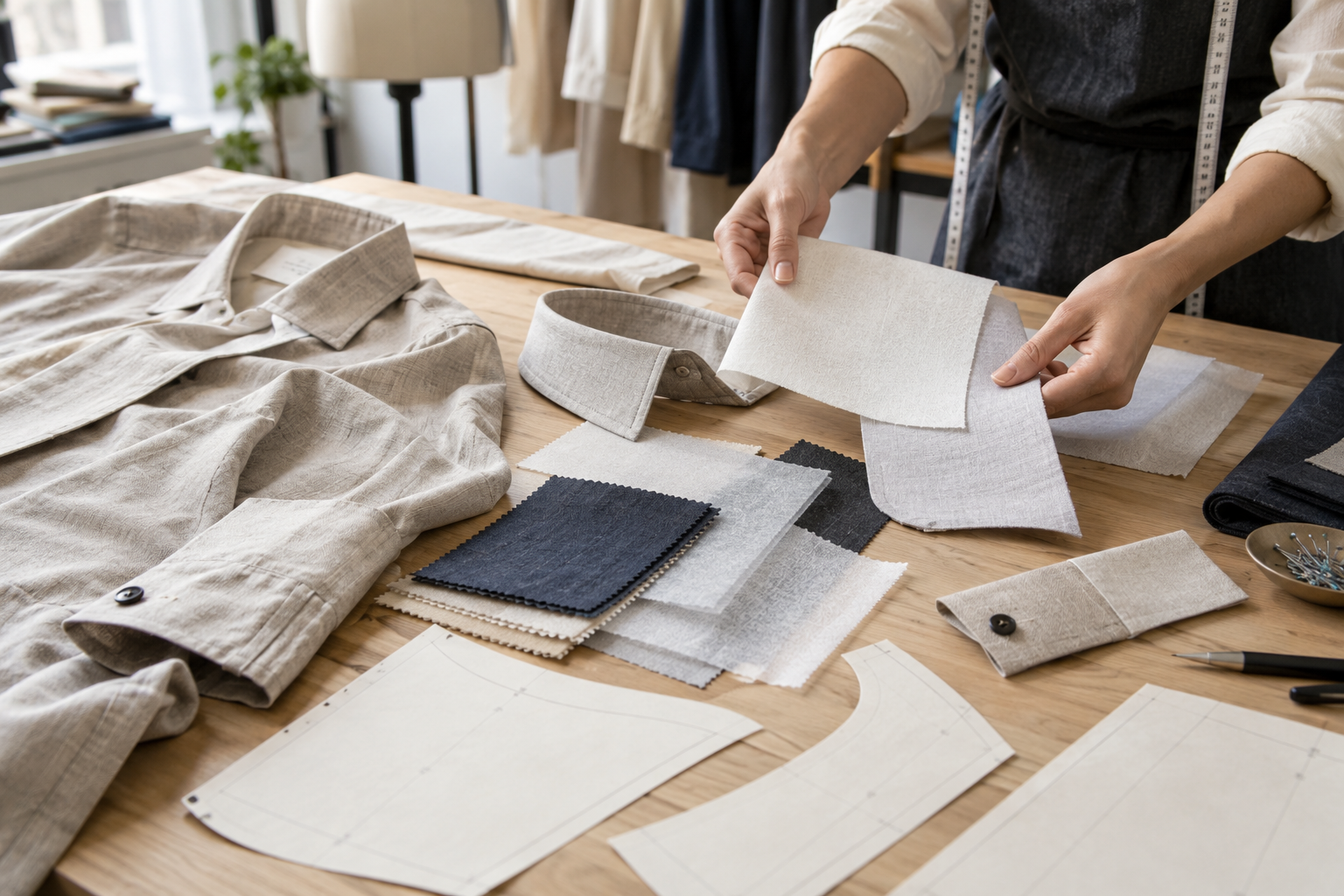
Ask the manufacturer to assess the candidate fabric against the design rather than evaluating the swatch alone. Useful questions include:
- Does the material remain sufficiently opaque in the chosen colour?
- Will gathers, pleats, or a gathered cuff sit cleanly without excess bulk?
- Does the fabric require a different seam finish or interfacing to protect the look?
- How does it behave after the intended care process?
- Will collars, plackets, or button areas keep their shape?
Document the approved fibre content, construction, colour reference, finish, and any lining or fusible requirements in the material section of the apparel tech pack. If the fabric is lightweight or has a variable surface, note what the sample establishes as acceptable appearance. That context prevents a later substitution from being judged only by colour.
Develop the silhouette before polishing details
Blouse fit is often judged by balance rather than a single tight measurement. Shoulder placement, armhole height, bust ease, sleeve volume, body length, and hem shape all affect whether the garment looks intentional when worn. A change to one point can alter the rest: raising an armhole may improve mobility but change sleeve shape; adding body width may require reconsidering the collar proportion or tuck behaviour.
Build a useful measurement brief
Provide a base size and a measurement specification for the key points of measure. For a blouse, this usually includes shoulder width, chest or bust circumference, hem circumference, centre-back length, sleeve length, bicep, cuff opening, neckline, and placket length. Add a sketch or photo markup where a measurement location could be interpreted more than one way.
The garment measurement spec sheet guide is a useful reference for making this information readable across design, development, and production teams. Include the intended ease and the body position used for review, especially for styles that are meant to be tucked, worn loose, or layered.
Make volume deliberate
Gathered shoulders, balloon sleeves, peplums, and soft ruffles can be central to a blouse’s identity. State the intended amount and placement of fullness, not just the presence of a gather. Reference photos help, but they should be paired with measurable directions such as seam length, finished cuff width, or acceptable gather distribution. This makes the fit sample a controlled test rather than a guess at the reference image.
Specify neckline, closure, and finishing details
Small components have an outsized influence on a blouse. The collar and collar stand determine how the neckline frames the face. The placket affects whether the front hangs flat. Cuffs, buttons, ties, and concealed closures influence both function and the perceived quality of the style.
For each component, record its material, size, colour, placement, and construction expectation. For example, a button description should distinguish diameter, finish, colour, hole configuration, quantity, and spacing. A collar note should clarify whether it is soft or structured, whether it uses interfacing, and how the points should sit after pressing. The garment trim sourcing guide can help turn these choices into an approval list.
Light-coloured and sheer styles deserve extra review at closures and seam junctions. Check whether internal allowances, placket facing, darts, and pockets show through under normal light. If a lining, facing, French seam, or alternative finish is needed, approve it on the sample rather than leaving it to a bulk-production assumption.
Use samples to answer the right questions
A first sample should validate the design’s fundamentals: silhouette, fabric behaviour, core construction, and visual balance. It is not simply a smaller version of bulk production. Give feedback in priorities so the development team can distinguish a must-fix proportion issue from a later colour or trim confirmation.
Review the blouse on an appropriate fit model or form and in conditions that match how the product will be presented. Raise both arms, sit, tuck the hem, wear it under a jacket if relevant, and assess it in front and side views. For translucent materials, check it over the intended underlayer and in more than one lighting condition.
Capture feedback against the actual sample, using marked images and a single consolidated comment sheet. The goal is a traceable decision for every change: what changes, why it changes, which size it affects, and whether the change needs another sample. For a structured approach, use the fit sample feedback guide.
Prepare a production-ready handoff
Bulk production should begin with one agreed source of truth. Assemble the approved sample notes, final measurement table, grade rules, bill of materials, artwork or placement files where applicable, approved fabric and trims, colour references, labels, packaging requirements, and finishing expectations. Record the final revisions rather than relying on a chain of email comments.
Before approving the handoff, check that the decisions connect. The approved fabric should match the collar construction. The button count should match the tech pack drawing. The grade should preserve the intended sleeve and body balance. Any limitation discovered during sampling should be visible in the final documentation.
A pre-production approval checklist is useful for this final alignment. It gives the brand and manufacturer a shared moment to confirm the style before production activity starts.
Common mistakes in custom blouse development
Choosing a fabric from a swatch only
A small swatch rarely shows how a material behaves across a full sleeve, placket, or gathered shoulder. Sample the intended construction whenever the design depends on drape, opacity, or structure.
Using inspiration images as complete specifications
Images communicate a mood but seldom show hidden finishes, measurements, or material composition. Convert visual intent into written and measurable requirements before sampling.
Approving fit without reviewing movement
A blouse may look balanced when still but bind at the bicep, pull at the placket, or shift at the neckline in normal movement. Add simple wear tests to the sample review.
Leaving delicate details until bulk production
Sheer fabrics, fine seams, and soft collars are exactly the details that need sample confirmation. A visible, approved reference is more reliable than a verbal instruction.
FAQ
What information should a brand send for a custom blouse?
Start with a design sketch or clear references, a product-use brief, target fabric direction, base-size measurements, size range, colourways, neckline and sleeve details, trim preferences, labels, and packaging needs. A tech pack brings those inputs together for review.
How many samples are needed for a blouse?
The number depends on how much needs to be validated. A straightforward style with available materials may need fewer iterations than a blouse with a new fabric, complex sleeve volume, delicate transparency, or multiple fit changes. Plan sampling around decisions, not a fixed number.
Can one blouse fabric work across several colourways?
Often it can, but each colourway should be checked for opacity, surface appearance, and trim coordination. Light shades can make seam allowances or facings more visible than darker colours.
Move from concept to an approvable blouse
A strong custom blouse starts with a precise product role and develops through deliberate fabric, fit, component, and sample decisions. When those decisions are captured in one production-ready package, the manufacturer can review the brief clearly and the brand can approve the final direction with fewer open questions.
Planning a blouse for your next collection? Contact Huilin Fashion to discuss your design brief, material direction, sample requirements, and production-ready documentation.