Capsule Collection Manufacturing: A Practical Guide for Apparel Brands
A capsule collection is a small, connected group of garments designed to work together across styling, color, fabric, and price positioning. For an emerging brand, that focus can make a first production program easier to communicate and easier to review. It does not, however, remove the need for detailed development work. A concise range still needs clear specifications, compatible materials, approved samples, and a disciplined handoff to production.
This guide explains how apparel brands can plan capsule collection manufacturing in a way that gives a clothing manufacturer the information needed to develop a coordinated, production-ready range. The goal is not to make the collection larger; it is to make every decision more intentional.
Start with the role of the capsule, not a list of garments
Before selecting styles, define the job the capsule should do in the broader collection. It may introduce a new silhouette, provide a compact seasonal drop, test a category, or give wholesale buyers a versatile set of core pieces. This context guides decisions that otherwise become disconnected: how many styles to develop, which pieces carry the visual identity, and where the range needs flexibility.
A useful starting brief describes the intended wearer, usage occasions, season, target channels, desired visual direction, and the relationship between styles. For example, an overshirt may be designed to layer over a knit top and pair with a trouser, while a light jacket adds an outer layer in the same palette. The manufacturer does not need a marketing presentation; they need a practical product brief that shows how the pieces connect.
Choose anchor styles and support styles
Not every garment needs equal development complexity. Identify the anchor styles that define the capsule’s point of view, then choose support styles that make the range wearable and commercially coherent. Anchor styles may require more distinctive pattern work, trims, washes, or construction. Support styles can share blocks, fabrics, or finishing approaches where that genuinely suits the design.
This distinction helps allocate attention during sampling. It also prevents a common mistake: treating every style as a separate project and discovering late that the colors, materials, or proportions do not sit together.
Build a connected style architecture
Capsule collection manufacturing works best when the connections between styles are explicit. Start with a simple range map that lists each style, its category, its role, proposed colorways, intended fabric, and key components. Include styling notes such as layering order or the pieces that should be worn together. This map lets a manufacturer spot shared material needs and potential development conflicts early.
Consider the practical links as well as the visual ones. A shared button, zipper finish, label placement, or pocket construction can create consistency when it is appropriate for the garments. Shared details should never be forced merely to make sourcing appear simpler; a component that performs well on a woven overshirt may not suit a knit top. The right question is whether a common element supports both the design and the garment’s use.
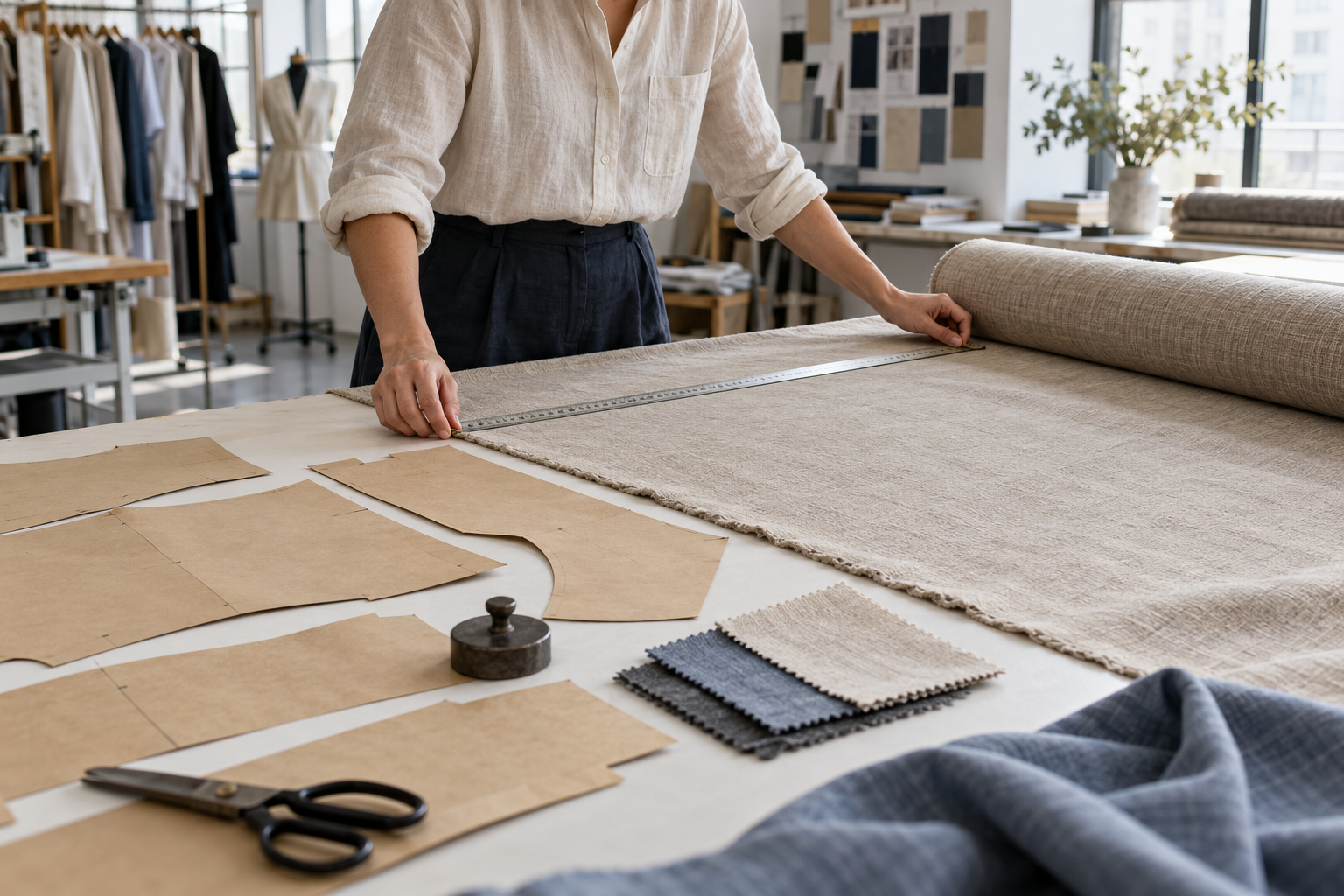
For each style, prepare a clear apparel tech pack with front and back views, construction callouts, points of measurement, grading direction, color references, artwork placement where relevant, and packaging notes. A capsule is coordinated at range level, but it is still manufactured style by style.
Plan fabric and color as a system
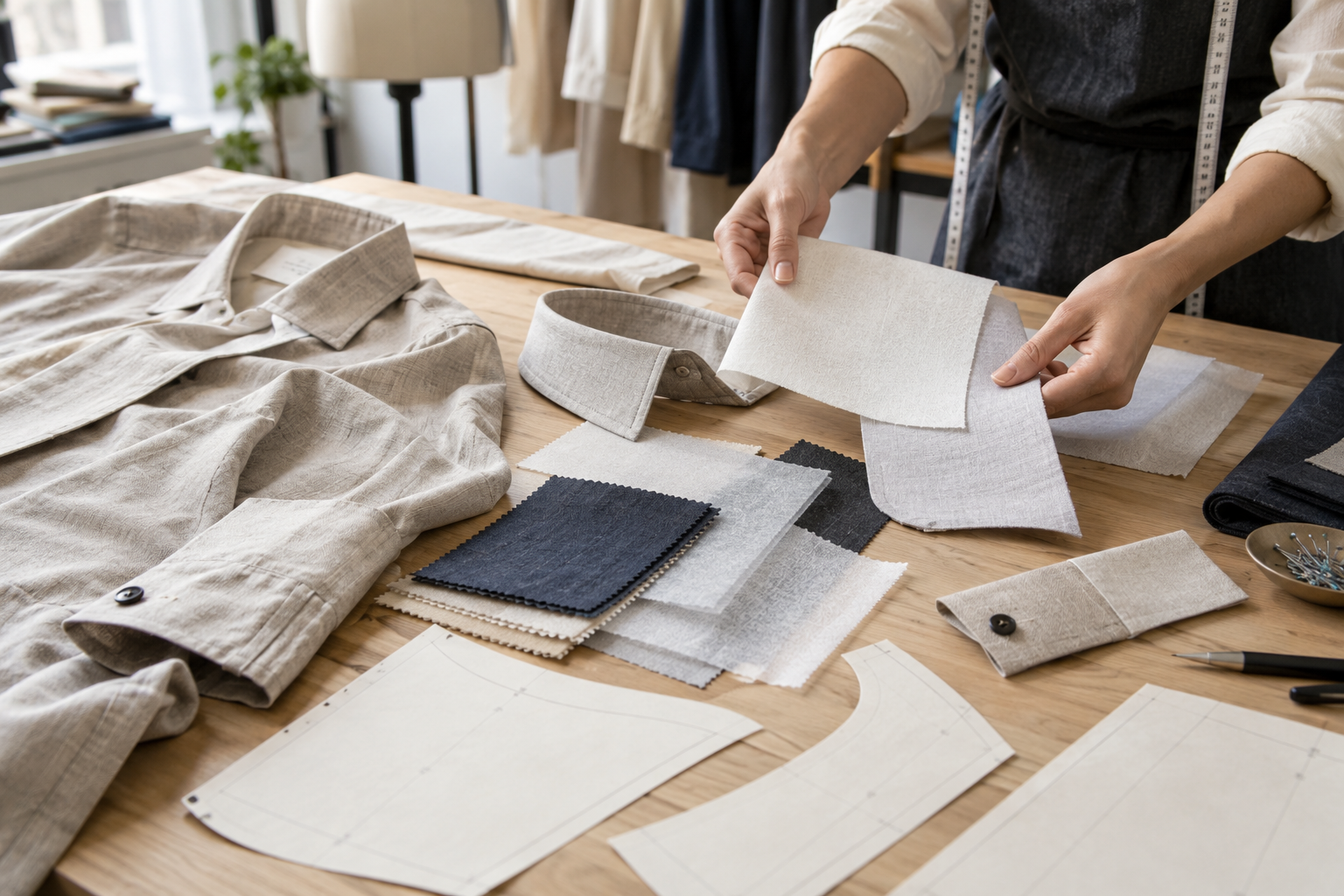
Fabric selection has an outsized effect on whether a capsule feels cohesive. Start by deciding which material families are essential, which can be shared, and which pieces need their own behavior. A trouser and overshirt might use compatible woven qualities, while a knit layer needs its own yarn, gauge, and finishing plan. The objective is a balanced material story, not one fabric applied everywhere.
Review weight, drape, opacity, stretch, recovery, surface texture, care needs, and color response for the intended garment. A fabric that looks right on a hanger can behave very differently once it is washed, pressed, layered, or cut into a specific silhouette. When a capsule contains light and dark colorways, confirm how each proposed fabric accepts color and how trims will coordinate with it.
Document these choices in an apparel bill of materials. A good BOM connects every approved fabric, trim, label, thread, and packaging item to the correct style and colorway. It reduces ambiguity when several garments share components but not all specifications.
Create a color plan that production can follow
Define each colorway at style level rather than relying on descriptive names alone. Include a physical or digital color reference, the fabric or material it applies to, trim color instructions, and any intentional contrast. If a capsule uses neutrals, small differences in undertone can be especially visible when garments are merchandised together. Sample review is the right time to compare the garments side by side under consistent lighting.
Sequence development to expose decisions early
A capsule has shared dependencies, so sampling should be sequenced with those dependencies in mind. Begin with the styles or materials most likely to affect the rest of the range: a new fabric, a key color, a complex construction, or an anchor silhouette. Early learning from those samples can inform the remaining styles before every component is committed.
Set a review purpose for each sample stage. A development sample may test the pattern direction and material suitability. A fit sample should focus on balance, ease, movement, and measurements on the intended base size. A later approval sample should confirm the complete garment as specified, including construction, trims, labels, color, and finishing. Avoid approving an incomplete sample as though it represents the final production standard.
Use a written pre-production approval checklist to consolidate the final decisions across the capsule. It should identify the approved sample or reference for each style, any changes from prior rounds, measurement expectations, materials, colors, labels, packaging, and approved exceptions. A verbal agreement is difficult to apply consistently once production begins.
Review fit across the range, not only one style at a time
Fit is a capsule-level experience. Each garment can meet its own measurements and still feel inconsistent when the proportions are viewed together. During range review, look at the intended outfit combinations. Does the overshirt layer comfortably over the knit? Does the trouser rise and leg shape support the styling direction? Does the jacket length work with the other pieces? These are design questions with manufacturing consequences.
Give feedback in an organized format. Reference the exact sample, specify the location of the issue, describe the desired outcome, and update measurements or construction notes when needed. Photos can help clarify placement and silhouette, but they should accompany rather than replace the technical instruction. If one fit correction affects a shared block or component, note every style that may be affected.
Prepare one production-ready handoff
Once samples are approved, bring the capsule documents into a controlled final set. The manufacturer should receive the latest version of each tech pack, BOM, color and trim references, grading information, approved sample notes, packaging requirements, and purchase quantities by style, size, and color. Check that the quantities use the same style codes and color names as the specifications.
Ask the production team to confirm questions before bulk work starts, especially where a shared material or trim affects several styles. Confirming the details in one coordinated handoff is more reliable than sending isolated updates across messages. It also gives the brand an auditable point of reference if a decision needs to be revisited.
Common capsule collection manufacturing mistakes
- Adding styles before the first group is resolved. More options can dilute the concept and multiply open decisions.
- Assuming similar colors will match across materials. Verify color and undertone on the actual fabrics and trims.
- Reusing details without checking function. Shared components must work for each garment, not only look coordinated.
- Approving samples in isolation. Review the intended outfit combinations before final approval.
- Letting final changes live only in email. Update the production documents so the approved version is unambiguous.
FAQ
How many styles should a capsule collection include?
There is no universal number. Choose the smallest group that can express the collection idea and offer useful outfit combinations. The right scope depends on your category, development capacity, and the amount of information you can approve carefully.
Can different garments in a capsule use different fabrics?
Yes. Coordinated collections often use multiple materials. The important work is to define how their weights, textures, colors, and care needs relate, then document the correct material for every style and colorway.
Should every style share the same trims?
No. Share trims where they support both the design and the garment’s function. Use separate components when construction, comfort, durability, or material behavior requires it.
When is a capsule ready for bulk production?
It is ready when each style has an approved specification, materials and colors are confirmed, relevant samples are signed off, final changes are recorded, and the manufacturer has one complete production handoff to review.
Turn a focused range into a clear production plan
A strong capsule collection is not simply a small group of attractive garments. It is a connected development program with deliberate style roles, compatible materials, disciplined sample review, and complete documentation. That clarity helps the brand protect the design intent while giving the manufacturing team a practical basis for production.
If you are developing a coordinated apparel range, contact Huilin Fashion with your style brief, reference images, tech packs, and material direction. Starting with a clear capsule plan makes the next production conversation more productive.