Stock Fabric vs. Custom Fabric for Clothing Production: A Brand Guide
Choosing fabric is not only a design decision. For a clothing brand, the choice between stock fabric and custom-developed fabric affects the sampling path, color direction, minimums, approvals, and the information a manufacturer needs before bulk production. The right answer depends on what makes the product distinctive and how much development work the brand is ready to manage.
This guide explains how to compare the two routes, what to ask before committing, and how to give a clothing manufacturer a clearer fabric brief.
What Is Stock Fabric?
Stock fabric is material that is already available from a mill, fabric supplier, or converter. It may be offered in a defined composition, weight, construction, finish, and color range. A brand selects from those existing options instead of asking for a new fabric to be made from the ground up.
For example, a brand may choose an available cotton jersey, fleece, poplin, twill, or rib knit that has a suitable hand feel and performance for its garment. Availability should still be confirmed for the specific color, quantity, and timing of the intended order. “In stock” is a point-in-time condition, not a permanent specification.
Where Stock Fabric Works Well
Stock fabric is often a practical route when a brand is developing an early collection, testing a silhouette, or working with a focused color palette. It can keep the conversation centered on garment pattern, fit, construction, trims, and decoration rather than on fabric development. It may also make it easier to compare several suitable materials during sampling.
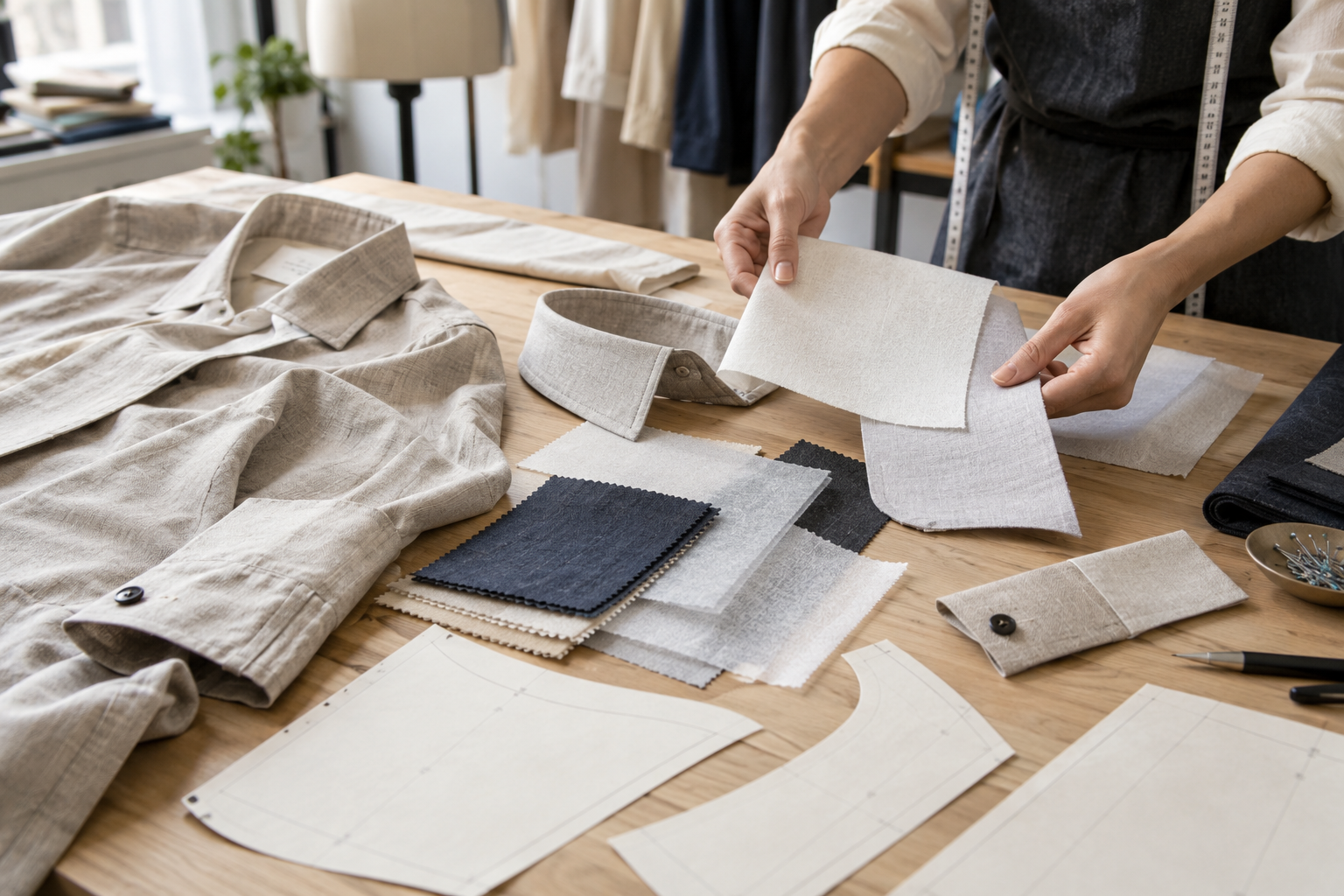
This route does not mean accepting any available cloth. Brands should still ask for a swatch or sample yardage, record the exact fabric details, and assess how it behaves in the proposed garment. A fabric that feels right as a loose swatch may drape, stretch, recover, or sew differently once it becomes a finished style.
What Is Custom Fabric?
Custom fabric is developed or modified for a specific product requirement. The request may involve composition, yarn, knit or weave construction, weight, color, print, surface finish, coating, or a combination of these elements. In some cases, the starting point is an existing quality with a requested adjustment; in others, the brand is specifying a new direction.
Custom development gives a brand more control over the material story, but it also introduces more decisions to define and approve. The request needs enough detail for suppliers and manufacturers to understand what must be matched, what can vary, and how the material will be evaluated.
Where Custom Fabric Can Add Value
Custom fabric can be appropriate when material is central to the product: a distinctive color, a particular weight and structure, a signature print, or a performance requirement that available options do not meet. It can also help when a collection needs visual consistency across multiple styles. The benefit comes from clarity, not from customisation alone. A vague request for a “premium” or “soft” fabric is difficult to develop and difficult to approve consistently.
Compare the Two Routes Before You Sample
Use the same product questions for both options. The difference is how much of the answer already exists and how much needs to be developed.
1. Product purpose and wearer expectations
Start with what the garment must do. A structured overshirt, a relaxed jersey tee, and a movement-focused legging place different demands on fabric. Describe the intended silhouette, next-to-skin feel, opacity, stretch, recovery, warmth, breathability, and care expectations in practical terms. This makes it easier to decide whether an available material is already suitable or whether the product needs a more specific development path.
For a broader framework on evaluating material against garment use, see this fabric selection guide for private-label clothing.
2. Design distinctiveness
Ask which fabric attributes are essential to the brand’s product identity. If the garment can succeed with an existing quality in a carefully selected color, stock fabric may support the design without adding unnecessary development. If the exact color, surface, construction, or printed appearance is the reason customers will recognize the product, custom work may be worth exploring.
Separate must-haves from preferences. This gives the supplier room to propose alternatives when one requirement conflicts with another. For example, a target hand feel, weight, and opacity may not all be achievable in the same construction. A ranked brief makes that trade-off visible early.
3. Sampling and approval workload
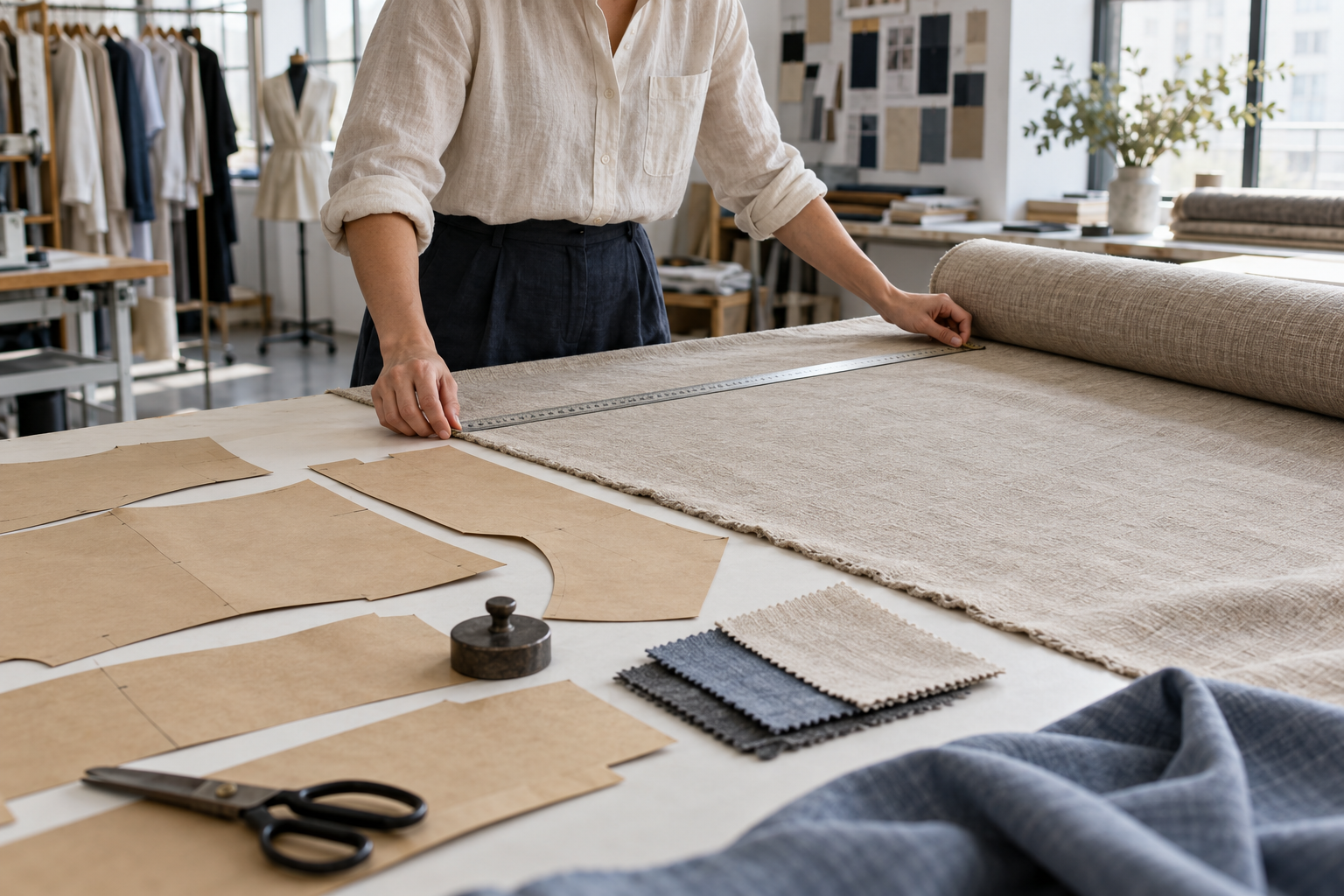
With stock fabric, sampling can begin once the chosen material is confirmed and supplied. With custom fabric, fabric approval becomes part of the sample-development process. Brands should plan to review material swatches or lab dips, then assess the fabric in the actual garment before treating it as production-ready.
Keep each review tied to a version. Record the supplier, fabric reference, composition, weight or target range, color reference, finish, and date received. When a decision changes, update the brief rather than relying on a chain of messages. This simple discipline helps prevent a sample from being made in one fabric version while the team believes another version was approved.
4. Minimums and assortment complexity
Available materials and custom developments can each have practical quantity considerations. The relevant question is not only the garment order quantity; it is how much fabric is needed for each quality, color, and variation. More colors, fabric qualities, or small style runs can make planning more complex even when the finished-garment order appears modest.
Before finalising a plan, share the style list, colorways, estimated size curve, and expected units per variant. This lets the manufacturer and fabric source assess the request as a complete material plan. Read more about the distinction in this fabric MOQ vs. garment MOQ guide.
5. Risk management when availability changes
Stock fabric should be checked again before bulk commitment because availability, color options, and replenishment can change. For custom fabric, the key risk is whether the approved development is clearly documented and can be reproduced to the agreed reference. In both cases, the brand should agree on how substitutions will be handled before production, not after a material is unavailable.
A useful rule is to treat a substitute as a new approval point. The alternative may look close in a swatch but behave differently after cutting, sewing, washing, or decorating. This fabric substitution approval guide outlines the questions to settle before accepting a change.
How to Write a Better Fabric Brief
A manufacturer can give more useful feedback when the brief describes both the fabric and the garment outcome. Include the following items in one place:
- Garment style and use: State the product type, intended wearer, season, and desired fit or silhouette.
- Reference material: Provide a swatch, clear close-up photos, or a physical reference when available. Label it as an inspiration, an approval standard, or a feature to match.
- Technical requirements: Note target composition, construction, weight, stretch direction, hand feel, opacity, and any relevant finish or performance expectation.
- Color direction: Specify whether the brand can use available colors, needs a defined color reference, or is considering custom color development.
- Decoration and construction: Explain planned print, embroidery, wash, lining, reinforcement, or seam details that may affect material suitability.
- Priority order: Identify which requirements cannot change and which can be discussed if a feasible alternative is needed.
Do not assume a reference garment tells the full story. Its fabric may have been changed after washing, combined with a particular lining, or produced under conditions that are not visible from the outside. Use it as evidence, then clarify the attributes that matter most.
A Practical Approval Sequence
The goal is not to create extra checkpoints. It is to make sure the right decisions happen before a bulk order depends on them.
- Define the product requirement. Write down the garment function and the non-negotiable fabric attributes.
- Review available options first. If stock fabric meets the requirement, compare the actual swatches rather than deciding from a photo alone.
- Decide whether a gap justifies development. If an essential attribute is unavailable, turn that gap into a specific custom-fabric request.
- Approve the material in context. Review it in a garment sample, especially where fit, drape, stretch, shrinkage, or decoration matters.
- Document the approved version. Link the fabric reference to the style, colorway, sample, and production instructions.
- Confirm before bulk. Recheck the material reference, color direction, and any agreed substitution process before production begins.
This sequence works for simple stock selections and for more involved development. The scope changes, but the need for a clear approved reference does not.
Common Mistakes to Avoid
Choosing by composition alone
Two fabrics with the same fiber content can perform very differently. Construction, weight, yarn, finishing, and color treatment all influence how a garment looks and feels. Use composition as one part of the brief, not the entire decision.
Approving a swatch but not a garment sample
A swatch is important, but it cannot show every issue that appears after the fabric is cut and sewn. Review the sample for drape, seam appearance, stretch recovery, opacity, and compatibility with trims and decoration.
Leaving substitution decisions open-ended
“Use something similar” is not an approval standard. Define who reviews an alternative, what information they receive, and whether a new sample or swatch is needed. This protects the product intent when supply conditions change.
FAQ
Is stock fabric always the better option for a new clothing brand?
No. Stock fabric can be a sensible way to focus on the garment and validate a collection, but the best choice depends on the product. If a specific material attribute is fundamental to the design, a custom route may be more appropriate. The decision should follow the product brief, not a blanket rule.
Can a brand use stock fabric for sampling and custom fabric for bulk production?
It is possible, but it should be approached carefully. A different bulk fabric can change fit, drape, construction behavior, and appearance. If the production fabric differs from the sample fabric, review a new garment sample or an equivalent approval reference before bulk production.
What should a brand send a manufacturer when requesting custom fabric?
Send the garment brief, a labeled physical or visual reference if available, the key material requirements, color direction, intended decoration, and the planned style-color assortment. Be clear about which attributes are essential and which are flexible.
Move From Fabric Preference to a Production-Ready Decision
Stock fabric and custom fabric are both useful tools. The strongest choice is the one that supports the garment’s purpose while giving the production team an unambiguous reference to work from. Before requesting a quote or starting a sample, consolidate the fabric brief, style information, and approval priorities into one document.
If you are preparing a custom clothing project, contact Huilin Fashion with your style brief, fabric references, and product requirements to start a focused manufacturing discussion.