Fabric Substitution in Apparel Manufacturing: A Brand’s Approval Guide
Fabric substitutions can become necessary at almost any stage of custom apparel production. A preferred fabric may no longer be available in the required color, a mill may offer a revised construction, or the material selected during development may not be suitable for the production plan. The risk is not simply choosing a fabric that looks similar. A replacement can change drape, fit, shrinkage, color response, sewing behavior, decoration results, and the customer’s experience of the garment.
For apparel brands, the practical goal is to manage a fabric substitution deliberately: identify what must remain unchanged, assess the replacement against the approved reference, and document a decision before it reaches bulk production. This guide explains a usable approval process for brands sourcing custom clothing and working with a manufacturer.
Why fabric substitutions need more than a visual comparison
Two fabrics can look close on a swatch card yet behave very differently once they become a garment. A slightly heavier knit can alter neckline recovery and body length. A woven fabric with a different yarn, coating, or finish can change the hand feel, opacity, press marks, wash result, or print appearance. Even a near-match in color may shift under different lighting or after laundering.
That is why an approved garment should be treated as the reference point, not just the original fabric name. Before considering alternatives, capture the approved version’s critical requirements. For a deeper starting point, review the principles in fabric selection for private-label clothing: fabric choice should support the intended product, not only the initial look.
Separate essential requirements from flexible ones
Ask the product team to classify each fabric requirement. Essentials are the characteristics that must be preserved for the garment to work as intended; flexible characteristics may be adjusted with approval. This avoids an unproductive request for an “exact” replacement when the real priority is, for example, stretch recovery, opacity, or a particular silhouette.
- End use: What activity, climate, layering role, and level of durability is the garment designed for?
- Construction: Is it knit or woven? Does it need stretch, structure, softness, breathability, or a specific surface?
- Appearance: Which color, sheen, texture, weight, and drape characteristics are non-negotiable?
- Compatibility: What must still work with the selected pattern, seam type, trim, print, embroidery, wash, or finishing process?
- Order structure: Does the change affect multiple colorways, sizes, or styles that share the same material?
Start with the reason for the change
A clear reason sets the scope of the review. “Fabric unavailable” is not enough information for a useful decision. Brands should ask whether the issue is a color-specific limitation, a construction change, a quantity constraint, a timing concern, or a quality concern identified during development. The answer determines whether a substitute is appropriate or whether the product plan should change instead.
For example, an alternate fabric may be acceptable for a new colorway but unsuitable for a reorder that needs to match an earlier delivery. A replacement may also be feasible only if a pattern or measurement tolerance is reviewed again. Treating each situation as a controlled product decision helps the brand avoid approving a material that creates a downstream problem.
Build a substitution brief before requesting options
Give the manufacturer a concise, structured brief rather than a single request to “find something similar.” The brief should identify the original fabric, the garment style, the approved sample version, the intended production stage, and the evaluation criteria. Attach photos of the approved garment in neutral light if available, but do not rely on photos alone for color or texture approval.
Include the original fiber content and construction when known, along with fabric weight, stretch direction, finish, color reference, and any performance expectations. If these details are incomplete, say so clearly. It is better to mark an item as unknown than to let an assumption become part of the production specification.
Use a comparison table that a factory can act on
For each proposed option, compare it to the approved fabric in a simple matrix. Typical columns include fiber content, construction, weight, width, stretch, recovery, thickness, surface texture, opacity, color behavior, finishing, care expectations, and known sewing or decoration considerations. Add a decision field: approved for review, needs sample, not suitable, or approved for bulk.
The comparison should also state what has changed. A transparent record is more useful than calling a substitute “equivalent.” It helps everyone understand whether the decision preserves the product concept or intentionally creates a revised version.
Assess the replacement at three levels
1. Fabric level: inspect the material itself
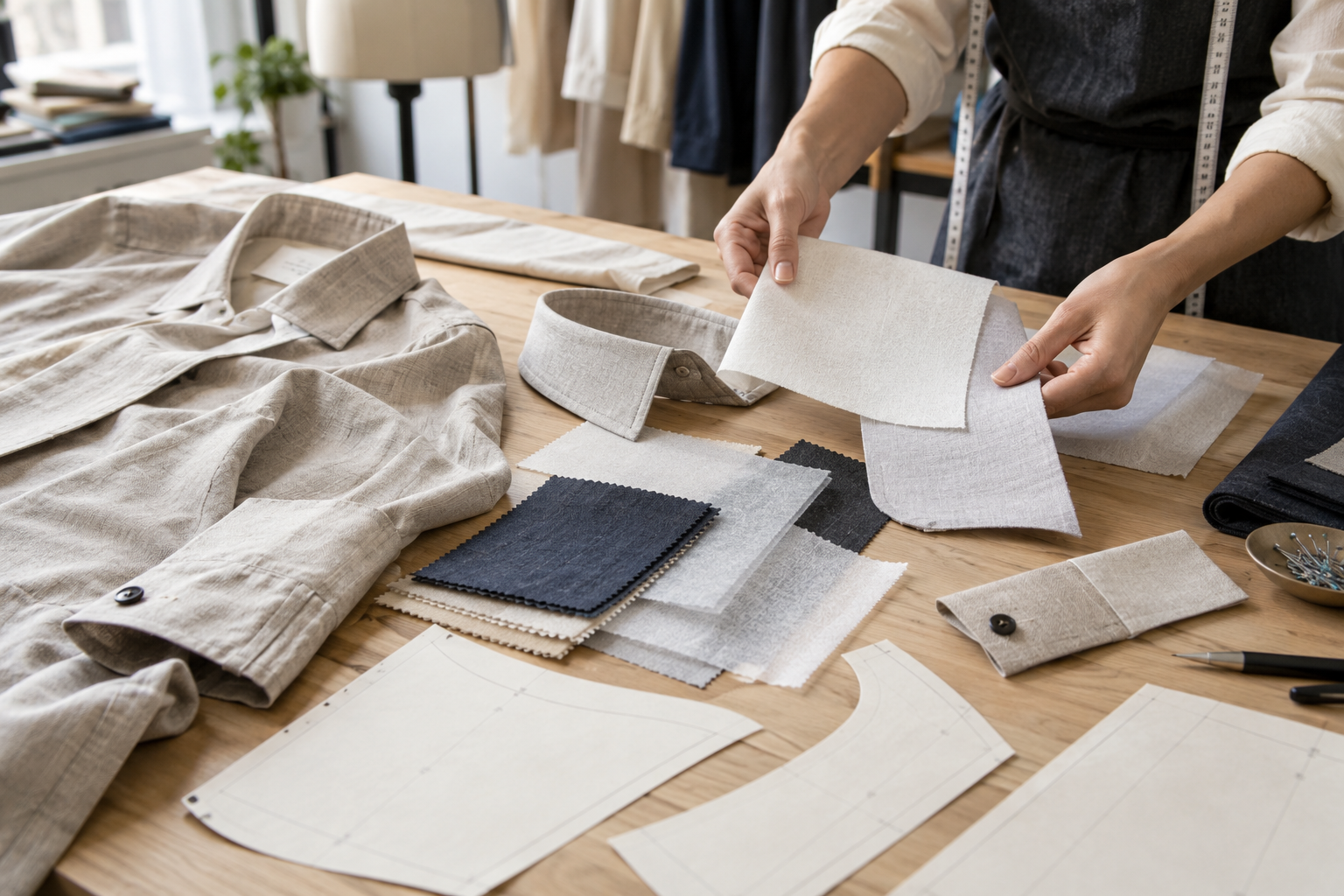
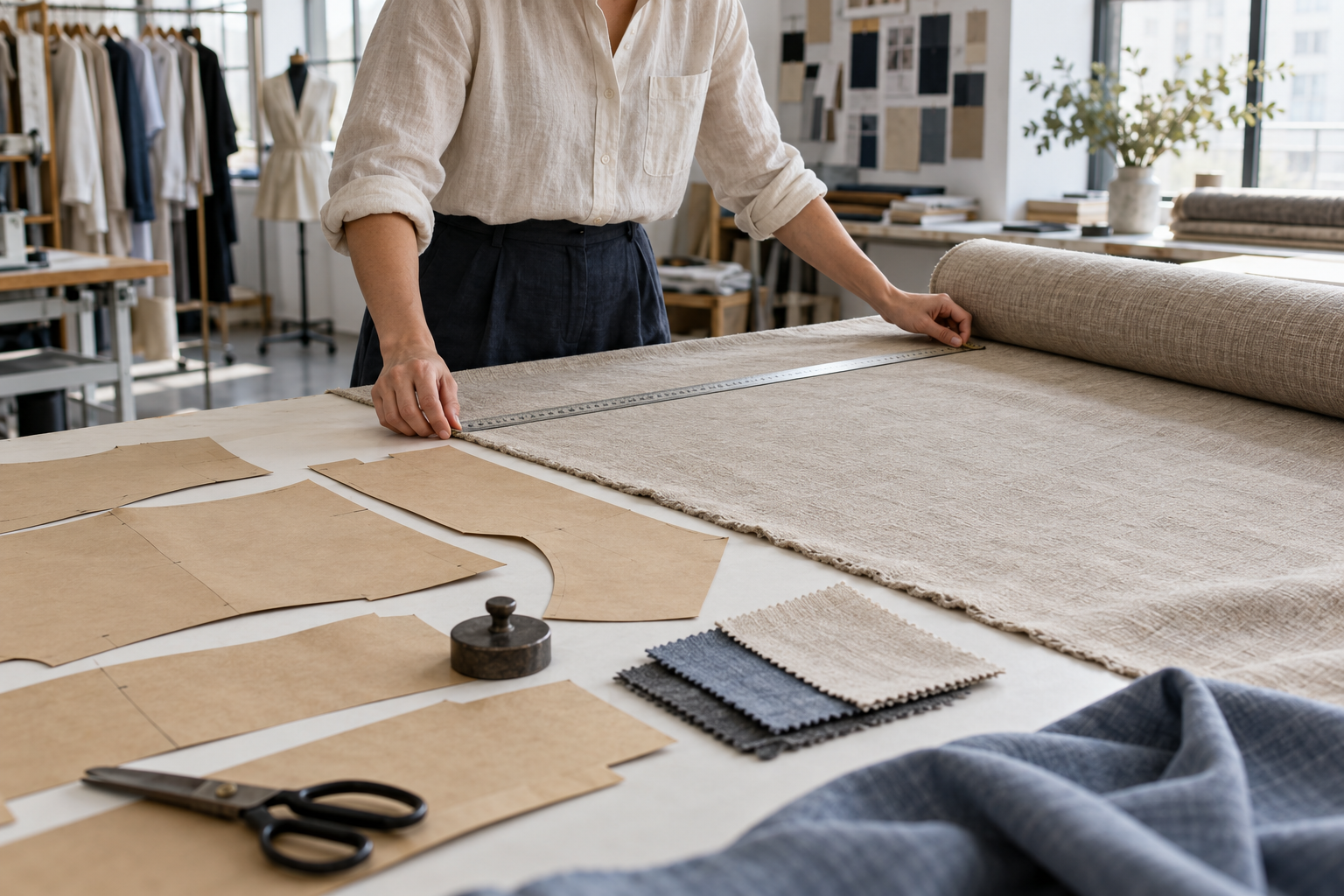
First compare physical swatches under consistent lighting. Check color, surface, hand feel, weight, stretch, recovery, and opacity. Consider the garment’s use: a jersey that feels soft on a small swatch may relax differently in a long sleeve; a woven with a similar color may crease or abrade differently. Where the product has a relevant care or performance expectation, ask what evaluation is appropriate before making a final claim to customers.
Material testing needs should be defined by the product and market, not assumed. Use a clear plan for methods, samples, and acceptance criteria when a product requirement calls for testing.
2. Garment level: make a targeted sample
A swatch cannot confirm pattern behavior. When the substitution changes a critical characteristic, develop a targeted sample in the proposed fabric. It does not always need to be a full collection sample, but it should show the areas most likely to react to the change: neckline, waistband, pockets, seams, closures, panels, print placement, or wash effect.
Review the sample against the approved garment side by side. Look beyond first impressions. Measure the garment after the relevant processing, assess balance on body or form, inspect seam appearance, and confirm whether the new fabric affects comfort, structure, or intended ease. If fit is impacted, document the feedback precisely; the process in fit-sample feedback for clothing manufacturers is useful for turning observations into actionable revisions.
3. Production level: confirm repeatability
Before bulk approval, confirm whether the fabric and color can be supplied consistently for the intended order. This is not a request for a promise; it is a planning conversation about the material reference, dye lot handling, acceptable variation, and the steps required if the brand expects future reorders. If the alternative changes width, yield, or cutting behavior, revisit consumption and packing assumptions before finalizing the order.
Protect color and finish approvals
Color is one of the easiest places for a substitution to create unintended variation. A different base fabric can absorb dye differently, reflect light differently, and change after washing or finishing. Specify the viewing conditions and approved reference for the color decision. If a trim, print, or embroidery needs to coordinate with the body fabric, include it in the review rather than approving each component in isolation.
The same applies to finishes. Brushing, peaching, washing, coating, and other processes can alter hand feel, dimensions, and color. Keep the approved sample, swatch, and notes together as the production reference. For a broader checkpoint, use the fabric, color, and trim approval checklist before releasing a revised material to production.
Document the decision in the production package
Once a substitute is approved, update the documents that control production. This step matters as much as the material review itself. A factory should not need to infer which swatch, color, sample, or version is current.
- Record the approved fabric identification, color, and construction details.
- Attach or reference the approved swatch and the approved substitute sample.
- State whether the original sample remains the fit and workmanship reference.
- List any pattern, measurement, sewing, decoration, care-label, or packing changes caused by the new fabric.
- Retire superseded files clearly so they cannot be used by mistake.
Version control is especially important when teams work across time zones or when multiple styles share a material. Use dated filenames and a short change log. The goal is not paperwork for its own sake; it is one unambiguous production instruction.
Common mistakes brands can avoid
Approving from a screen: Digital images are helpful for discussion but are not enough for a final material decision. Review physical references whenever the change is meaningful.
Comparing only color: A close shade does not guarantee comparable weight, stretch, opacity, or behavior after processing.
Skipping a targeted sample: The cost of a focused sample is often easier to manage than correcting unexpected fit or construction issues during production.
Leaving the change out of the specification: An approved substitute that is not recorded in the production package can be treated as a temporary discussion instead of the final instruction.
FAQ
Can a manufacturer choose a substitute fabric without brand approval?
Brands should define the approval path before production. A manufacturer may be able to propose alternatives, but a material change can affect the product and should be reviewed against agreed requirements before bulk use.
When is a new sample necessary?
A new or targeted sample is advisable when the substitute could alter fit, drape, stretch, construction, color, finish, decoration, or the garment’s intended performance. The needed sample scope depends on the risk of the change.
How should a brand handle a fabric substitution on a repeat order?
First decide whether matching the prior delivery is essential. If it is, compare the proposed material directly with the approved prior reference and confirm how the variation will be communicated. If the product is intentionally changing, treat it as a revised version and update the production package accordingly.
Turn a fabric change into a controlled decision
Fabric substitutions do not have to derail a collection. With a defined brief, physical comparison, targeted sampling, and clear documentation, brands can make a confident decision while protecting the product details that matter most. If you are preparing custom apparel and need to discuss material options, sample review, or a production-ready handoff, contact Huilin Fashion with your product brief and approved references.