Custom Tracksuit Manufacturing: A Development Guide for Apparel Brands
A tracksuit looks simple when it is viewed as a jacket and a pair of pants. In development, however, it is a coordinated system. The two pieces need to share a clear product purpose, compatible materials, a consistent visual language, and an approach to fit that works together rather than piece by piece. For a brand preparing custom tracksuit manufacturing, that coordination is what turns an initial idea into a sample that can be approved with confidence.
This guide helps apparel buyers and product teams prepare a practical brief, make the key decisions in the right order, and create a clearer handoff for sampling and bulk production.
Start with the tracksuit’s role in the collection
Before choosing a fabric or drawing a pocket, define the job the set must do. Is it designed for warm-up, travel, everyday streetwear, team wear, or a relaxed lifestyle range? A performance-led set may need stretch, light weight, and secure pockets. A comfort-focused set may prioritize a softer hand feel and a relaxed silhouette. A fashion-led set may depend more on proportions, panel lines, texture, or a distinctive color story.
Write that role into the product brief. Include the intended wearer, climate or use setting, silhouette, price-positioning goal, and whether the jacket and pants will be sold as a set, as separates, or both. This gives the manufacturer context for later choices without asking them to guess your brand’s priorities.
Decide what must match and what may differ
Most tracksuits benefit from a shared base fabric, color, and trim family, but they do not need to be identical in every detail. For example, a jacket can have a full front zip while the pants use a drawcord waist; both can still feel like one set through their fabric face, seam treatment, piping, rib quality, and hardware finish. Define the non-negotiable matching elements early. This prevents a sample from looking like two separate garments placed together.
Choose fabric for the intended movement and appearance
Fabric affects the tracksuit’s drape, warmth, recovery, surface appearance, and the way every seam and trim behaves. Rather than selecting by fiber name alone, assess the finished material against the use case. A brushed knit can create warmth and a familiar casual feel, while an interlock or double-knit construction can provide a cleaner face and more structure. A woven option may suit a lighter technical direction, but it changes the garment’s stretch, seam behavior, and fit allowances.
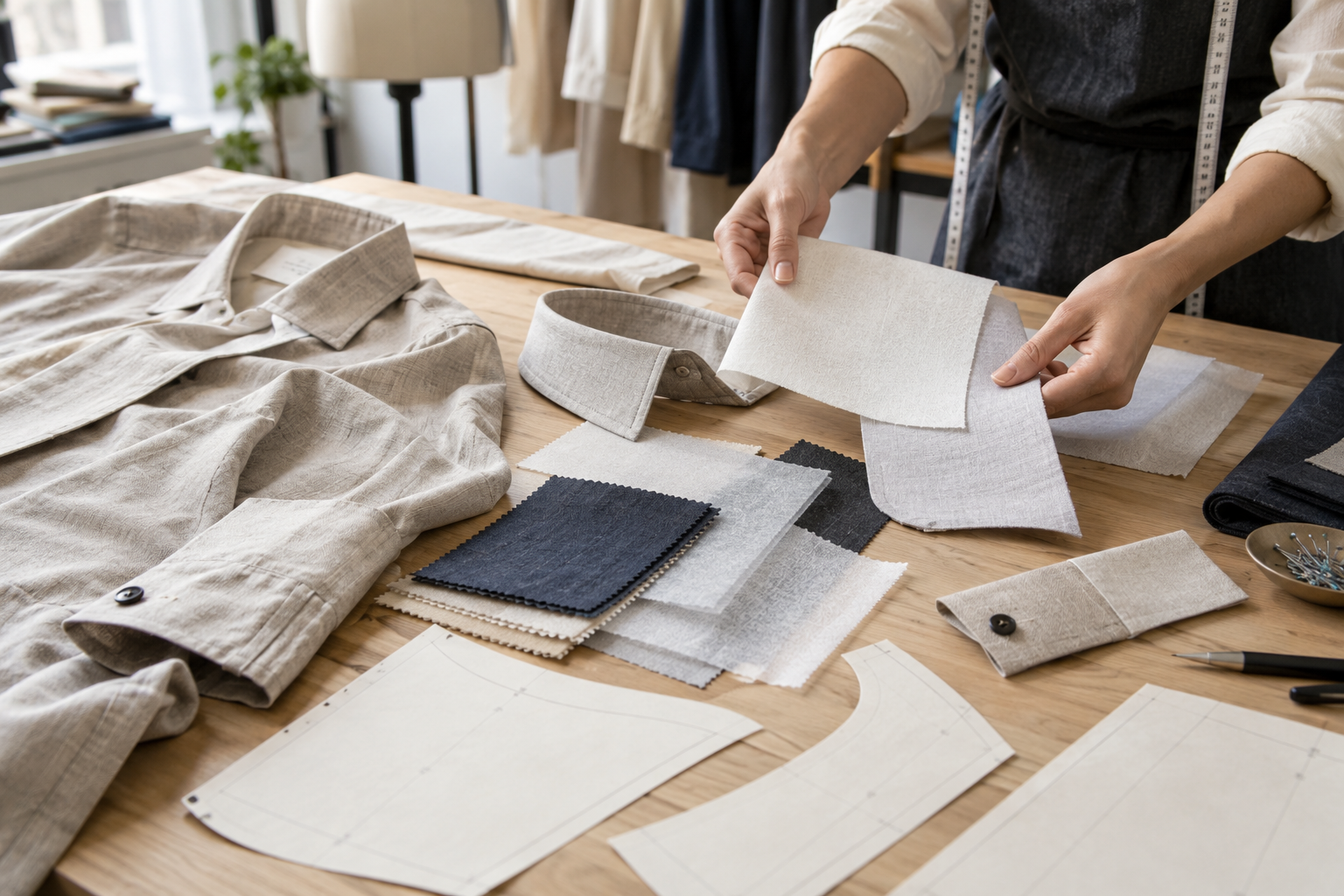
Ask to review swatches under normal light and handle them alongside the proposed zipper tape, rib, mesh, lining, or contrast panels. Check whether colors read consistently across the different components. If the jacket and pants use different fabric weights, confirm that they still look intentional when worn together.
Material choices are easier to communicate when the product package states the requested composition, construction or weight range where relevant, color reference, finish expectations, and any performance requirements you need to validate. A structured apparel bill of materials can keep those inputs connected to the correct component instead of leaving them scattered across email threads.
Build the jacket and pants as one fit story
A tracksuit should be reviewed on a body, not only on a flat table. The jacket’s body length, shoulder shape, sleeve volume, and hem tension influence the perceived proportion of the pants. In the same way, the pants’ rise, leg shape, cuff opening, and hem length affect how balanced the full look feels.
Start with a base size and identify the body measurements and ease that matter most for the intended silhouette. A slim travel set, a regular team set, and an oversized streetwear set need different movement allowances. Specify whether the wearer should be able to layer under the jacket, whether the pants should sit at the natural waist or lower, and how the cuffs should interact with footwear.
Make the measurement sheet usable
Use clearly named points of measure for each garment, a base-size target, grading direction, and a visual reference for any unusual measurement. The jacket and pants should have their own tables, but the fit notes should explain their relationship. For a fuller setup, use a garment measurement spec sheet that gives the sample team one unambiguous reference.
Specify construction and components before sampling
Tracksuit details are highly visible because the wearer sees the garments together. A small inconsistency in a zipper puller, drawcord tip, piping width, or rib tone can make the set feel unfinished. List every component rather than relying only on a sketch.
- Jacket: collar height, zip type and length, pocket construction, cuff and hem finish, panel seams, lining or mesh placement, and decoration locations.
- Pants: waistband construction, elastic and drawcord details, pocket type, rise and leg shape, ankle finish, and any zip openings or contrast panels.
- Shared elements: fabric and color references, logo or artwork files if applicable, hardware color, piping or tape, labels, hangtags, and packaging instructions.
Even familiar components deserve an explicit instruction. State whether a zipper is intended to be exposed or covered, whether a drawcord is functional or decorative, and whether a pocket must safely hold a phone. If artwork is involved, provide production-ready placement, scale, color, and method notes. The practical framework in an apparel tech pack helps connect these details to the right views and specifications.
Plan colorways and decoration as a coordinated system
Tracksuits often use contrast stripes, panels, embroidery, transfers, or printed graphics. These elements require decisions beyond the main garment color. Identify the color reference for each panel and trim, then decide which colors share the same dye route or material source. A contrast rib or zipper tape that is only “close enough” in a swatch can look noticeably different when assembled next to the body fabric.
For decoration, make the sample approval meaningful: review position on the body, alignment across left and right sides, scale across sizes, and how the method behaves on the selected fabric. A large print may drape differently over a stretch knit than it does on a flat artwork file. Compare decoration methods against the selected fabric and the desired durability before one is confirmed.
Use samples to test the set, not only each garment
Approve a tracksuit sample by reviewing both pieces together and separately. Put the full set on the intended fit model, then assess the jacket open and closed, the pants in motion and seated, and the effect of any layering. Photograph or record feedback from the front, back, and side so that changes are traceable.
Useful sample-review questions include:
- Does the jacket length and pant rise create the intended overall proportion?
- Do panel seams, stripes, or piping align and remain balanced across the set?
- Do pockets, zippers, waistbands, and cuffs work comfortably in normal movement?
- Do fabric stretch, recovery, opacity, and surface appearance match the brief?
- Are all components consistent with the approved material and color references?
Consolidate feedback into one controlled revision round where possible. Vague comments such as “make it better” slow sampling; a measured change, annotated photo, or marked pattern detail gives the team something actionable and keeps decisions clear.
Prepare a production-ready approval package
Do not let a verbal sample approval stand alone. Before bulk production, organize the approved sample references, final measurement tables, grading instructions, fabric and trim approvals, artwork files, labeling and packaging requirements, and a written record of every agreed change. The goal is not extra paperwork; it is a shared reference that prevents a late revision from being lost between the sample room and production team.
Confirm which physical sample or swatch represents the approved standard, especially when multiple colorways or trim options are involved. If a detail has a permitted variation, define it instead of assuming it will be understood. A final pre-production approval checklist can help your team review the full set before production begins.
FAQ: Custom Tracksuit Manufacturing
Can a tracksuit jacket and pants use different fabrics?
Yes, when that difference supports the intended use and the materials still look cohesive. Review the pieces together during sampling, because surface sheen, drape, and color can change the visual relationship.
What should be included in a custom tracksuit tech pack?
Include flat sketches for both pieces, measurement tables, construction notes, material and trim specifications, colorways, artwork placement, labels, packaging, and sample comments. Note the shared details that must match across the set.
How do brands avoid mismatched tracksuit components?
Assign a clear reference to every fabric, trim, hardware item, and decoration method; then approve the jacket and pants together. A bill of materials and a final pre-production review make those references easier to control.
Move from concept to a clear manufacturing brief
Strong custom tracksuit manufacturing starts with one coordinated product story: what the set is for, how it should fit, what materials and components support it, and which sample details must be approved before production. When that information is clear, your manufacturer can focus on making a sample that reflects the brief instead of filling in missing decisions.
When you are ready to develop a coordinated tracksuit or another custom apparel style, contact Huilin Fashion with your sketches, specifications, material ideas, and target product use to begin a focused production discussion.