Custom Jacket Manufacturing: A Development Guide for Apparel Brands
Custom jackets often carry more development decisions than a simple top or bottom. A jacket may need an outer shell, lining, interlining, insulation, pockets, closures, hardware, reinforcement, and a silhouette that still works over other garments. For an apparel brand, the best way to approach custom jacket manufacturing is to turn those choices into a clear, testable product brief before bulk production is discussed.
This guide explains the decisions that make a jacket easier to sample, review, and produce. It is written for fashion brands sourcing custom outerwear for wholesale, retail, or a first collection.
Start with the jacket’s job, not just its look
“Jacket” describes a category, not a complete specification. A cropped fashion jacket, a workwear overshirt, a lightly insulated coach jacket, and a structured blazer-like outer layer can look related on a mood board while needing very different materials and construction.
Begin by defining the use case in practical terms:
- Layering: Will it be worn over a T-shirt, knitwear, or a heavier mid-layer?
- Climate and season: Is the aim wind resistance, light warmth, weather protection, or a purely fashion-led layer?
- Silhouette: Should the shoulder be dropped, fitted, extended, padded, cropped, or relaxed?
- Customer handling: Does the product need frequent washing, travel-friendly packing, or more tailored care?
- Merchandising: Which colors, sizes, and trims must remain consistent across the planned range?
These answers help a manufacturer interpret the design intent. They also prevent a common issue: selecting a shell fabric because it photographs well, then discovering in sampling that it cannot support the intended warmth, structure, or pocket construction.
Build an outerwear brief that a development team can use
A reference image is useful, but it rarely communicates every production decision. A development-ready brief combines the visual direction with the components and measurements that define the jacket. Your apparel tech pack can organize this information in one place.
Specify the shell, lining, and internal layers separately
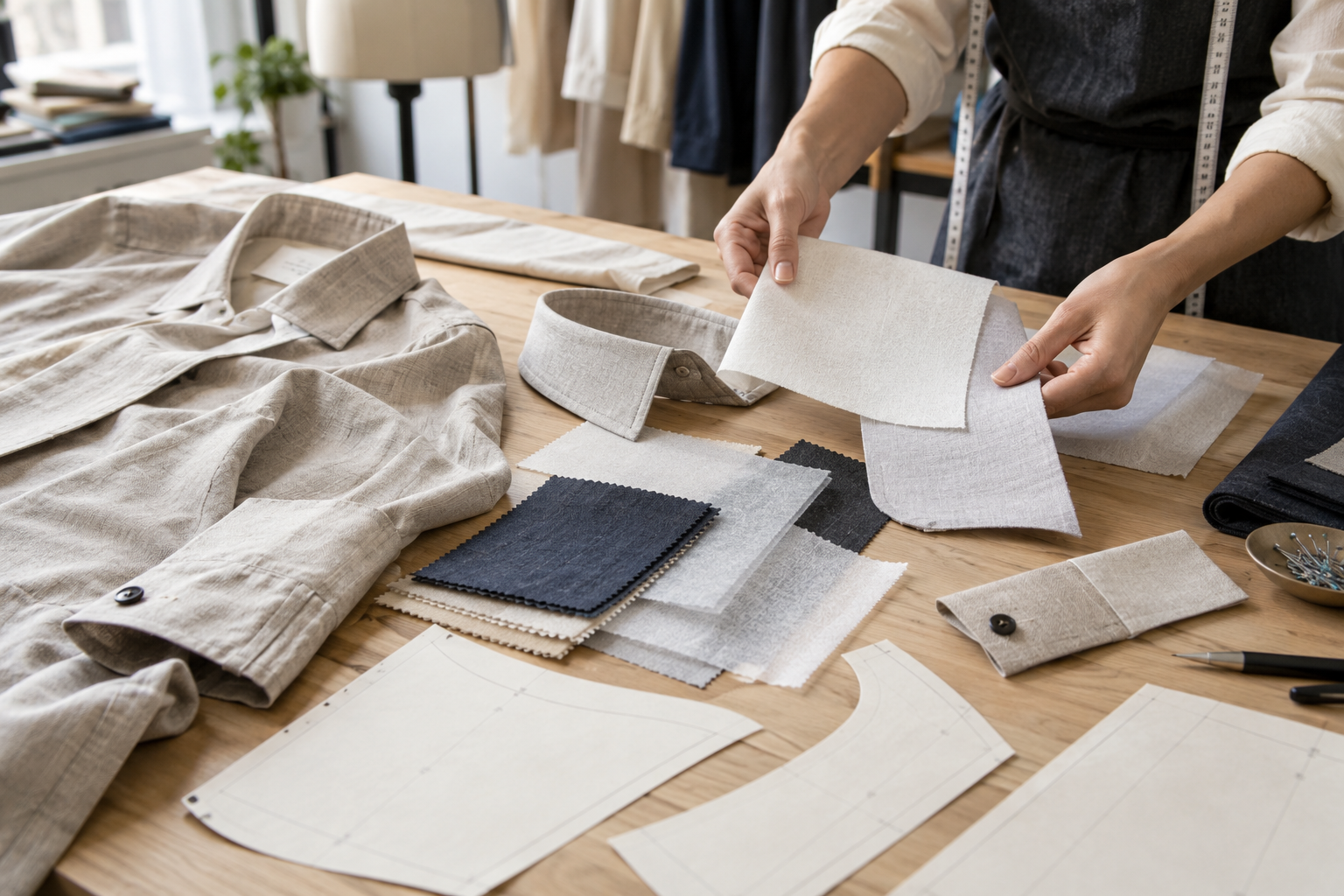
Each layer has a different job. The shell drives appearance, abrasion behavior, drape, and how seams look. A lining affects comfort, ease of putting the jacket on, and how the inside is finished. Interlining, fusible support, padding, or insulation can affect shape and warmth without being visible at first glance.
For every material, provide the intended fiber content or hand feel, target weight where available, color reference, finish, and whether the material needs a particular performance characteristic. If the exact fabric is not yet chosen, state what must not change: for example, a crisp shape, soft hand, low bulk, or a matte surface. That gives the development team useful boundaries when reviewing fabric options.
Describe construction at the points customers notice
Jacket construction is especially visible around the collar, placket, cuffs, hem, pockets, and armhole. Call out whether edges are topstitched, bound, turned, ribbed, or faced. Identify the pocket type—patch, welt, inseam, cargo, or internal—and its placement. If a collar needs stand, roll, or specific height, show it in the sketch and note it in the brief.
A detailed construction page is not over-specifying; it is a way to align appearance and function. For a useful reference, see this guide to garment construction details for custom apparel.
Choose closures and hardware early
Zippers, snaps, buttons, drawcords, cord stops, and metal details influence both the design and the assembly sequence. Define the closure type, finish direction, approximate length, puller style, and placement. If a branded element is planned, provide approved artwork and location guidance rather than assuming a reference photo is sufficient.
Also think through the customer experience. A zipper that is difficult to operate, a snap that pulls on a lightweight shell, or a pocket opening that gapes can undermine an otherwise strong jacket. Sampling is the right time to check these interactions with the actual materials.
Make fit decisions with layering in mind
Fit is not only a chest and body-length question. Outerwear needs enough movement through the shoulder, bicep, and back when a customer reaches, drives, or layers clothing underneath. At the same time, adding ease without a plan can make the garment look oversized in unintended places.
Set the target sample size and include the core points of measure: body length, chest, sweep, shoulder, sleeve length, bicep, cuff opening, collar dimensions, and pocket placement. Clarify how body length is measured and whether the hem is level, curved, elasticated, or adjustable. A garment measurement spec sheet gives everyone a consistent way to review these points.
During fit review, evaluate the jacket over the layer it is intended to accommodate. If it is designed as a lightweight piece, assess it with a light base layer. If it is intended for cold-weather layering, include the mid-layer in the fitting. Record feedback by point of measure and construction location, not only with general notes such as “make it roomier.”
Use sampling to resolve risk before bulk production
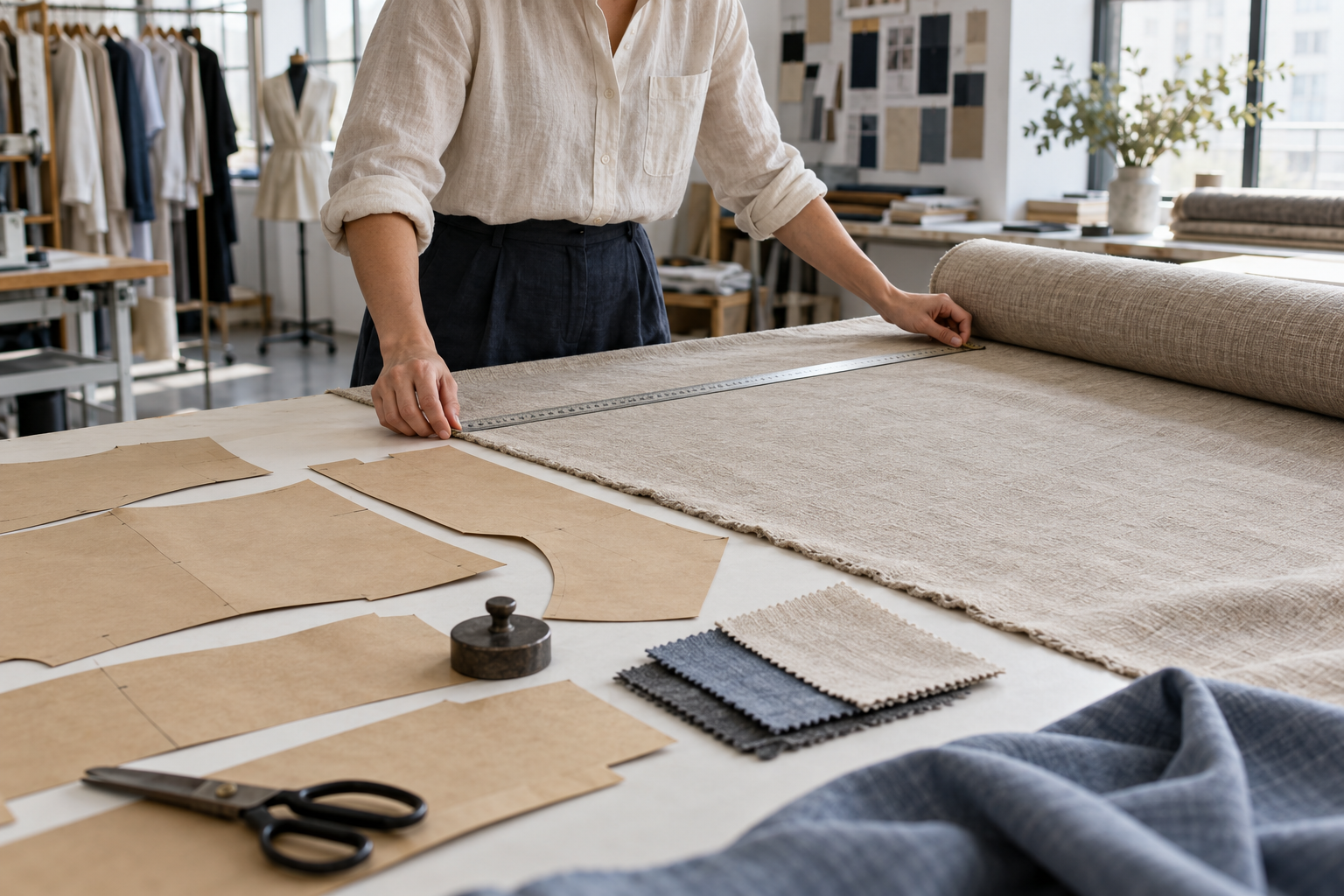
A sample should answer focused questions. The first development sample may establish overall shape and pattern direction. A revised sample can confirm fit, pockets, closures, lining behavior, and construction. A pre-production approval stage should capture the final agreed version before bulk work begins.
For custom jacket manufacturing, review the following areas in the actual sample:
- Whether the shell and lining work together without twisting, pulling, or unwanted bulk.
- How seams, topstitching, and reinforcement appear on the selected fabric.
- Whether pocket openings, zippers, snaps, and drawcords function smoothly.
- How the garment behaves when layered and when arms are raised or bent.
- Whether the approved color and trim combination maintains the intended visual balance.
Keep one consolidated feedback document for each revision. Mark comments as approved, change required, or question pending. This avoids a familiar problem in multi-person reviews: a late request conflicts with an earlier approval because the decision trail was not clear.
Plan colorways, size range, and trim consistency
Jackets often have more visible components than basic garments, so a new colorway is more than a new shell color. Consider lining, zipper tape, hardware finish, rib, elastic, thread, labels, and any decoration. Decide which elements stay constant across colorways and which intentionally change. A simple color-and-trim matrix makes those decisions easier to review.
Size planning needs the same discipline. Grade rules should reflect the silhouette and movement needs of the jacket, particularly at the chest, shoulder, bicep, and sleeve. Use your intended customer and size range to set the starting point, then review the graded specification before approving bulk production. This apparel size grading guide explains why a single approved base size is not enough on its own.
Prepare for production with clear approvals
Before moving forward, make sure the approved jacket is traceable: final measurements, bill of materials, construction notes, artwork placement, label instructions, color references, and sample comments should tell the same story. Resolve any “to be confirmed” item before the production team relies on it.
It is also helpful to identify which details are non-negotiable. Perhaps the collar shape and zipper finish define the brand look, while a lining color can remain flexible if supply changes. Giving that context helps the team raise relevant questions instead of making assumptions. The goal is not a longer document; it is a decision-ready one.
FAQ: Custom Jacket Manufacturing
What should I send a manufacturer for a custom jacket?
Send a clear tech pack or brief with sketches, target measurements, fabric and lining direction, construction details, closure and hardware information, artwork files, labels, colorways, and the intended size range. Reference photos help explain style, but they should be supported by written specifications.
How do I choose a fabric for a custom jacket?
Start with the jacket’s intended use, silhouette, season, and care expectations. Then evaluate swatches and sample garments for hand feel, structure, weight, seam appearance, and compatibility with the lining or insulation. Review the actual fabric in a sample before giving final approval.
Why is a jacket sample important before production?
A sample lets you assess elements that a flat sketch cannot show: layering ease, collar shape, pocket function, closure performance, lining behavior, and the combined effect of materials and construction. It gives the brand a practical basis for consolidated feedback and approval.
Turn your jacket concept into an approval-ready product
A strong outerwear brief turns creative direction into clear choices around materials, construction, fit, and trim. If you are preparing a jacket collection, contact Huilin Fashion to discuss your product brief and sampling requirements for custom apparel production.