Custom Denim Manufacturing: A Development Guide for Apparel Brands
Denim can look simple on a mood board, yet turning a sketch into a consistent, retail-ready jean, jacket, skirt, or overshirt requires a series of connected manufacturing decisions. Fabric weight affects silhouette, the pattern affects comfort, wash development changes measurements, and a small trim choice can alter both the product’s appearance and production plan.
For brands sourcing custom denim manufacturing, the most useful starting point is a clear product brief—not a request for “premium denim” in the abstract. This guide explains how to communicate the development choices that matter, review samples with purpose, and move toward bulk production with fewer avoidable surprises.
Start with the wearer and the intended silhouette
Before choosing a fabric or wash, define what the garment needs to do for the customer. Is it a rigid, straight-leg five-pocket jean designed to hold its shape? A stretch denim slim fit for daily movement? A lightweight denim shirt intended for layering? These are different products, even if they share a blue indigo appearance.
Give your manufacturer a short use-case statement alongside visual references. Include the target customer, intended fit, styling context, and the elements that are essential versus flexible. This helps the development team interpret design references without treating every visual detail as a construction instruction.
Translate the concept into measurable points
For bottoms, record the rise, waistband position, hip, thigh, knee, hem opening, inseam, and leg shape. For denim outerwear, specify body length, chest, shoulder, sleeve, pocket placement, and intended ease. A structured measurement spec sheet turns fit feedback into information that can be checked from one sample to the next.
It is also helpful to identify your sample size and grading direction early. A sample may fit well in one size but reveal a poor balance when the product is graded across a range. State which size is being evaluated and which measurement points must remain proportional as sizes change.
Select denim with the final garment in mind
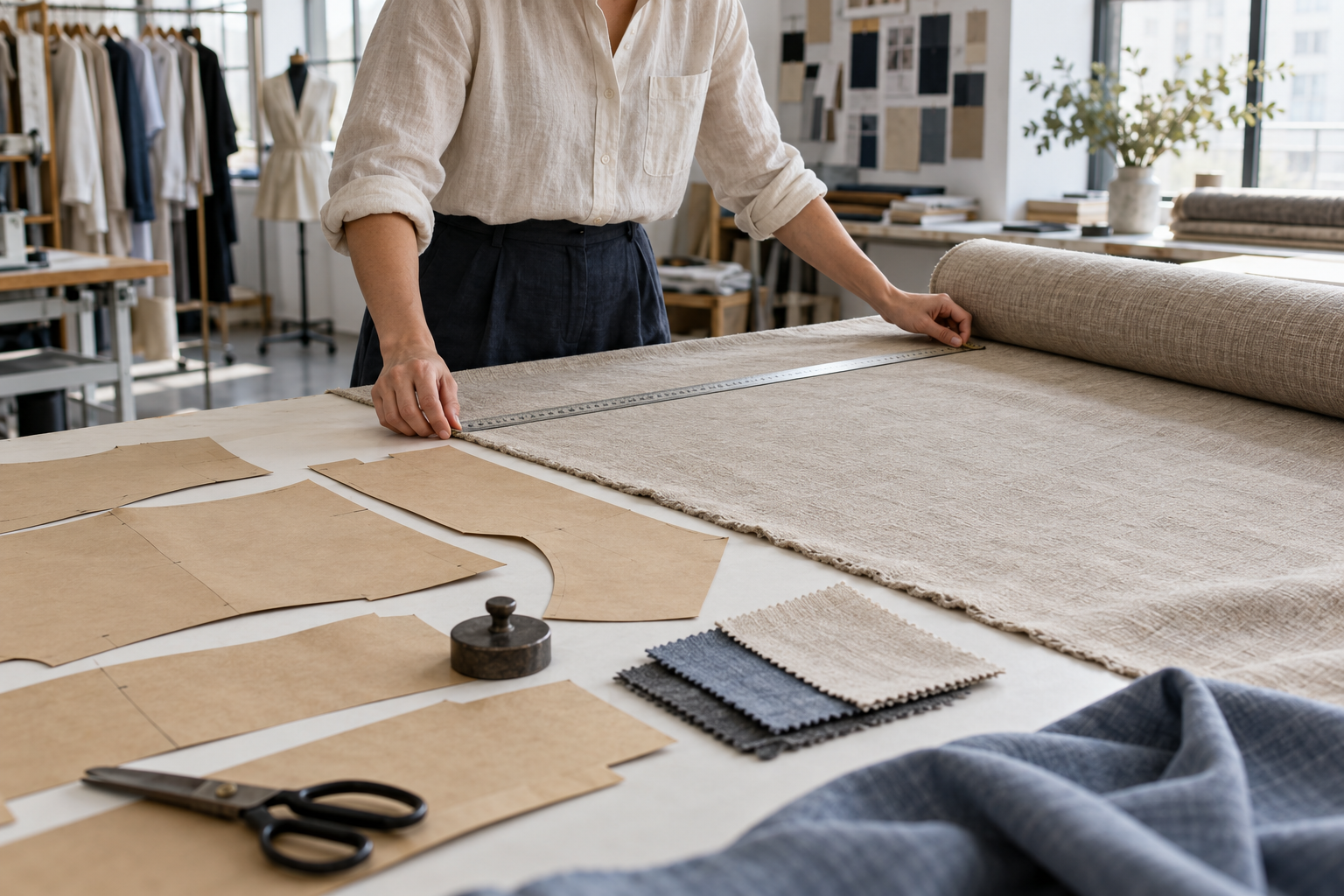
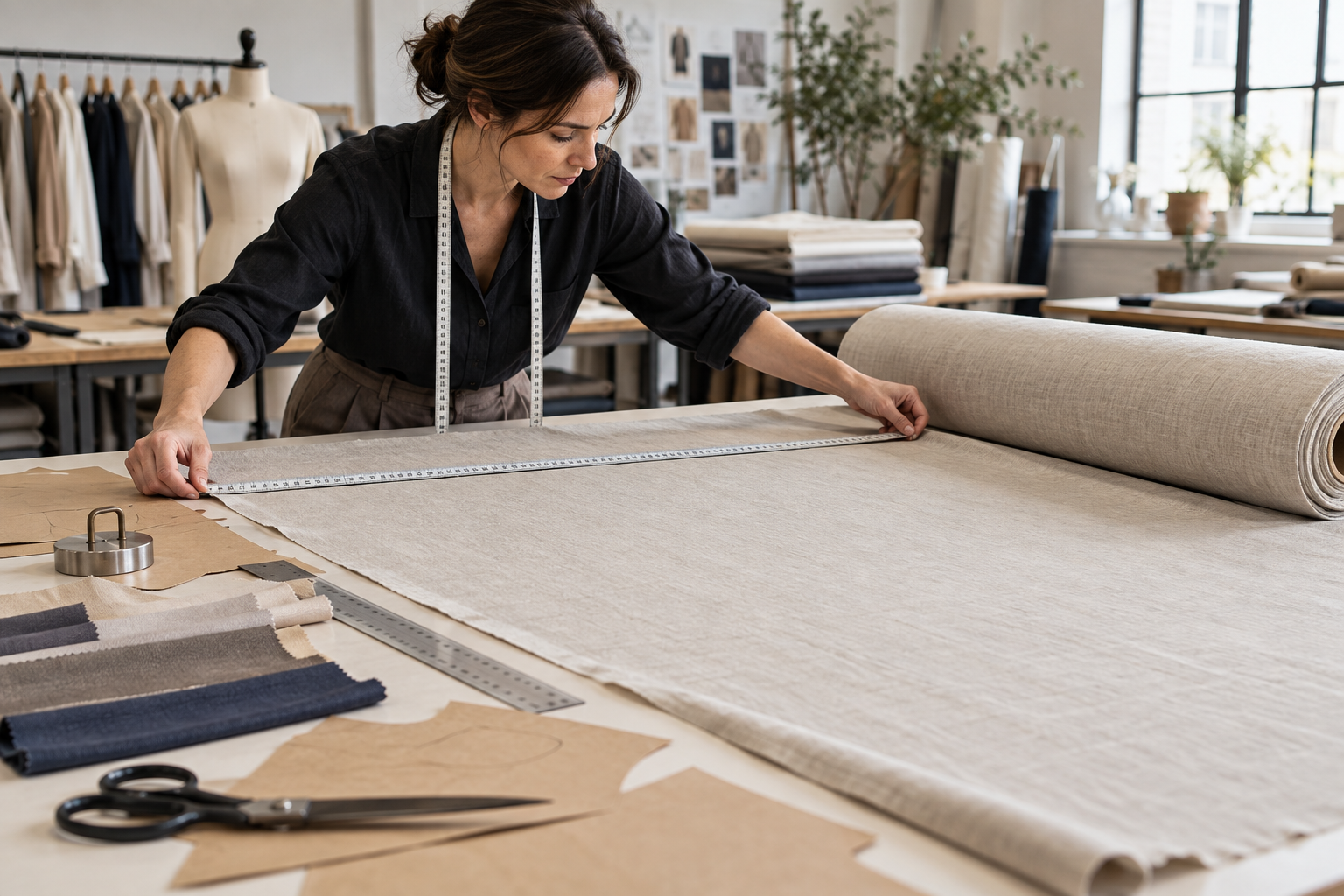
“Denim” describes a family of fabrics, not one material. Weight, fiber content, weave density, finish, stretch and recovery behavior, and color treatment all influence the finished garment. Rather than approving a swatch only by color or hand feel, consider how the fabric will behave after it is cut, sewn, washed, and worn.
Questions to answer during fabric review
- What weight and drape support the desired silhouette?
- Does the design require rigid cotton denim, stretch denim, or a softer lightweight construction?
- How should the fabric recover after movement, especially around the seat, knee, elbow, or waistband?
- Is the chosen shade intended to remain clean and dark, or to develop a visibly washed character?
- Which fabric properties should be checked after the planned wash or finish?
Reviewing fabric this way makes the selection process more practical. For a broader framework on comparing hand feel, performance, and use, see Huilin Fashion’s guide to fabric selection for private label clothing. If a proposed material changes mid-development, ask how it differs in weight, stretch, shrinkage, color response, and sewing behavior before assuming it is an equivalent replacement.
Build the construction plan before the first sample
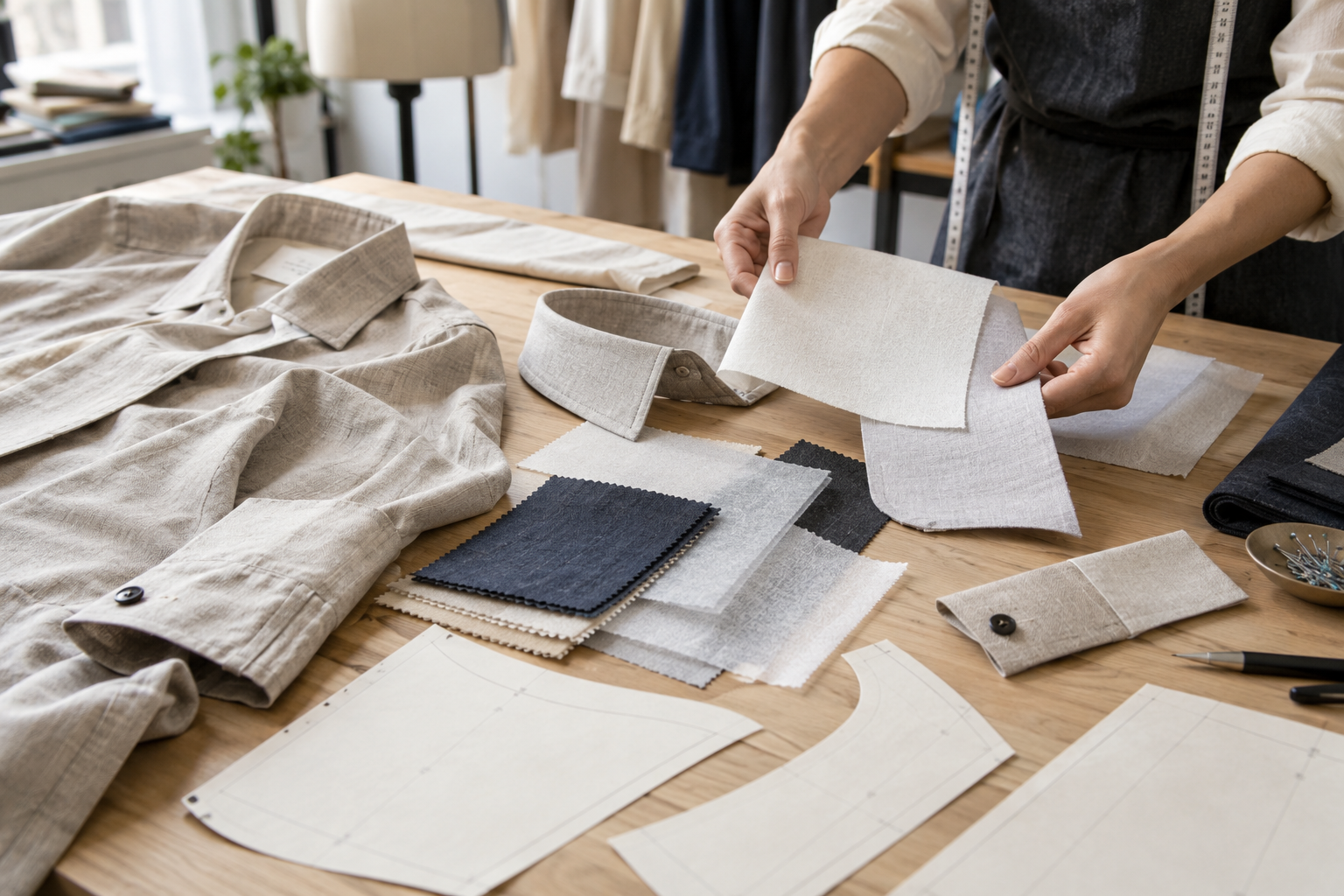
Denim garments often rely on construction details that are functional as well as visual. The waistband, fly, pocket bag, yoke, belt loops, outseam, inseam, hem, and reinforcement points should work together. A reference photo can suggest the overall look, but it rarely captures the exact stitch type, seam allowance, reinforcement, or pocket geometry needed for repeatable production.
Use your tech pack to document front and back flats, measurements, material information, color direction, label placement, artwork, and a close-up reference for key details. The apparel tech pack guide is a useful companion when turning a concept into a production brief.
Detail decisions worth calling out
- Stitching: Identify contrast or tonal thread, topstitch visibility, and areas requiring reinforcement.
- Pockets: Provide dimensions, shape, placement, and any embroidery or bartack direction.
- Closures and trims: Define button, zipper, rivet, and label requirements without assuming a reference image supplies all specifications.
- Edges and hems: State whether hems are clean, raw, cuffed, distressed, or otherwise finished.
Construction choices should be reviewed as a system. This is especially important when you want a deliberately vintage or workwear-inspired appearance while still requiring a consistent fit and a clean inside finish. Record the required details in the same development brief used to approve the rest of the garment.
Plan wash and finish development as part of the product
Wash treatment is not simply a final color filter. It can change shade, contrast, hand feel, surface character, seam expression, and garment dimensions. The same base fabric can look markedly different once it is rinsed, faded, softened, distressed, or finished. For that reason, a wash reference should describe the intended effect and the degree of variation you can accept, rather than promise an exact match from one photo.
Ask to review the wash direction on the relevant fabric and sample construction. Check the garment before and after wash, compare measured points, and make notes on color, abrasion placement, seam puckering, pocket shape, and trim appearance. Organize that review against the same visual and measurement references used for the sample.
Use samples to separate fit, construction, and wash feedback
A common development problem is trying to solve every question in one round of comments. The result can be unclear instructions: a revised wash masks a fit change, or a fabric change makes it hard to judge stitching. Keep your review organized by category so the manufacturer can trace each requested revision.
- Check the overall silhouette and measured points against the spec.
- Review comfort, movement, rise, seat, and balance on the intended wearer or fit model.
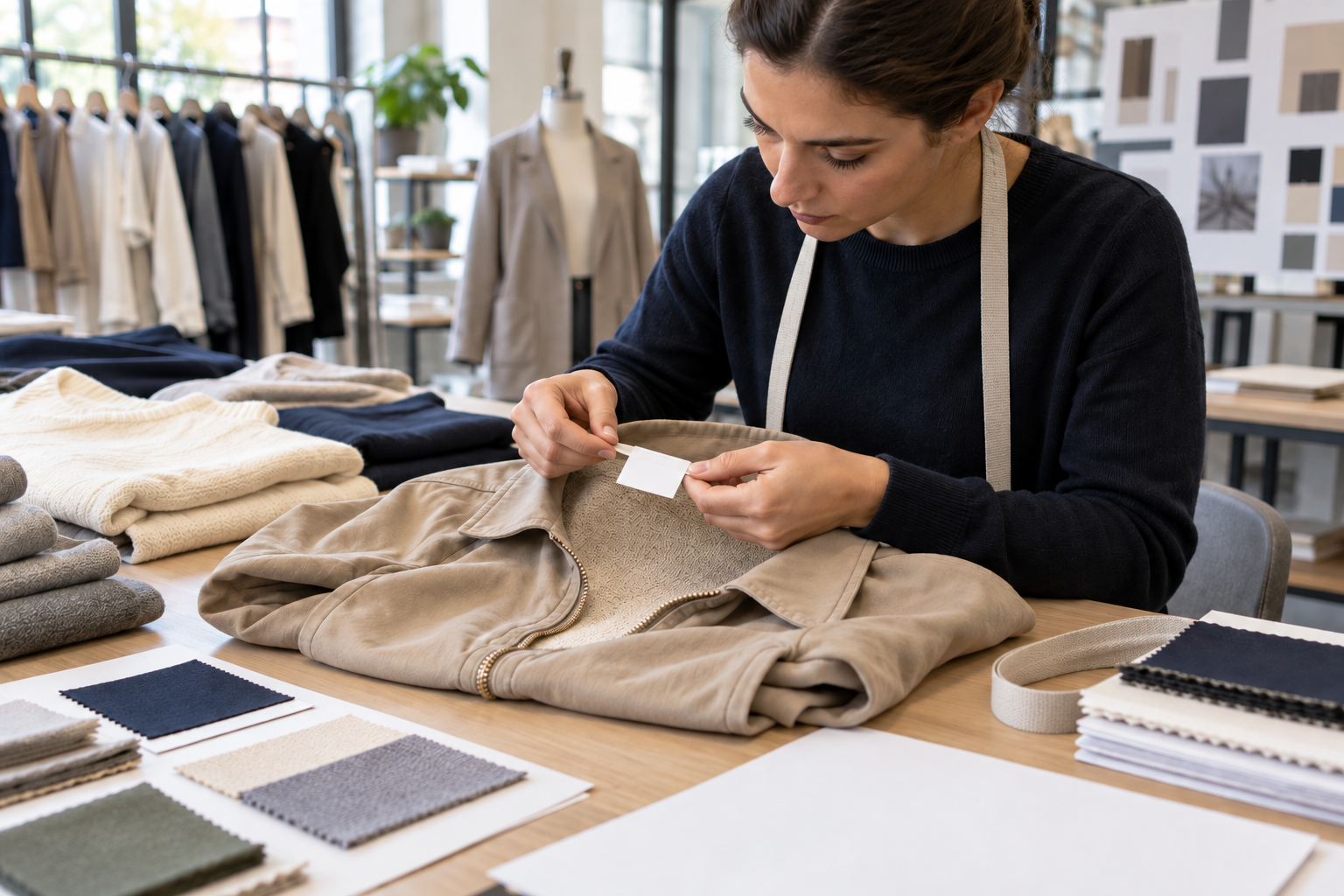
- Inspect seam quality, pockets, fly, waistband, labels, and reinforcement details.
- Assess wash appearance and hand feel separately from fit observations.
- Send consolidated feedback with annotated photos and a clear priority for each change.
Good sample feedback is specific enough to act on and structured enough to verify later. Instead of “make the leg better,” say which point is affected, how it appears on the body, and whether the desired change is in width, shape, length, or placement. Consolidated, labelled feedback keeps the next review focused.
Prepare for bulk approval with a decision record
Before bulk production, align the approved sample, measurement specification, fabric and wash direction, trim selection, artwork, label placement, packaging needs, and size-color breakdown. If a decision changed during development, update the working documents rather than relying on an old email thread or a verbal recollection.
It is wise to establish which physical reference governs the final look: for example, the approved size sample paired with the approved wash standard. This gives both brand and manufacturer a shared reference when questions arise during production. It also helps prevent a well-intended but unapproved detail change from becoming part of the final run.
FAQ
What should I send a custom denim manufacturer for an initial quote?
Send a concise product brief with reference images, product type, target fit, estimated size range, fabric direction, wash intent, decoration or branding requirements, quantity guidance, and destination market. A tech pack and measurement chart will make the discussion more precise, but an early conversation can start with a well-organized brief.
Can I develop a denim garment from a reference photo?
A reference photo is a useful starting point for silhouette and visual direction, but it does not replace construction, measurement, material, and wash specifications. Use it alongside a written brief and revise the information as you learn from samples.
Why can the fit change after a denim wash?
Washing and finishing can affect dimensions, fabric behavior, and seam expression. Measure and review the garment after the planned treatment so your approval reflects the product customers will receive.
Move from denim concept to an approval-ready brief
Custom denim manufacturing becomes more manageable when the brand treats fabric, fit, construction, wash, and sampling as connected decisions. Start with the wearer, document the measurable requirements, and keep feedback traceable through each sample round. That preparation gives your manufacturer a clearer path to build the product you have in mind.
When you are ready to discuss a custom denim style, contact Huilin Fashion with your product brief, references, and development priorities.