Clothing Manufacturing Cost Drivers: A Practical Guide for Apparel Brands
When a clothing brand asks for a manufacturing quote, the most useful question is not simply, “What will this style cost?” It is, “Which decisions are creating the cost, and which of them are essential to the product?” Understanding clothing manufacturing cost drivers lets a buyer compare options without stripping away the character, fit, or performance that makes a collection worth buying.
Costs are shaped by the complete production brief: materials, pattern and construction choices, trims, decoration, quantities, quality requirements, packaging, and commercial terms. A clear brief helps a factory quote the intended garment; a vague one often produces assumptions that make early comparisons unreliable.
Start with a complete product definition
Before discussing savings, make sure the style is described consistently. A production-ready brief should identify the garment type, intended wearer, size range, fabric composition and weight where known, colourways, construction details, trims, artwork, labels, packaging, and target order quantity. The more decisions that remain open, the more a quote will need qualifications.
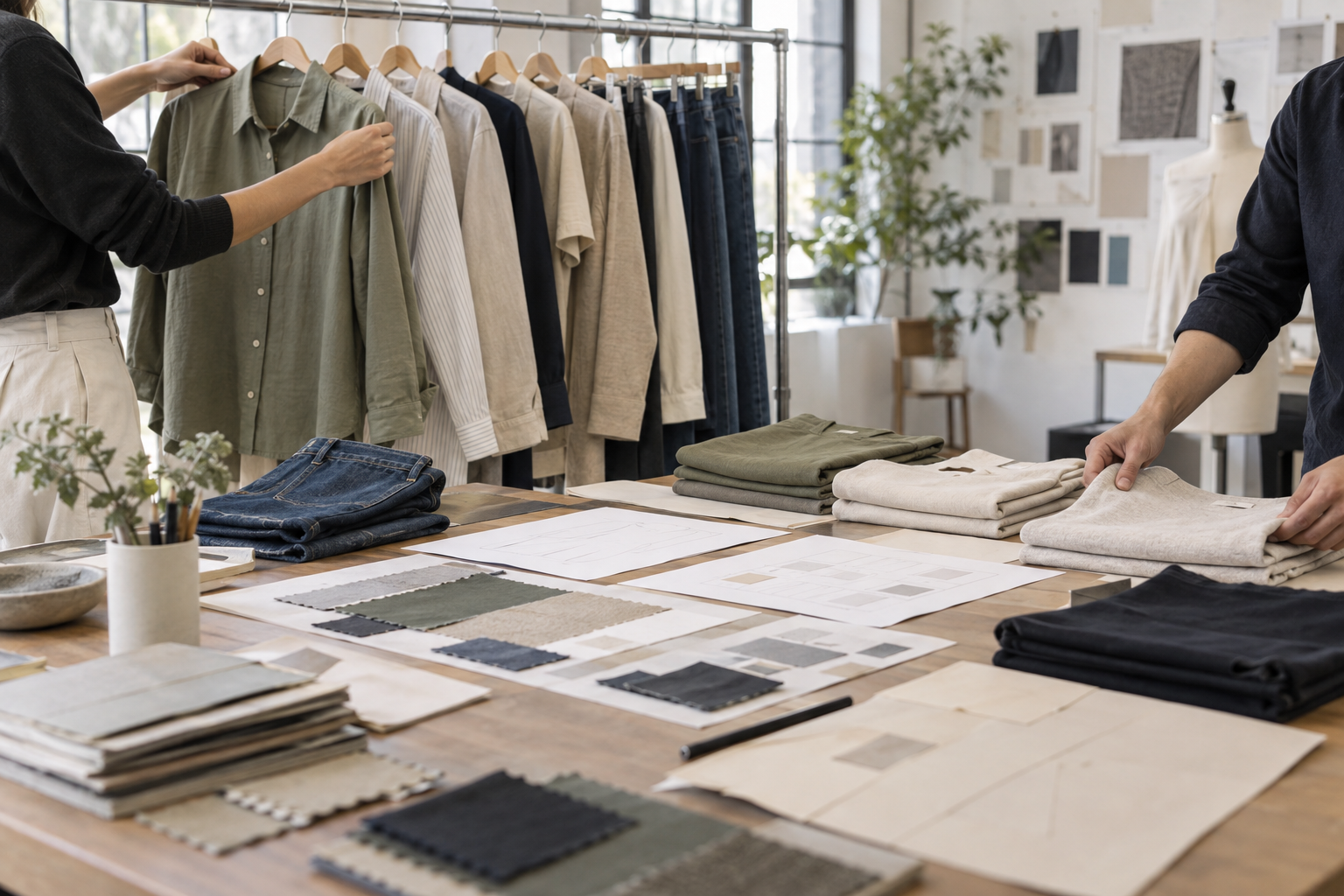
A well-organized apparel tech pack gives each supplier the same starting point. It does not need to be elaborate to be useful. Clear sketches, measurement points, material notes, and a list of open questions are far more helpful than a mood board alone.
1. Fabric is usually the largest material decision
Fabric influences both the direct material cost and the work needed to turn it into a garment. Fibre content, construction, weight, width, surface treatment, stretch, colour, print, and finishing can all change availability, minimums, yield, and handling. Two fabrics that look similar in a photograph can behave very differently in cutting, sewing, pressing, washing, and wear.
For example, a light woven fabric may require attention to opacity, seam finishing, and pressing. A stretchy knit may need recovery checks and stitch choices that move with the fabric. A brushed, coated, or washed material can add development steps because the brand needs to approve the hand feel and appearance after processing.
Ask suppliers to distinguish stock fabric from a custom-developed fabric and to state any assumptions about composition, weight, colour standard, and finish. This makes the quote easier to revise when the fabric direction changes. For a fuller decision framework, see fabric selection for private label clothing.
2. Pattern efficiency affects fabric consumption
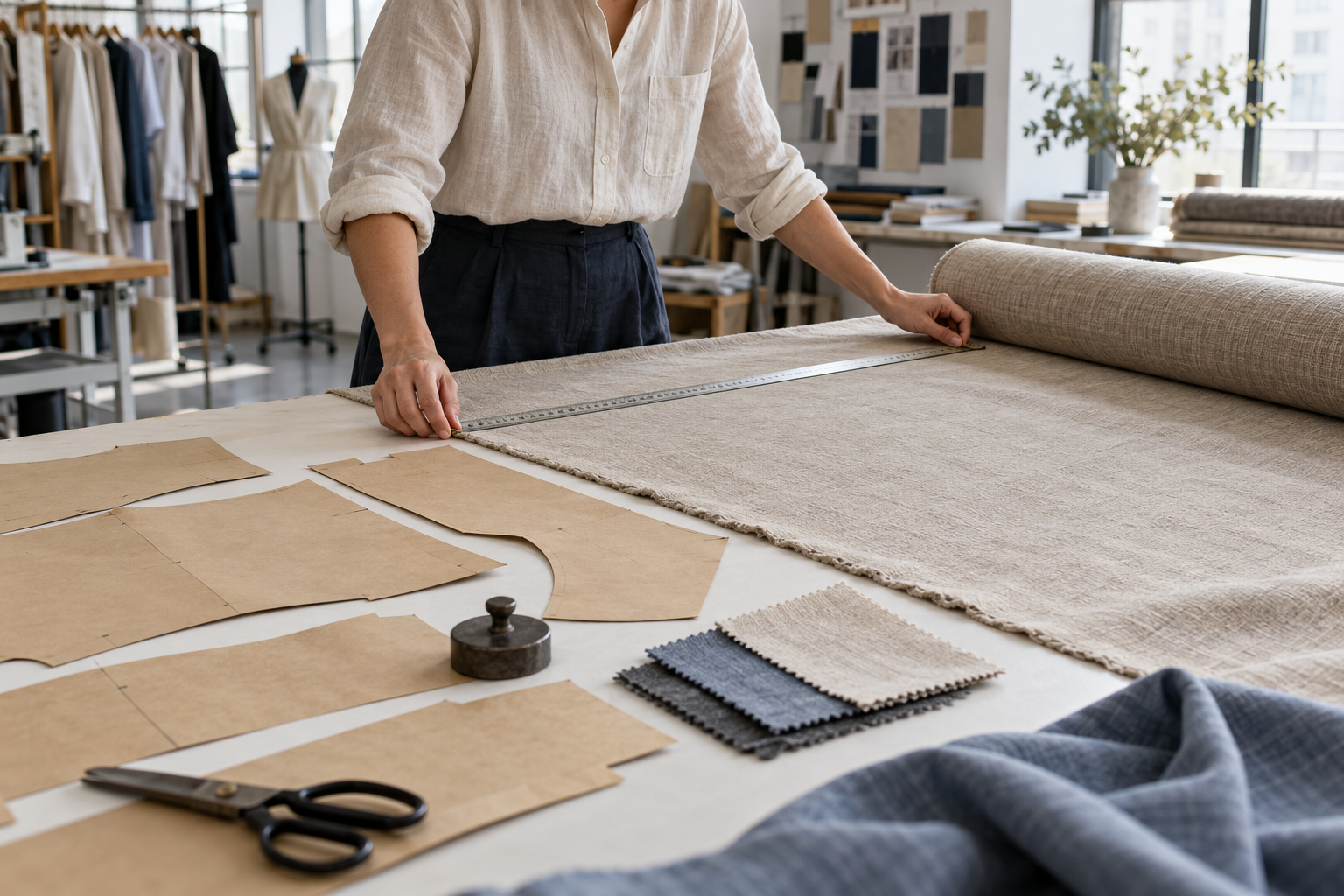
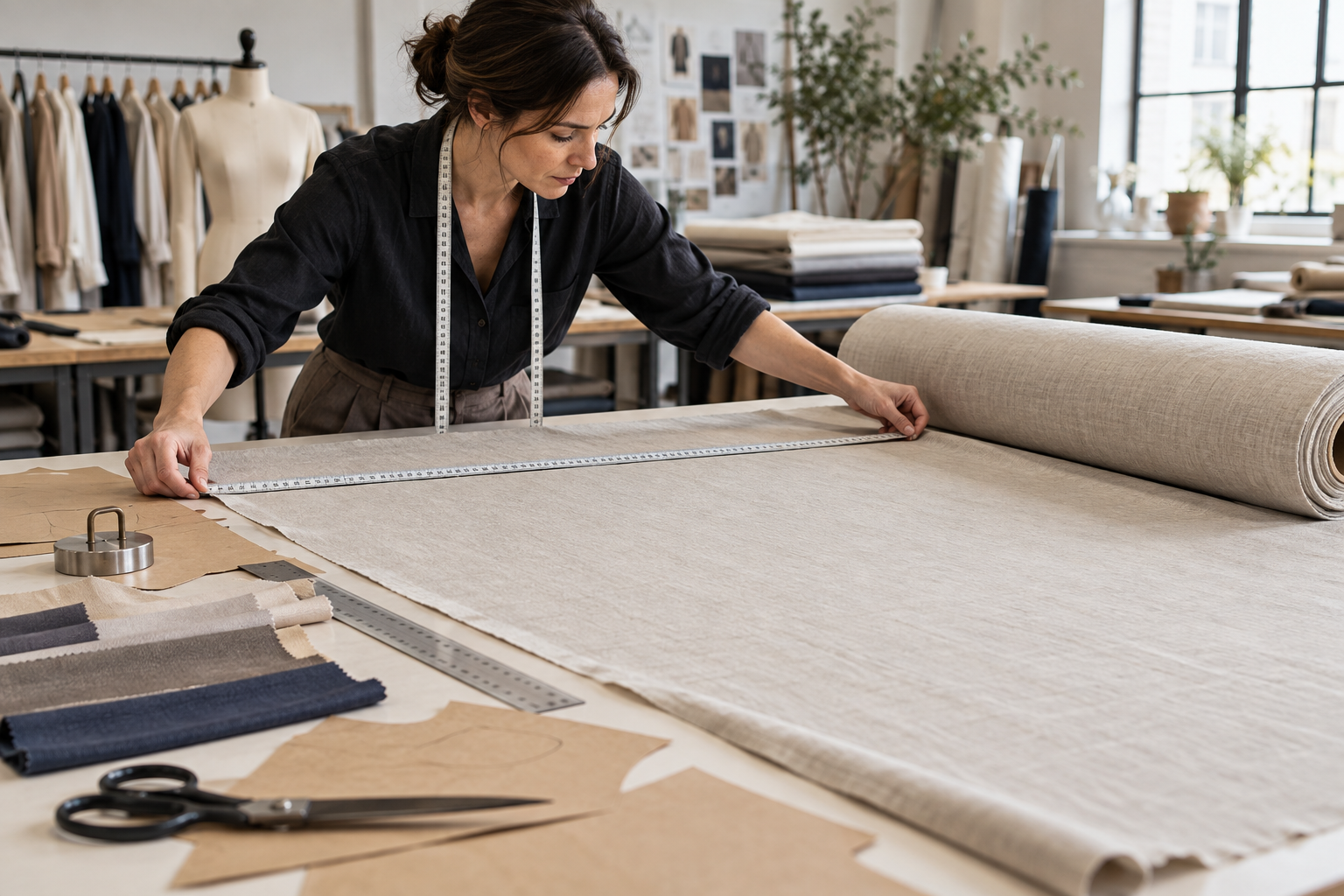
Garment cost is not based only on the fabric price per metre or yard. It also depends on how much fabric each size and style consumes. A design with wide legs, a full skirt, long sleeves, matching stripes, directional prints, oversized pockets, or a complex panel layout may use more material or create more cutting waste than a simpler silhouette.
Pattern placement matters as well. When a stripe, check, placement print, or pile fabric must align across seams, cutting may require additional allowance. Brands should treat this as a conscious product choice rather than a surprise in the final quote. If visual alignment is important, specify which seams or features must match and which can be treated more flexibly.
3. Construction complexity adds operations
Each seam, panel, pocket, placket, lining, reinforcement, zipper, and edge finish can add a production operation. Complexity is not inherently a problem; it may be what makes a style distinctive. The key is to decide where construction detail creates meaningful value for the customer.
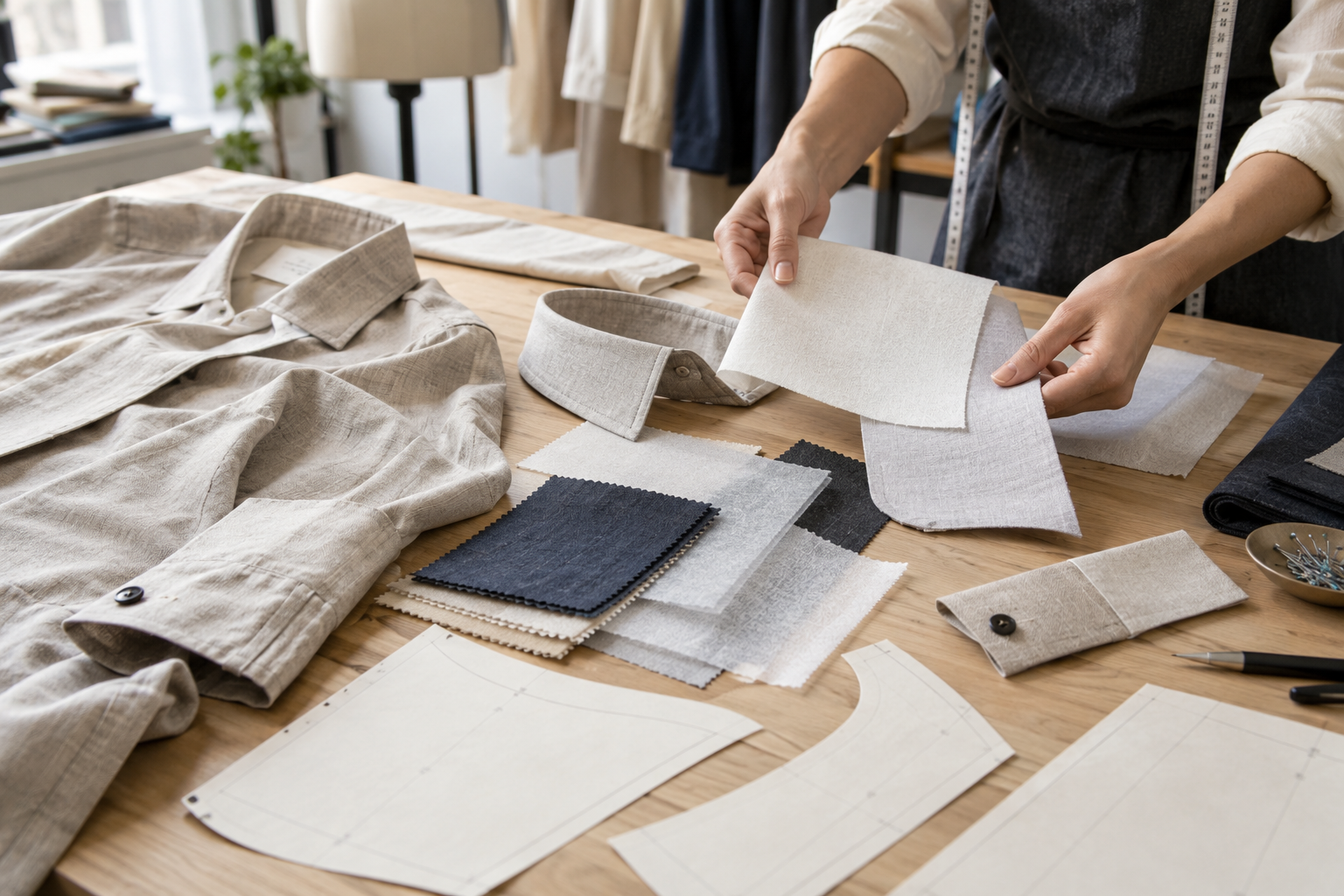
A basic T-shirt body, for instance, is a different build from a garment with contrast panels, bound necklines, coverstitch details, appliqué, utility pockets, and multiple types of topstitching. Similarly, tailored or lined styles can require more preparation and pressing than unlined casual pieces. Reviewing construction details with the pattern and sample prevents a quotation from relying on an oversimplified sketch.
4. Trims, labels, and decoration need their own specifications
Buttons, zippers, elastic, drawcords, snaps, thread, hangtags, woven labels, care labels, and packaging are small components with outsized practical effects. Their material, finish, colour, source, minimum order, and application method should be defined early. A trim can affect both the unit material cost and the labour needed to attach it.
Decoration deserves the same attention. Print size, number of colours, placement, embroidery stitch density, patch construction, and special effects all influence setup, material, and application requirements. Supply artwork in a usable format and identify the intended decoration method where possible so the visual idea can be matched to an appropriate production route.
5. Quantity changes how fixed work is shared
Some preparation happens before the first bulk garment is made: pattern work, markers, sample development, material sourcing, colour matching, decoration setup, and quality documentation. A smaller order may spread these activities across fewer units, while a larger order may use material and production capacity differently. That does not mean a higher quantity is automatically the right answer; it means the quantity should be discussed alongside the collection plan and sales confidence.
Give suppliers a realistic quantity by style, colour, and size—not just one total for the collection. A total of several hundred garments can represent a very different production task when it is split across many styles, colours, or variants. Use the same assortment assumptions when comparing quotations.
6. Sampling and approvals protect the bulk decision
Sampling is a development investment, not merely an administrative step. A prototype may test shape and construction; a fit sample may test measurements and movement; a pre-production sample may confirm the approved combination of material, trims, colour, and workmanship. Skipping clarity at these stages can move uncertainty into bulk production, where changes are harder to manage.
Agree what each sample is intended to answer, record feedback in one place, and note every approved change. A practical pre-production approval checklist helps teams make sure the approved sample and the production instructions tell the same story.
7. Quality, testing, and packing requirements should be explicit
Quality expectations influence the process, even when they are not visible in a line drawing. Brands may need to define measurement tolerances, shade expectations, seam appearance, placement tolerances, inspection approach, wash tests, performance checks, folding method, barcode labels, polybag requirements, carton marks, and assortment packing.
Only request checks that matter to the product and market, but describe them precisely. “High quality” is subjective; an approved reference sample, a measurement chart, and clearly stated acceptance expectations are actionable. If a retailer or marketplace has packaging rules, bring them into the briefing stage rather than treating them as a last-minute add-on.
8. Commercial scope affects what a quote includes
Quotes can look similar while covering different scopes. One may reflect cut, make, and trim work; another may include materials; another may include freight-related, packing, or development activities. Payment terms, delivery location, responsibilities for supplied materials, and the treatment of taxes or duties can also change the comparison.
Ask every supplier to list inclusions, exclusions, assumptions, and the basis of the quote. Then compare like with like. The guide to comparing clothing manufacturer quotes offers a useful structure for that review.
How to reduce cost without weakening the product
The best cost conversation protects the product’s non-negotiables. Start by identifying the features that support fit, comfort, durability, and brand identity. Then review alternatives with the sample in hand: a stock colour instead of a custom colour, a shared trim instead of several similar trims, a simplified interior finish where it does not affect wear, or a more efficient panel layout that preserves the silhouette.
Do not make several changes at once. If fabric, fit, construction, trim, and decoration all change together, it becomes difficult to know what affected the appearance or performance. Make one controlled choice, revise the specification, and confirm it through sampling before treating it as the new production baseline.
A practical request-for-quote checklist
- Style sketches or photographs that show front, back, and key details
- Target fabric information, acceptable alternatives, and colour direction
- Measurement chart and intended size range
- Construction, trim, label, decoration, and packaging requirements
- Quantity by style, colour, and size, plus the intended order timing
- Sample needs and the decisions each sample must validate
- Quote scope, delivery location, and any retailer-specific requirements
FAQ
What is the biggest clothing manufacturing cost driver?
There is no universal single driver. Fabric and fabric consumption are often central, but construction, trims, decoration, quantity, sampling, quality requirements, and commercial scope may be equally important for a particular style.
Can a brand get an accurate quote from a sketch?
A sketch can begin a conversation, but it rarely contains enough information for a dependable production comparison. Add material assumptions, measurements, construction details, trims, decoration, quantity, and packing requirements as the style develops.
Does simplifying a garment always lower the cost?
Not always. Simplification can reduce operations or material use, but the effect depends on the original specification, order quantity, available materials, and whether the change creates a new sampling or sourcing need. Review each alternative within the complete brief.
Build a cost-aware brief before asking for quotes
A useful quote is the result of a useful brief. When a brand understands the decisions behind clothing manufacturing cost drivers, it can protect the details that matter, compare supplier responses fairly, and develop a more production-ready collection. If you are preparing a custom apparel project, contact Huilin Fashion with your style information and sourcing questions to begin a focused production conversation.