Custom Polo Shirt Manufacturing: A Development Guide for Apparel Brands
A polo shirt can look deceptively simple. For a brand buyer, however, it brings together a specific knit fabric, a collar that must keep its shape, a placket that must sit cleanly, and a fit that needs to work across a size range. Good custom polo shirt manufacturing turns those connected choices into a product brief that a production team can interpret consistently.
This guide helps apparel brands plan a custom polo from concept through sample approval. It focuses on the decisions worth making before bulk production: product position, fabric and collar behavior, construction, trims, fit, and the approval record that keeps the final order aligned with the sample.
Start with the role of the polo in your range
Before choosing a fabric or a collar, define what the polo is meant to do for the collection. A refined everyday polo, a uniform-oriented style, a golf-inspired piece, and a relaxed fashion polo may share the same basic silhouette, but they need different priorities. The intended wearer, climate, layering use, price position, and brand aesthetic all affect the development brief.
Describe the intended fit in plain language as well as measurements. Decide whether the body should be trim, regular, boxy, or oversized; whether the sleeve should finish closer to the bicep or elbow; and whether the hem is meant to be tucked, worn loose, or both. Reference images are useful when they clarify proportion, but they should be paired with a measurement specification. A clear garment measurement spec sheet gives the team a repeatable way to assess the sample rather than relying on an overall impression.
Build a concise style brief
A useful opening brief can include the target customer, silhouette, garment length, intended season, base color options, branding locations, decoration method if any, and a short list of non-negotiable details. It should also state what may be flexible. This separates design intent from later sourcing decisions and makes early conversations with a clothing manufacturer more productive.
Choose fabric for performance, appearance, and production behavior
Many polos use piqué or another textured knit because the structure gives the garment a recognisable surface and breathable feel. Jersey, interlock, and blends can create a smoother or heavier appearance. Rather than selecting only from a swatch color, assess how the fabric handles the whole product: hand feel, drape, opacity, stretch, recovery, surface texture, shrinkage risk, and how it responds at the collar and placket.
Fiber content matters, but it is not a complete specification. Two fabrics with similar fiber descriptions can behave differently because of yarn, knit construction, weight, finish, and color treatment. Ask to review the actual candidate fabric in the intended color where possible. A fabric choice should complement the fit: a light, fluid knit can emphasize a relaxed shape, while a more stable knit can support a cleaner, more structured silhouette.
Use the same disciplined approach described in this fabric selection guide for private label clothing. Record the fabric reference, composition supplied by the mill or supplier, color, finish, and any approved alternative. If there is an expected wash process, make sure it is considered during sample review rather than treated as a final-stage detail.
Plan color with the collar and trims in view
Solid-color polos can still have multiple components: body fabric, collar rib, cuff rib, placket facing, buttons, thread, labels, and possible contrast tape. Decide whether the collar and cuffs should match the body, use a contrast, or carry a stripe. For each colorway, document the intended relationship between those components. This is especially helpful when a dark body, light tipping, or contrast button thread could make a small mismatch more visible.
Specify the collar, placket, and cuff construction
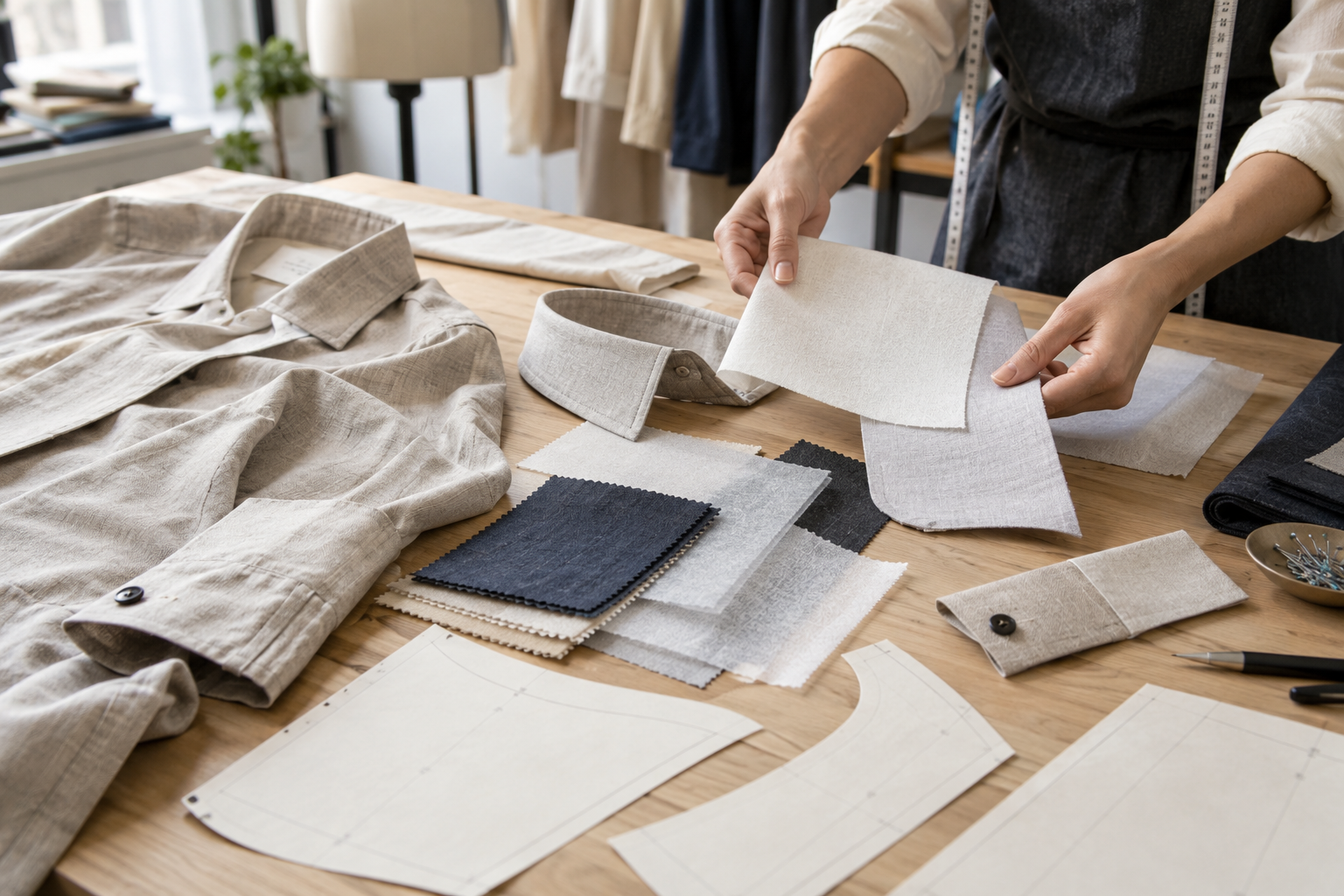
These details give a polo its character and are often where a generic sample differs from the intended result. State the collar type, its finished shape, whether it has tipping or a contrast edge, and the desired balance between softness and stability. A collar that is too limp can lose its presentation; one that is too stiff can feel out of place on a casual style. The sample is the time to judge both appearance and comfort on the body.
For the placket, specify the number of buttons, finished length, button size and material direction, buttonhole placement, and whether the placket is self-fabric, reinforced, or contrasted. If a hidden placket, half placket, or zip variation is part of the design, provide a clear close-up reference and construction notes. Also call out side vents, hem shape, neck tape, back neck finishing, and sleeve-cuff treatment. These are small choices individually, but together they shape the garment’s perceived quality and usability.
A detailed apparel tech pack is the best place to consolidate these decisions. Include flat sketches with callouts, measurement points, a bill of materials, placement artwork, colorway notes, and reference photos. Where a visual alone could be read in more than one way, add a written instruction.
Develop a fit that works beyond the first sample
Fit approval should consider the polo as a moving garment, not only as a flat measurement exercise. Review shoulder placement, chest ease, armhole comfort, sleeve opening, body length, collar stand, placket lay, and the balance between front and back. Try the sample in the use cases that matter to your customer: standing, sitting, reaching, layering, or tucking it in when relevant.
Provide feedback by measurement point and by observed effect. Instead of requesting that the sample simply feel more relaxed, explain which area needs change and what result you expect: for example, more room through the chest while keeping the shoulder position, or a shorter body with unchanged placket length. The feedback method in this fit sample feedback guide can help brands make revisions traceable from one version to the next.
Consider grading before bulk approval
Do not treat the base size as the entire fit program. Discuss the intended size range early and review how key measurements should progress across it. Collar, placket, sleeve, and body proportions can look different at the ends of a size range. Your approved specification should identify the base size, grade rules where available, measurement tolerances, and which sizes require review. This gives the manufacturer a clearer production target and gives the brand a practical standard for checking finished goods.
Make branding and decoration part of the development plan
A polo may use embroidery, a small chest print, a woven badge, a heat-applied mark, or no external branding at all. Each option has different artwork, placement, backing, and handling considerations. Choose the method based on the fabric, scale of the artwork, desired hand feel, and the way the polo will be worn and washed. Avoid sending a low-resolution logo or an unlabelled visual reference as the only decoration instruction.
Provide the approved artwork file, dimensions, placement measured from stable garment points, thread or color references, and any preferred backing or finish. For a deeper comparison of common approaches, see screen printing, embroidery, and heat transfer for custom apparel. Review decoration on the actual sample whenever the result could affect drape, stretch, or comfort.
Use samples to resolve questions before bulk production
Sampling is a decision process, not just a request for a prototype. At each review stage, check the fabric and color, collar shape after handling, placket symmetry, button security, stitching appearance, measurement points, labels, decoration, and overall balance on a wearer. Photograph agreed details and record version-specific feedback so that changes do not get lost between samples.
Before approving bulk, bring the final information together: approved sample version, fabric and trim references, measurement chart, grade plan, colorway details, decoration files, labeling and packaging instructions, and any agreed test or inspection requirements. The goal is not to create unnecessary paperwork. It is to remove preventable ambiguity before production begins.
A practical custom polo shirt manufacturing checklist
- Define the polo’s customer, purpose, fit direction, and position in the collection.
- Select candidate fabrics based on feel, structure, recovery, opacity, and intended use.
- Specify collar, cuff, placket, button, hem, and side-vent details.
- Create a measurement chart and describe the expected fit on body.
- Document every colorway, including contrast components and thread or tipping direction.
- Supply production-ready artwork and placement notes for branding or decoration.
- Review samples on a wearer, record revisions, and confirm the size-range plan.
- Approve one complete, traceable production package before bulk manufacturing.
FAQ
What should a brand prepare before requesting a custom polo shirt sample?
Prepare a style brief, flat sketch or reference images, target measurements, fabric direction, colorways, collar and placket details, branding artwork, label requirements, and the intended size range. If some elements are not fixed, clearly identify the questions you want the sampling stage to help answer.
Which fabric is best for a custom polo shirt?
The best option depends on the product’s intended fit, climate, use, hand feel, and visual direction. Piqué is a familiar choice for textured polos, while other knits can create smoother, denser, stretchier, or more relaxed results. Review the actual material in the intended color before final approval.
How can brands avoid collar problems in bulk polo production?
Specify the collar construction and finish clearly, review it on a worn sample, and approve the collar together with the body fabric, cuff, and placket. Keep photos, trim references, and the approved sample version in the final production package so the intended result is easy to verify.
Move from a polo concept to an approval-ready brief
A well-developed polo is the result of connected decisions, not a single fabric or logo choice. When your brief makes the desired fabric behavior, construction, fit, and sample approval points clear, it becomes easier to evaluate options and protect the intent of your collection. If you are preparing a custom polo program, contact Huilin Fashion with your concept, references, and development requirements to begin a focused production conversation.